
First-ever in-utero stem cell therapy for fetal spina bifida repair is safe, study finds
A UC Davis Health research team has safely performed the world’s first spina bifida treatment combining fetal surgery with stem cells, according to results from Phase 1 of an ongoing clinical trial. These results have been published today in The Lancet.
MIT's new 'Fetal SMPL' uses AI to create incredibly detailed 3D models of fetuses from MRI scans, accurate to 3.1mm. This could revolutionize prenatal diagnostics, helping doctors spot abnormalities with unprecedented clarity. What other medical fields could benefit from this level of AI-powered imaging?
https://news.mit.edu/2025/machine-learning-tool-gives-doctors-more-detailed-3d-picture-fetal-health-0915#AIinMedicine #FetalHealth #MachineLearning #TechNews #Healthcare
Machine-learning tool gives doctors a more detailed 3D picture of fetal health
MIT CSAIL researchers developed Fetal SMPL, a novel tool that can accurately model the shape and movements of fetuses in 3D, potentially assisting doctors in finding abnormalities and making diagnoses.
Expecting with hyperparathyroidism? Get vital information on its effects on pregnancy, how to spot symptoms, and the latest treatment approaches for optimal maternal and fetal well-being.
https://livepositively.com/hyperparathyroidism-in-pregnancy-risks-symptoms-and-treatment-explained/
#PregnantAndHealthy #HPTinPregnancy #MomsHealth #FetalHealth #PregnancyWellness

Everything You Need to Know About Rhesus Disease and Its Treatment in Pregnancy
Pregnancy is a journey filled with excitement, anticipation, and sometimes unexpected challenges. One such challenge, though less frequently discussed, is Rhesus (Rh) disease—a condition that can...
Stillbirths and neonatal deaths at a Malawi clinic have dropped by 82% since launching an AI-supported program in 2021 for regular fetal observation. 🤰🤖
#AI #Healthcare #StillbirthPrevention #NeonatalCare #FetalHealth #Malawi #TechForGood #HealthInnovation #MaternalHealthNew #fetal heart study by Maryam Dargahpour Barough et al. shows the potential of myocardial strain assessment via cardiac #MRI to identify CHD - a promising development in prenatal diagnostics. #FetalHealth #EuropeanRadiology
🔗 https://link.springer.com/article/10.1007/s00330-023-10551-0
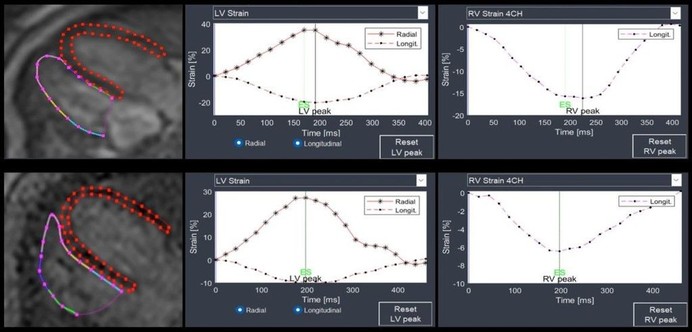

Myocardial strain assessment in the human fetus by cardiac MRI using Doppler ultrasound gating and feature tracking - European Radiology
Objectives Assessment of myocardial strain by feature tracking magnetic resonance imaging (FT-MRI) in human fetuses with and without congenital heart disease (CHD) using cardiac Doppler ultrasound (DUS) gating. Methods A total of 43 human fetuses (gestational age 28–41 weeks) underwent dynamic cardiac MRI at 3 T. Cine balanced steady-state free-precession imaging was performed using fetal cardiac DUS gating. FT-MRI was analyzed using dedicated post-processing software. Endo- and epicardial contours were manually delineated from fetal cardiac 4-chamber views, followed by automated propagation to calculate global longitudinal strain (GLS) of the left (LV) and right ventricle (RV), LV radial strain, and LV strain rate. Results Strain assessment was successful in 38/43 fetuses (88%); 23 of them had postnatally confirmed diagnosis of CHD (e.g., coarctation, transposition of great arteries) and 15 were heart healthy. Five fetuses were excluded due to reduced image quality. In fetuses with CHD compared to healthy controls, median LV GLS (− 13.2% vs. − 18.9%; p < 0.007), RV GLS (− 7.9% vs. − 16.2%; p < 0.006), and LV strain rate (1.4 s−1 vs. 1.6 s−1; p < 0.003) were significantly higher (i.e., less negative). LV radial strain was without a statistically significant difference (20.7% vs. 22.6%; p = 0.1). Bivariate discriminant analysis for LV GLS and RV GLS revealed a sensitivity of 67% and specificity of 93% to differentiate between fetuses with CHD and healthy fetuses. Conclusion Myocardial strain was successfully assessed in the human fetus, performing dynamic fetal cardiac MRI with DUS gating. Our study indicates that strain parameters may allow for differentiation between fetuses with and without CHD. Clinical relevance statement Myocardial strain analysis by cardiac MRI with Doppler ultrasound gating and feature tracking may provide a new diagnostic approach for evaluation of fetal cardiac function in congenital heart disease. Key Points • MRI myocardial strain analysis has not been performed in human fetuses so far. • Myocardial strain was assessed in human fetuses using cardiac MRI with Doppler ultrasound gating. • MRI myocardial strain may provide a new diagnostic approach to evaluate fetal cardiac function.
 Hacker News
 Mind Lude
 MrMed : Online Pharmacy
 PUPUWEB Blog
 European Radiology
 Alan Kotok