YAML-LD brings the power of JSON-LD’s #LinkedData to YAML, using YAML’s more compact and expressive syntax #timetogiveinput #FPWD
▶️ https://www.w3.org/TR/yaml-ld-10/

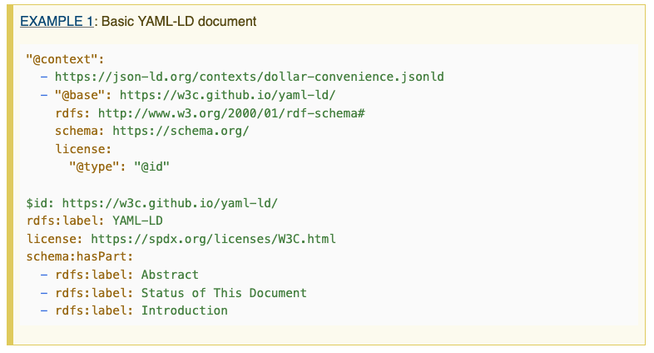
The @w3c specification "YAML‑LD 1.0" offers more data types and flexible structure than #JSON, while ensuring compatibility with #JSONLD syntax, semantics, and #APIs.

Feedback wlc! https://github.com/w3c/yaml-ld/issues

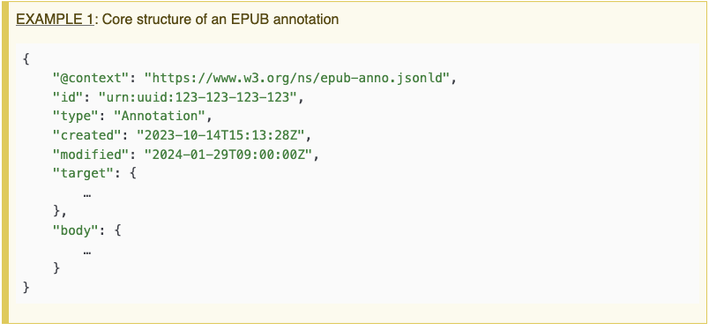
The @w3c #Publishing Maintenance #WorkingGroup issues EPUB Annotations 1.0 as #FPWD, enabling richer reading and improved interoperability #timetogiveinput
▶️ https://www.w3.org/TR/epub-anno-10/

This document defines a profile of the Web Annotation Data Model for #EPUB publications, enabling annotations such as highlights, notes, and bookmarks to be expressed using embedded #JSON-LD. The spec. also introduces Annotation Sets for packaging and sharing annotations.

Feedback welcome: https://github.com/w3c/epub-specs/issues?q=is%3Aissue%20state%3Aopen%20label%3ASpec-Annotations

The @w3c CSS #WorkingGroup publishes "Selectors Level 5' as #FPWD. The spec. extends Level 4, adding new #CSS selectors #timetogiveinput

▶️ https://www.w3.org/TR/selectors-5/

It introduces time dimensional pseudo-classes (':current', ':past', ':future') e.g. for use in #WebVTT, grid-structural (column) selectors to style HTML tables, heading pseudo-classes (👍 #developers-signal https://github.com/web-platform-dx/developer-signals/issues/384), etc.

Feedback wlc: https://github.com/w3c/csswg-drafts/tree/main/selectors-5

Selectors Level 5

The @w3c SHACL 1.2 Rules specification is an addition to the Shapes Constraint Language (SHACL) family of documents. It provides a standardized way to express and evaluate declarative rules that generate new data (as #RDF triples) by inference on existing RDF data. #FPWD #timetogiveinput
▶️ https://www.w3.org/TR/shacl12-rules/

Feedback welcome: https://github.com/w3c/data-shapes/issues/

SHACL 1.2 Rules

This document describes Shapes Constraint Language (SHACL) Rules.

The @w3c CSS Backgrounds Module Level 4 enhances #CSS background features. It adds a new longhand property for 'repeat' and expands 'background-clip' options with 'border-area' and 'text' #FPWD #timetogiveinput
▶️ https://www.w3.org/TR/css-backgrounds-4/

Feedback wlc: https://github.com/w3c/csswg-drafts/issues/new?labels=css-backgrounds-4

#developers, if you want the 'background-clip: border-area' and the 'background-clip: text' features to be avail. in all #browsers, please give a 👍 to https://github.com/web-platform-dx/developer-signals/issues/266 and /129

👇 cc https://kwz.me/hGI

The @w3c Thing Description (TD) is a key element of @wot, providing a standard way to describe the #metadata, interfaces, and interactions of physical or virtual entities. The newly published document defines TD 2.0 #FPWD #timetogiveinput #WoT

▶️ https://www.w3.org/TR/wot-thing-description-2.0/

TDs simplify integrating #IoT devices into applications, and are encoded in a #JSON format that also allows JSON-LD processing.

Known implementations: https://www.w3.org/WoT/developers/

Feedback welcome: https://github.com/w3c/wot-thing-description/issues

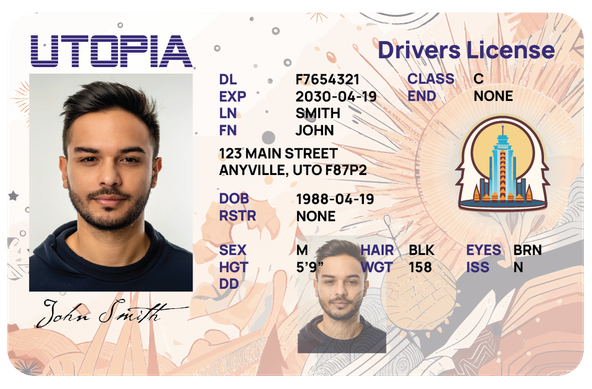
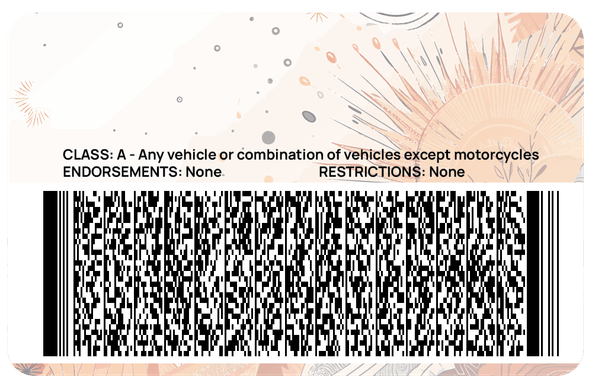
Another publication today from the @w3c Verifiable Credentials #WorkingGroup: the "Verifiable Credential Rendering Methods v1.0" specification outlines methods for presenting a Verifiable Credential using visual, auditory, or haptic formats #FPWD #timetogiveinput

▶️ https://www.w3.org/TR/vc-render-method/

It includes guidance on displaying credentials as physical documents, digital images, or through assistive technologies such as screen readers and braille #a11y

Feedback wlc: https://github.com/w3c/vc-render-method/

Verifiable Credential Rendering Methods v1.0

This specification describes mechanisms that can be used to represent a Verifiable Credential through a visual, auditory, or haptic medium. It covers rendering a Verifiable Credential to a physical document, digital image, screen reader, or braille output.

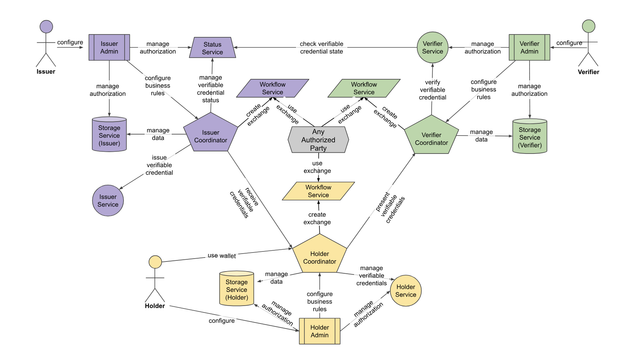
The @w3c "Confidence Method v1.0" specification defines a way for verifiable credentials to include a 'confidenceMethod' property, indicating how strongly the credential’s subject is bound to cryptographic or biometric evidence. This helps verifiers assess #trust in the credential holder’s identity #FPWD #timetogiveinput

▶️ https://www.w3.org/TR/vc-confidence-method/

Feedback welcome! https://github.com/w3c/vc-confidence-method/

Confidence Method v1.0

This specification defines a mechanism that can be used with the Verifiable Credentials Data Model v2.0 to increase a verifier's confidence about a particular subject identified in a verifiable credential.

Anchor positioning extends #CSS absolute positioning by letting elements align to other boxes, not just their container, automatically choosing the best placement to prevent overlap or overflow. @w3c's CSS Anchor Positioning Module Level 2 introduces the anchored container queries to allow querying certain aspects of elements #FPWD #timetogiveinput

▶️ https://www.w3.org/TR/css-anchor-position-2/

Explainer: https://github.com/w3c/csswg-drafts/blob/main/css-anchor-position-1/anchored_container_query.md

Feedback wlc: https://github.com/w3c/csswg-drafts/labels/css-anchor-position-2

CSS Anchor Positioning Module Level 2

The @w3c #CSS Environment Variables Module Level 1 spec lets pages use environment data as CSS variables, such as "safe areas", viewport segments for foldable and hinged displays, and user text scale preferences #FPWD #timetogiveinput

▶️ https://www.w3.org/TR/css-env-1/

Environment variables are global and remain consistent everywhere. Their values can be inserted into different places using the 'env()' function, much like how 'var()' works.

Feedback welcome: https://github.com/w3c/csswg-drafts/labels/css-env-1