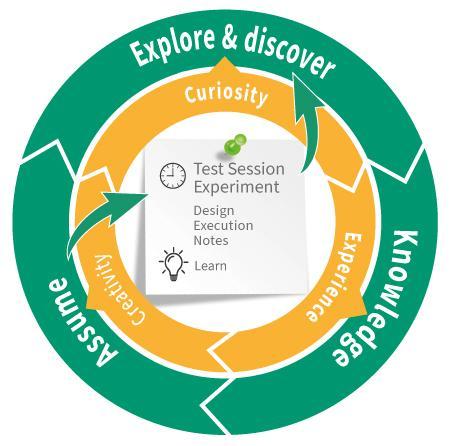
ISO 29119 calls #exploratory testing a testing approach in which tests are designed and executed dynamically, based on knowledge, exploration of the test object, and the results of previous tests.
An overview of the main elements of #experience-based #testing and their context can be found in the attached graphic.
Learn more: https://zurl.co/u7Ror
#softwaretesting #exploratorytesting #softwarequality #agile
Going back to a mandate levels model I used in building up teams with two different mandate levels at previous place of work.
#ExploratoryTesting has always been an idea about increasing agency in testing by keeping things together that should stay together (design - execution), and #ContemporaryExploratoryTesting was adding automation and deciding.
A lot of our salary models are based on ideas of having beginners in low mandate roles.
Udita Sharma's and my #AgileTD workshop "Collect your explorer badge" is done! 🎉 It was a blast, seems participants had a great time as well generating new test ideas to explore and inspiring each other 😁
https://agiletestingdays.com/2024/session/collect-your-explorer-badge/ #exploratoryTesting
Udita Sharma's and my #AgileTD workshop "Collect your explorer badge" is done! 🎉 It was a blast, seems participants had a great time as well generating new test ideas to explore and inspiring each other 😁
https://agiletestingdays.com/2024/session/collect-your-explorer-badge/ #exploratoryTesting
Since there is a lot of confusion about exploratory testing (for one: it is not ad hoc testing!), I need to revisit this some 2 year old tweet and learn more: [Wayback/Archive] AndreaJensen on Twitter: “Hi testers, What do you find difficult, tricky, or challenging about #ExploratoryTesting? Please share your thoughts. Rt are also highly appreciated. Thanks”
–jeroen