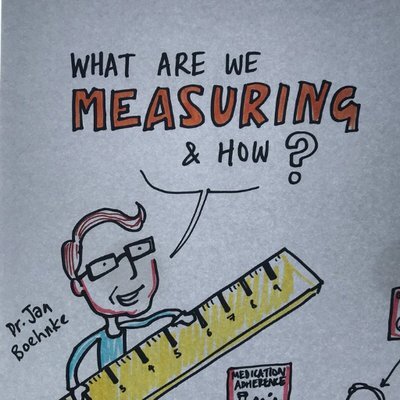
Mirjam Stieger (Lucerne Uni) and I are invited to present
"Contemporary #Evaluation of Interventions: Mobile, Digital, and Pragmatic"
at @unibern
https://www.bbs.unibe.ch/training/summer_course/index_eng.html

This is the annual Summer Course of the Doctoral Program Brain and Behavioral Sciences, and comprises a mixture of keynotes, masterclasses, hidden curriculum etc.

I am very much looking forward to it, and also very honoured to be invited once again to Bern to train #ECRs!

#RCT #EvaluationResearch #ResearchDesign #StudyDesign

Summer Course 2025

Doctoral Program Brain and Behavioral Sciences

⭕️ En 81.000 evaluaciones de equipos, estos son los adjetivos que más se repetían con hombres y mujeres. Vía @loretahur

https://hbr.org/2018/05/the-different-words-we-use-to-describe-male-and-female-leaders

#genderDifferences #evaluationresearch #womeninscience

The Different Words We Use to Describe Male and Female Leaders

We know that men and women are often described differently in performance evaluations, and now we have more information on exactly what some of those differences are. Researchers analyzed a large-scale military dataset (over 4,000 participants and 81,000 evaluations) to examine objective and subjective performance measures. They found no gender differences in objective measures (e.g., grades, fitness scores, class standing), but the subjective evaluations were very different. Negative words (like selfish, passive, and scattered) were much more frequently applied to women. The specific words used to describe men and women also differed. The most commonly used positive term to describe men was analytical, while for women it was compassionate. The most commonly used negative term to describe men was arrogant, while for women, it was inept — even though men’s and women’s performances were objectively the same.

Harvard Business Review

I had yesterday the opportunity to re-read this paper co-authored by two of my colleagues:
https://www.sciencedirect.com/science/article/pii/S2352827318300946

When evaluating #PublicHealth interventions, subgroup analyses to investigate an intervention's impact on health inequities can deliver important insights, but their credibility "may be an underappreciated problem."

#EvaluationResearch