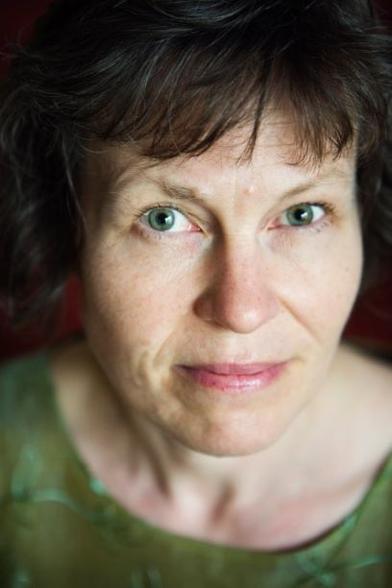
Mathilde Wantenaar: Lush harmonies in new piece for Dutch Radio Choir

Mathilde Wantenaar

This season NTRZaterdagMatinee makes up for decades of neglecting female composers, featuring well-known names such as Kaija Saariaho and Unsuk Chin next to lesser-known composers such as Calliope Tsoupaki and Kate Whitley. On Saturday 23 March the Dutch Radio Choir will present both Gubaidulina’s Canticle of the Sun and Dit zijn de bleeke, bleeklichte weken by Mathilde Wantenaar.

This piece for choir a cappella was commissioned by the renowned radio series in Concertgebouw Amsterdam. As always the concert will be aired live on Radio 4. Underneath you find the translation of my text for the programme booklet.

Mathilde Wantenaar (Amsterdam, 1993) has been steadfastly working on her development for years. In 2011 she attracted attention with her entry for the annual composition competition of the Nederlands Blazers Ensemble. Seven years later the wind players asked her for their project Bach & Sufi. “She sliced up the Hohe Messe, inclined her ears towards Persia, and arranged a musical treat that amply transcends good intentions”, opined de Volkskrant.

In 2014 she won the Alba Rosa Viëtor Composition Prize with Sprookjes 1, 2 & 3 for violin and piano, and a year later her Song of Songs for soprano, guitar and percussion won an award in the Princess Christina Composition Competition. She composed pieces for pianist Ralph van Raat, vocal ensemble Wishful Singing and soprano Johannette Zomer. In 2016 she presented the successful chamber opera p e r s o n a r for the Opera Forward Festival of Dutch National Opera. Her Octet for Strings, written for violinist Liza Ferschtman, represented the Netherlands in 2017 at the International Rostrum of Composers.

She studied composition with such diverse teachers as Willem Jeths and Wim Henderickx at the Conservatory of Amsterdam, graduating in 2016. Wantenaar does not limit herself to composing, however. During her studies she also took cello lessons and vocal training, and currently she is enrolled at the Royal Conservatoire in The Hague to become a professional singer. She has a great affinity with the human voice and even her purely instrumental compositions are remarkably melodious.

Elusive atmosphere

No wonder her first commission for NTRZaterdagMatinee is a composition for the Dutch Radio Choir. For this a cappella piece she chose a poem by Herman Gorter, Dit zijn de bleeke, bleeklichte weken (which roughly translates as These are the pale, pale weeks). This is not the first time she was inspired by Gorter’s poetry. In 2017 she made a setting of De stille weg (The silent road) for chorus, piano and violin, a commission from the Festival De Muze van Zuid.

Wantenaar was attracted by ‘the stillness, the stratification, the visual, the elusive and the transient’ in Dit zijn de bleeke, bleeklichte weken. The poem evoked strong images in her: ‘In my mind’s eye I envisioned the poet sitting in a quiet room at a table next to the window. The sun is hidden behind an endless expansive cover of white clouds, it is as if the world has been drained of all colour, even though there is a lot of light.’

‘Outside there is life, but in the poet’s room everything sounds muted, it feels as if time is standing still and the sky has solidified. We sit under a bell jar, shimmering dust particles float in the air and in the meantime the world slowly passes us by. It is nice to be there, but at the same time also oppressive and lonely.’

Wantenaar translated this static, somewhat floating feeling into a 3/2 metre, which we often associate with older music. The text is sung largely homophonic and the tempo is low, time seems to stand still. Under the calm atmosphere, however a ‘mildly longing romantic undercurrent is simmering’, says the composer. Underneath this yet another layer is concealed, with a ‘darker feeling of constriction’. The play of light and dark finds its equivalent in a varied dynamic, the tranquillity is expressed in sonorous harmonies. A single dissonant chord echoes the subcutaneous tension that shimmers through the poem.

Concertgebouw 23 March 2.15 pm: NTR ZaterdagMatinee
Dutch Radio Choir /Philipp Ahmann; Ivan Monighetti, cello
Wantenaar – Dit zijn de bleeke, bleeklichte weken (commissoned by NTR ZaterdagMatinee, WP)
Tchaikovsky – Nine Sacred Pieces
Gubaidulina – Canticle of the Sun


#DutchRadioChoir #GrootOmroepkoor #MathildeWantenaar #NTRZaterdagmatinee #SofiaGubaidulina

wantenaar

Contemporary Classical - Thea Derks

Composer Karin Rehnqvist: ‘I simply had to address global warming in Silent Earth’

Karin Rehnqvist (c) Ester Sorri

Saturday 18 April 2020 was to see the first performance of Karin Rehnqvist’s Silent Earth in NTR ZaterdagMatinee. Yet, as all concerts, this premiere fell prey to the measures taken to prevent the further spreading of the Corona-virus. Rehnqvist had written this large scale work for the Dutch Radio Choir and Philharmonic Orchestra, who would present it in the Amsterdam Concertgebouw.

I had written the programme notes and was to interview Rehnqvist (1957) previous to the concert. Since the new season had already been planned, the premiere of Silent Earth was rescheduled for 29 January 2022.

Rehnqvist feels sad, but remains placid: ‘These are strange and scary times, we must simply accept the situation.’ She even cherishes some hope: ‘Silent Earth was co-commissioned by the Swedish Radio, who have scheduled it for the Black Sea Festival in August. Let’s hope that will work, though nothing can be taken for granted.’ Fingers crossed! In February 2020 we talked about Silent Earth over Skype. (The Festival was cancelled after our interview, TD.)

Human voice

Karin Rehnqvist has a great affinity with the human voice and for many years led the Swedish Stans Kör. She became famous with compositions such as Puksånger-lockrop for two singers and timpani (1989) and Solsången for female voice, two female speakers and orchestra (1994). In these she makes use of the so-called kulning from Swedish folk music, a shrill, vibration-free way of singing with which shepherdesses drove their cattle together. To this end she worked closely with the folk singer Lena Willemark. – There’s no kulning in her new piece though, says Rehnqvist: ‘I didn’t want to use solo voices.’

The self-evident way in which Rehnqvist combines the ghastly cries with modern compositional techniques and special timbres earned her many prizes. Exploring the intersections between art and folk music runs like a thread through her oeuvre, in which folkloristic elements are never used for a nostalgic effect. Thus she developed into ‘one of the most distinctive voices in contemporary music since Ligeti and Penderecki’, as one critic wrote.

#MeToo

Recently she made a big impression with the monodrama Blodhov (Blood-hoof) in which she once again collaborated with Lena Willemark. It is a bloodcurdling story from the Edda, about the God Freyr who rapes the female giant Gerður more and more brutally for nine consecutive nights. – However this time the tale is told from the perspective of the woman, who tries to exorcise her pain and powerlessness in fearful words and a primal scream that pierces through marrow and bone. Blodhov was awarded the 2019 Järnåker Prize.

‘The story gripped me so much that it took me years to complete the piece’, says Rehnqvist. ‘When the #MeToo affair broke out in 2017, I couldn’t even compose at all for a while, because so many authentic contemporary stories came up.’ At its premiere in 2019, Blodhov thus proved to be a perfect match for current events. As was Day is Here for eight voices and string orchestra composed a year earlier: ‘The last part is a prayer for rain from the Navajo Indians. I wrote it in spring, but then came that incredibly hot, dry summer. So we really needed that prayer!’

Asking the music

Were these two compositions more or less engaged by chance, in Silent Earth Rehnqvist deliberately reflects on the effects of global warming. ‘I am shocked that people still fly and eat meat carefree. The problem is life-size, this winter barely any snow has fallen in Sweden. We have to change our way of life. As a grandmother, I feel this responsibility all the more strongly.’

The piece was commissioned two years ago by NTR ZaterdagMatinee. ‘Before I started composing I asked myself: what needs to be said today? What do I need to express? Climate change is a big worry in our society, so I thought I had to address this in some way. My approach is always to ask the music questions: how will it be? What will happen? I trust the music to show the way. And in this case I also had a beautiful  text to go by.’

Kerstin Perski wrote the poems for Silent Earth. ‘We had collaborated before, on the children’s opera Beauty School in 1999, after which we made the opera Stranded. This is about a woman surviving a volcanic eruption, but it is still awaiting its first performance. The opera is in Swedish and the music is totally different, but the last poem “Burning Earth” is related to my new piece. So I had it translated into English and am reusing it in Silent Earth.

After the catastrophe

Rehnqvist recounts how ‘Burning Earth’ came into being: ‘One evening Kerstin and I were talking about climate change. In our fantasy we were sitting on another planet, looking down at Earth, that had been destroyed by a catastrophe. We asked ourselves: what is there? Is there still life? Are there any human beings? What is it we are seeing? In one way this was comforting: to sit there, on another planet and still be alive, looking at Earth. It’s a bit comparable to today’s situation: we have no idea how to handle it. We just have to wait, not knowing what will happen. After this talk I made some improvisations with my voice and the piano, which I gave to Kerstin.’

‘Then she came up with the first two poems. I think they are absolutely wonderful! They describe so precisely what’s happening at the moment. I threw all my improvisations away and started composing all over again. Though “Burning Earth” describes the catastrophe and comes last, in a sense it is also first: we find ourselves looking over the silent, devastated landscape and talk about who we once were. The text builds up towards a huge climax, describing the catastrophe when the world is swallowed up by fire and water.’

The piece opens with ‘Silent Earth’, from which the title is derived. ‘This describes an empty world, after the catastrophe, where the wind is blowing and the lakes have been fished empty.  Therefore I created an icy atmosphere.’ The hornists play with their hands in the bell, the trumpets use mutes, the harp ripples descending and ascending glissandi against a foundation of chilly sounds from cymbals. The choir softly sets in dissonant harmonies and only sings briefly, ending with the ultra-soft and repeatedly whispered word ‘fishless’.

Glimmer of hope

The following ‘We, Who Once Were’ is a confession of guilt: we praised the beauty of the Earth but destroyed it with our greed. The orchestral fabric condenses somewhat and the choir sings the opening line in unison, with an interval jump up on ‘once’ and an elated forte on ‘loved you’. Vibrations and dissonant harmonies dominate.

When the fabric thins out again, the choir loudly chants ‘Save yourself from us!’, repeated on the same tone, in changing variants and languages. ‘Each singer must choose another language alongside English. I want it to be really global, so you understand it concerns us all.’ Hereafter sopranos and tenors conclude on pitifully moaned ‘ah…’s in descending minor seconds, like seufzer.

In the concluding ‘Burning Earth’, Rehnqvist builds up a climax of frenetically churning strings, ominous percussion and fortissimo shouted phrases from the choir. ‘This is the most violent part, but at the same time I see it as a lamentation.’ In a long coda silence gradually returns and the female voices sing softly, and in unison, a single note on ‘ng’.

Rehnqvist: ‘We are still here: there’s a glimmer of hope…’.

On Sunday 5 April 2020 I played Rehnqvist’s ‘Salve Regina’ in my programme ‘An Ox on the Roof’ Concertzender. You can listen back any time through this link.

#Blodhov #DutchRadioChoir #DutchRadioPhilharmonicOrchestra #KarinRehnqvist #LenaWillemark #MeToo