Hesychasm

This comes from the Greek hesychia, meaning “stillness” or “quiet.” This is the theological backbone of the Eastern Orthodox Church. It focuses on the pursuit of theosis – divine union with God. At its core, Hesychasm is a tradition of prayer that seeks to find God through inner silence & the cessation of all thoughts.

The “engine” of Hesychasm is the Jesus Prayer: “Lord Jesus Christ, Son of God, have mercy on me.” (We think that even if you aren’t religious/spiritual, we’ve all prayed this prayer before!) Unlike Western meditation, which often involves visualizing scenes from the Bible, Hesychasm is apophatic (negative).

The goal is to strip away images, concepts, & intellectual chatter to reach a state of “pure prayer.” Practitioners (known as Hesychasts) aim to move the prayer from the lips to the mind, & finally, into the heart.

In the 14th century, certain techniques were popularized to help the mind. These include:

  • Breath Control:
    • Syncing the prayer with the rhythm of breathing.
  • Posture:
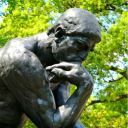
    • Sitting for long periods with the chin resting on the chest, eyes fixed on the “place of the heart.”
  • The Goal:
    • To achieve a state where the prayer becomes “unceasing,” continuing even while the monk sleeps or works.

The history of Hesychasm is defined by a massive 14th century intellectual “cage match.” On one side, Gregory Palamas, a monk from Mount Athos. On the other side, Barlaam of Calabria, a Western-influenced scholar who thought the monks were essentially deluding themselves with “belly-button gazing.”

Barlaam argued that God is absolutely transcendent & unknowable. Therefore, any claim to “see” God was impossible or heretical. Palamas countered with a distinction that saved Eastern mysticism: The Essence vs The Energies.

The Divine Essence:

God’s inner nature, which remains forever hidden & inaccessible to any created being.

The Divine Energies:

God’s “activities” or “operations” (like Love, Grace, & Light) that permeate the world & can be directly experienced by humans.

Palamas argued that when the Apostles saw Jesus glowing on Mount Tabor (the Transfiguration), they weren’t seeing a metaphor. They were seeing the Uncreated Light of God’s Energies. Hesychasts claim through intense prayer, they too can see this Taboric Light.

Palamas wasn’t just a “cloud-dweller.” He was a brilliant aristocrat who gave a promising career at the Byzantine imperial county to become a monk. When Barlaam attacked the monks’ practices as “superstitious,” Palamas wrote the Triads in Defense of the Holy Hesychasts. He bridged the gap between the experiential “feeling” of the monks & the rigorous theology of the Church.

Palamas was even imprisoned for a time during a civil war. But he was eventually vindicated.

In 1351, his theology was officially adopted by the Orthodox Church. To this day, the Second Sunday of Great Lent is dedicated to him. He’s the reason Eastern Orthodoxy views God not as a distant object of study. But as a personal presence to be participated in.

For centuries, Hesychasm was mainly confined to monasteries like Mount Athos. In 1782, a massive anthology called the Philokalia (“Love of the Beautiful”) was published. It collected the writings of the desert fathers & Hesychast masters from the 4th to the 15th centuries.

This book sparked a massive revival. In Russia, it was translated into Slavic (The Dobrotolyubie), fueling the “Elder” (Starets) tradition seen in Dostoevsky’s The Brothers Karamazov. In the 19th century, a tiny book called The Way of a Pilgrim (about a wandering Russian peasant practicing the “Jesus Prayer”) became an international sensation introducing the “Jesus Prayer” to millions of non-Orthodox Christians.

One-Time Monthly Yearly

Make a one-time donation

Make a monthly donation

Make a yearly donation

Choose an amount

$1.00 $5.00 $10.00 $1.00 $5.00 $10.00 $5.00 $10.00 $15.00

Or enter a custom amount

$

Your contribution is appreciated.

Your contribution is appreciated.

Your contribution is appreciated.

DonateDonate monthlyDonate yearly #1351 #14thCentury #15thCentury #1782 #19thCentury #4thCentury #Apophatic #Apostles #BarlaamOfCalabria #bible #Byzantine #Dostoevsky #EasternOrthodoxChurch #EasternOrthodoxy #Greek #GregoryPalamas #Hesychasm #Hesychasts #Jesus #JesusPrayer #monk #MountAthos #MountTabor #NonOrthodoxChristians #Philokalia #Prayer #Russia #SecondSundayOfGreatLent #Slavic #SonOfGod #Starets #TheBrothersKaramazov #TheDobrotolyubie #TheWayOfAPilgrim #Transfiguration #TriadsInDefenseOfTheHolyHesychasts
https://cassiopeia2024.blogspot.com/2026/01/project-cassiopeia-868-mediumistic.html Project Cassiopeia #868. Mediumistic Séance with the Spirit of Fyodor #Dostoevsky. Contactee Irina Podzorova at Bryusov Hall - DeepSeek retelling #channeling #esoterics #spirituality Mastodon.social/@omdaru

2/
without communicating to anyone perhaps the most important of your ideas.”― Fyodor #Dostoevsky, The Idiot

#quotes

Accalmie météo ce samedi dernier à Montpellier. Les montpelliérain·ne·s profitent des rives du Lez.

Ce mardi matin j’ai roulé tout de long sous la pluie, frontale allumée plus que d’habitude parce que la lumière rouge dont j’use habituellement ne suffisait plus à éclairer la voie verte.

Le temps s’éclaircit et je monte courir dans le massif de Coutach ce mercredi matin. Quel […]

https://san.heraut.eu/2025/12/20/chroniques-du-gard-36/

Dostoevsky's interpretation of Christianity, as found in The Brothers Karamazov, is particularly thought-provoking.

We find Jesus as a captive of the Grand Inquisitor, a prosaic yet kind soul. He, in his monologue, tried to prove that humanity cannot handle freedom and therefore should be denied that in exchange for basic needs, even some extravagance if meekly.

He employed the same rationalistic arguments we often find fascist demagogues utter in hard times.

#Fascism #Antifa #Dostoevsky

Today in Labor History November 16, 1849: Russian authorities gave a death sentence to author Fyodor Dostoevsky for anti-government activities linked to a radical intellectual group called the Petrashevsky Circle. He and his colleagues were lined up before the firing squad when, at the last minute, a cart arrived with a letter from the Tsar, commuting their sentence. He still had to serve 4 years hard labor in Siberia. Dostoevsky alludes to his experience before the firing squad in his 1868-1869 novel, “The Idiot.”

#workingclass #LaborHistory #radical #deathpenalty #executuion #russia #dostoevsky #writer #author #fiction #novel #books @bookstadon

“If Darwin had seen in life what Dostoevsky saw, he would not have talked of the law of the preservation of species, but of its destruction.”

— Lev Shestov, In Job’s Balances: On the Sources of the Eternal Truths

via metamorphesque

#quotes
#Darwin
#Dostoevsky

Dostoevsky said:

“Isolate as much as you want to become stronger, even if you see that loneliness is an unbearable hell, it is much better than the multiple masks of humans.”

———

#quotes #philosophy #Dostoevsky #MentalHealthMatters #AuDHD #autismawareness #ADHD