9/
The Constraints: Physics, chemistry, energy consumption.

The Emergent Architecture: The Octopus.

The paper is essentially trying to turn the "Jazz Band" chaos of evolution into a repeatable engineering formula. It’s "old wine in a new bottle," but the bottle is now high-performance computing.

https://youtu.be/ucQnsxjOTDA

#AI
#neuromorphic
#DistributiveIntelligence
#evolution
#octopus
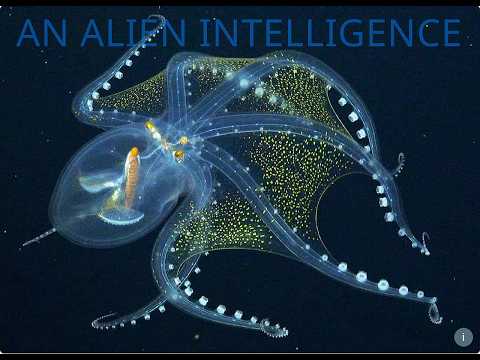
An Alien Intelligence

YouTube

8/
3. The "Neuromorphic" Hardware Angle

The "new" part is often the Hardware (Neuromorphic). We are finally building chips that can actually handle these distributed rules without a central "Boss" CPU bottlenecking everything.

The "Mind Club" Connection
If you feel like you’ve heard this before, it’s because you have—it’s the story of Evolution.

#AI
#neuromorphic
#DistributiveIntelligence
#evolution

7/
2. Declarative vs. Procedural

Most AI today is "Procedural"—it’s fed millions of examples to learn a procedure. A "Declarative Constraint" system is different. It’s like telling a robot: "You are not allowed to touch the walls," and letting it figure out navigation, rather than showing it 10,000 videos of robots not touching walls.

#AI
#neuromorphic
#DistributiveIntelligence

6/
1. From "Bio-Inspiration" to "Mechanical Necessity"

Usually, AI researchers try to mimic the brain (Neural Networks). Kinney is suggesting we stop trying to copy the brain's look and instead copy its limitations. He’s arguing that if you set the right "Universal Constraints," the system is forced to develop a brain-like structure because that's the only mathematically efficient way to solve the problem.

#AI
#neuromorphic
#DistributiveIntelligence

5/
The core idea of emergence from rules is nothing new. It’s what John Conway was doing with the Game of Life in 1970, and it’s how Stephen Wolfram has viewed the universe for decades.

What makes this specific paper by Kinney "new" (or at least a fresh take) isn't the concept of emergence itself, but the application:

#AI
#neuromorphic
#DistributiveIntelligence

4/

The Big Idea
Stephen Kinney is essentially arguing that we can create "Artificial Life" (or at least more flexible AI) by focusing on Limitations (Constraints) rather than Commands.

#AI
#neuromorphic
#DistributiveIntelligence

3/
Why it's "Neuromorphic"
"#Neuromorphic" means it’s designed to work like a biological nervous system.

Instead of a central "Boss" CPU telling every part what to do, each part of the system just follows the "Declarative Rules."

This creates a distributed intelligence where the behavior of the whole system comes from the interaction of the parts—much like how an octopus arm can "know" how to hunt even if the central brain is busy.

#DistributiveIntelligence