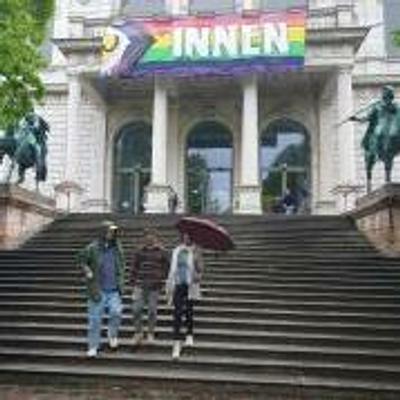
 Aktionsplan Bayern Queer
"Jacques Derrida hat 2003 in seinem Buch über Schurken das Paradoxon der Demokratie ausführlich beschrieben.
Demokratische Systeme, so kann man Derrida paraphrasieren, neigen dazu, ihre eigenen Grundlagen – wie Freiheit, Offenheit und Rechtsstaatlichkeit – im Namen des Schutzes eben dieser Grundlagen zu untergraben oder zu zerstören.
Sie können nicht anders, als ihren Anspruch auf Freiheit und Gleichheit auch für diejenigen geltend zu machen, die gegen die Demokratie vorgehen und sie durch ihre Stimme abschaffen würden.
#Derrida spricht in diesem Sinne von „suizidärer Autoimmunität“.
Denn eigentlich müsste die #Demokratie sich gegen die von ihr geduldete Zerstörung ihrer selbst immunisieren, doch genau eine solche Einschränkung widerspräche dem demokratischen Prinzip und würde somit Demokratie gegen sich selbst immunisieren.
Typische Beispiele für diese Autoimmunstörung sind bei Derrida die Einschränkung von #Bürgerrechte'n zur #Terrorismusbekämpfung oder die Aussetzung demokratischer Normen im #Ausnahmezustand."
https://geschichtedergegenwart.ch/demokratische-selbstsorge/
Demokratische Selbstsorge?
Sorge und Selbstsorge sind vieldiskutierte philosophische Konzepte. Sie gesellschaftlich zu ermöglichen, setzt Demokratie voraus. Doch wie steht es um demokratische Selbstsorge und Sorge?
 Michael Gisiger
 Artun Faliro

 slowforward
 Deirdre Anne Hendrick
 Ulrich Plate
 Douglas
 VeganPizza69 ⓋⒶ
 homo hortus