Advances in sulphur-iron autotrophic denitrification research and exploration of its future application in wastewater treatment: A critical review #wastewater #denitrification #nitrification #sulphur #iron https://www.sciencedirect.com/science/article/abs/pii/S0960852425013586

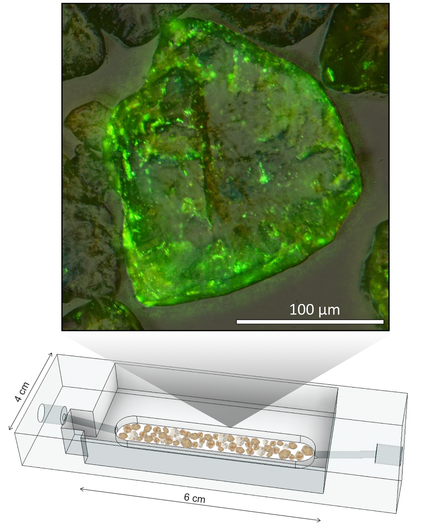
#Denitrification in tiny #anoxic pock­ets on #sand grains could ac­count for 1/3 of total #nitrogen loss in silic­ate shelf sands.

mpi-bremen.de/en/Nitrogen-...

Our newly developed #microfluidic method revealed #microorganisms on sand grains create anoxic microenvironments allowing #denitrification in well-oxygenated sands

Out now in Scientific Reports
@natureportfolio

doi.org/10.1038/s415...

Microbial denitrification responses to elevated CO2 in lake-shore sediments under different flooding conditions. #sediment #denitrification #bacteria https://www.sciencedirect.com/science/article/abs/pii/S0301479725018110

🚨 Not sure if I can take this assignment seriously, but here's my attempt at a truly absurd business idea for #denitrification:

Introducing the "Dino-Nitrate Detox Spa!" 🦕💦 Where customers can relax in our dino-infused water pods while we purify their nitrate-rich blood with the power of #denitrification! 💪🏼 It's like a regular spa, but instead of... (1/2)
#BusinessIdea #Business #Ai #Llm #LlaMA2

Idiotic indeed
0%
This could work
0%
This has been done allready
0%
Poll ended at .
New publication: #Liming enhances the abundance and stability of #nitrogen-cycling #microbes: the buffering effect of long-term lime application. #grassland #nitrification #Nfixation #denitrification #limestone
https://doi.org/10.1007/s00374-025-01889-2
Liming enhances the abundance and stability of nitrogen-cycling microbes: the buffering effect of long-term lime application - Biology and Fertility of Soils

Lime application (liming) has historically been used to ameliorate soil acidity in grasslands. Liming effectively improves soil pH, plant productivity, and soil physicochemical properties, but the long-term impact of acidity control by liming on key microbial nitrogen (N)-cycling genes in semi-natural grasslands is unknown. We investigated the effect of 65 years of liming on N-cycling processes in the limed and control plots of the Ossekampen long-term grassland experiment in the Netherlands. These plots have not received any other fertilizers for 65 years. Soil sampling and nitrous oxide (N2O) emission measurements were conducted three times in spring and four times in summer, and quantitative real-time PCR was performed to determine the absolute abundances of N-cycling genes, including ammonia-oxidation (amoA-AOB, amoA-AOA, amoA-comammox), denitrification (nirS, nirK, nosZ), nitrate ammonification (nrfA), and N-fixation (nifH) genes. Long-term liming increased the absolute abundances of nitrifiers, denitrifiers, and nitrate ammonifiers. Soil N2O emissions did not differ significantly between liming and control treatments. Additionally, liming had a buffering effect that maintained the population of N-cycling microbes against seasonal variations in abundance. Our results indicate that improving soil acidity through liming potentially facilitates microbial N-cycling processes without increasing N2O emissions.

SpringerLink

Scientists discover more #mitochondria-like #symbionts with surprising metabolic capacities https://phys.org/news/2024-12-scientists-mitochondria-symbionts-metabolic-capacities.html

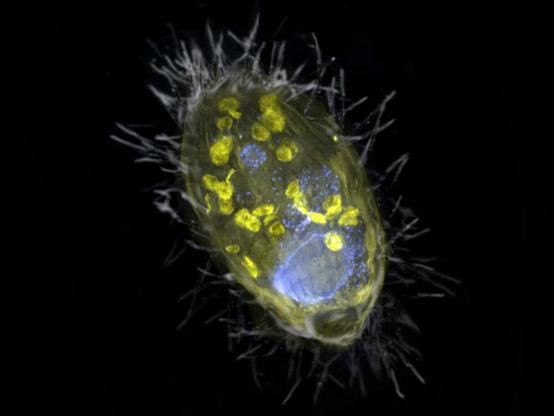
Genetic potential for aerobic respiration and #denitrification in globally distributed respiratory #endosymbionts https://www.nature.com/articles/s41467-024-54047-x

"They found a unique #bacterium that lives inside a ciliate (#protists) and provides it with energy... reminiscent of #mitochondria, with the key difference that the #endosymbiont derives energy from the respiration of nitrate, not oxygen."

Scientists discover more mitochondria-like symbionts with surprising metabolic capacities

In 2021, scientists at the Max Planck Institute for Marine Microbiology in Bremen, Germany, reported an astonishing new form of symbiosis: They found a unique bacterium that lives inside a ciliate—a unicellular eukaryote—and provides it with energy. The symbiont's role is thus strongly reminiscent of mitochondria, with the key difference that the endosymbiont derives energy from the respiration of nitrate, not oxygen.

Phys.org
Reactive Barriers Could Keep Nitrate out of the Atlantic

Microbes in mulch scrub nitrate from groundwater before it flows to the sea.

Eos