
The Largest Solar Telescope In The World Is On Maui - The Carey Adventures
Description: Just down from Haleakal?'s 10,023' summit is a batch of telescopes. Among them is the impressive Daniel K. Inouye Solar Telescope. Completed in 2017, the telescope sits above about 1/3 of the Earth's atmosphere, giving it a great view of the sun's surface. Learn more here: https://nso.edu/telescopes/inouye-solar-telescope/ If you're…
The @ERC_Research Advanced Grants competition results are out. Over €544 million in funding for leading researchers. One of the ERC Advanced Grants has been awarded to Sami Solanki from #MPSGoettingen. Together with his team, he intends to use observations from ESA #SolarOrbiter and #DKIST to answer longstanding questions about the #Sun
https://www.mps.mpg.de/erc-advanced-grant-for-sami-solanki
https://www.mps.mpg.de/7565738


ERC Advanced Grant for Sami Solanki
The European Research Council (ERC) has awarded Prof. Dr. Sami Solanki of the Max Planck Institute for Solar System Research (MPS) one of the prestigious ERC Advanced Grants. Over the next five years, the funding, totaling 2.5 million euros, will make it possible to fundamentally advance and complete our picture of the Sun's magnetic field. To this end, Solanki is relying on a new generation of space missions and solar observatories that are beginning or about to begin operations. The new research infrastructure not only provides data of unprecedented detail and resolution, but also allows access to regions of the Sun that could until now not be observed. Together with computer simulations, this will provide an unprecedentedly comprehensive view of our star. For the current funding period, the European Research Commission received more than 1600 applications for an Advanced Grant. Only 218 of these were approved.
 Daniel Fischer
 Peter West Carey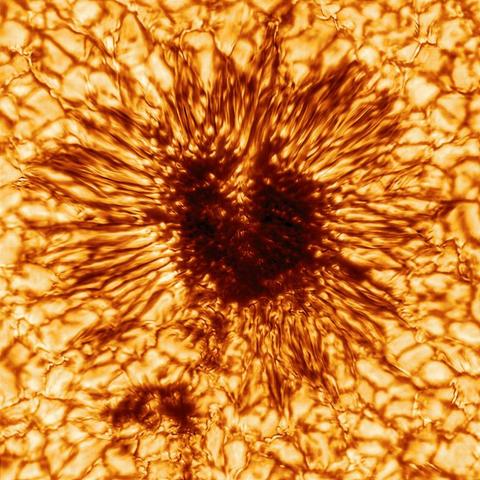
 MPS Göttingen has moved