 DARIAH EU
That's a wrap on #DARIAH2026!
The venue for #DARIAH2027 will be..... Aranjuez, Spain! 🇪🇸
Thank you to all who made this year possible 💙
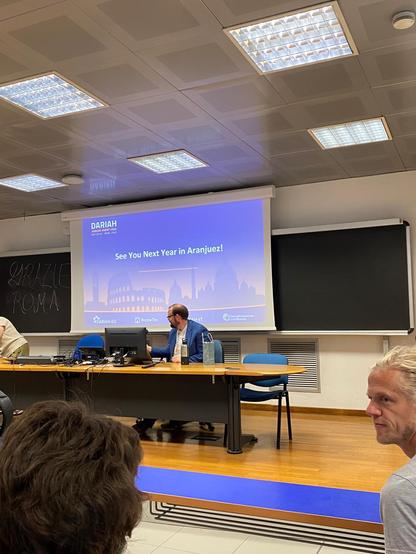
That's a wrap on #DARIAH2026!
The venue for #DARIAH2027 will be..... Aranjuez, Spain! 🇪🇸
Thank you to all who made this year possible 💙
There has been lots of talk about 𝘛𝘳𝘢𝘯𝘴𝘧𝘰𝘳𝘮𝘢𝘵𝘪𝘰𝘯𝘴: 𝘈 𝘋𝘈𝘙𝘐𝘈𝘏 𝘑𝘰𝘶𝘳𝘯𝘢𝘭 this week at #DARIAH2026.... 👀 💎
The third call for contributions to 𝘛𝘳𝘢𝘯𝘴𝘧𝘰𝘳𝘮𝘢𝘵𝘪𝘰𝘯𝘴 invites reflection on the theme of the DARIAH Annual Event: Digital Arts and Humanities with & for Society.
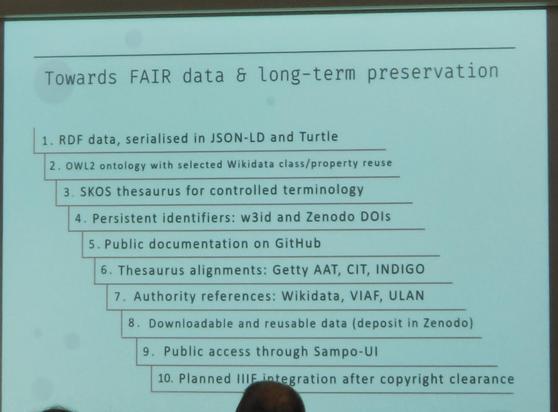
The #Dariah2026 keynote lecture by Andreas Fickers addresses the challenges of a #UI design in #digitalarchives that unduly hides complexity and forces different perspectives into one unified corpus:
https://annualevent.dariah.eu/andreas-fickers-is-the-keynote-speaker-for-annual-event-2026/
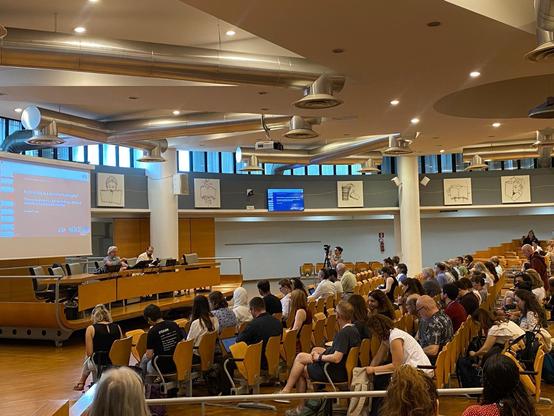
The keynote of #DARIAH2026 has kicked off!
"Multimodality as a means for multivocality? Transmedia storytelling and the challenges of shared authority in digital public humanities" by Andreas Fickers, director of the Luxembourg Centre for Contemporary and Digital History (C²DH), 3rd Interdisciplinary Center at the University of Luxembourg and head of its Digital History Lab.
Our #Dariah2026 presentation on "Digital Archives as a Public Good" is already available on Zenodo:
https://zenodo.org/records/20347224
Our slides outline how we built the #Letters1916 collection as a community-driven digital archive that also engaged volunteers in transcription and data exploration. This project would not have been successful as an online-only endeavour but needed physical events for different audiences, including older women in rural areas.
How can digital archives help societies confront contested pasts without merely replicating traditional historiography? Designing participatory digital commons can be a way to transcend the concept of digital archives as static repositories but make them sites of active, multi-voiced memory. Ideally, digital archives also challenge dominant interpretation frameworks and offer an important counterpoint to extractive (social media) platforms. Our paper explores how the Irish Letters 1916-1923 project, through its infrastructure and ethos, can serve as a model for participatory knowledge infrastructures.
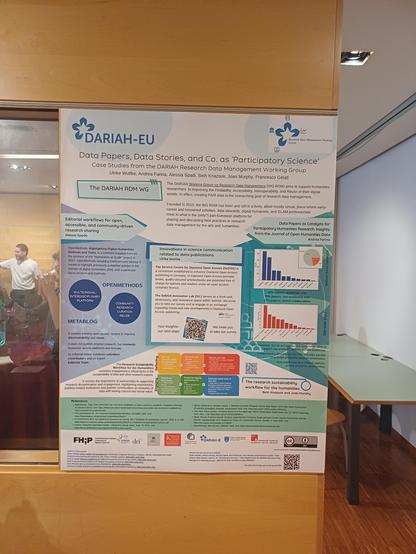
So happy to present with the fantastic DARIAH Working Group the poster "Data Papers, Data Stories, and Co. as ‘Participatory Science’" at the DARIAH-EU Annual Event 2026 at Rome! #DARIAH2026 #SeDOA #diamondopenaccess @sedoa
Ulrike Wuttke, Andrea Farina, Alessia Spadi, Beth Knazook, Joan Murphy, Francesco Gelati
https://www.conftool.net/dariah2026/index.php?page=browseSessions&ismobile=true&form_date=all&form_session=88&skipautoswitch=true
 Nanette Rissler-Pipka
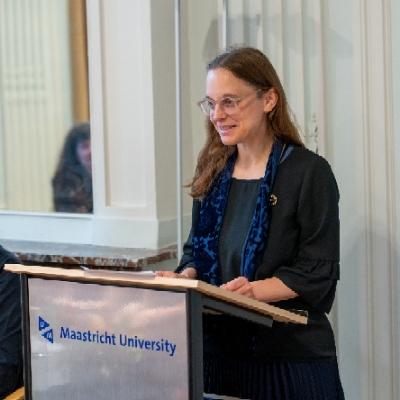 Monika Barget
 Ulrike Wuttke (moderator) 🇺🇦