Proving quantum computers have the edge

Quantum computers promise to outperform today's traditional computers in many areas of science, including chemistry, physics, and cryptography, but proving they will be superior has been challenging. The most well-known problem in which quantum computers are expected to have the edge, a trait physicists call "quantum advantage," involves factoring large numbers, a hard math problem that lies at the root of securing digital information.

Researchers show classical computers can keep up with, and surpass, their quantum counterparts

Quantum computing has been hailed as a technology that can outperform classical computing in both speed and memory usage, potentially opening the way to making predictions of physical phenomena not previously possible.

Phys.org

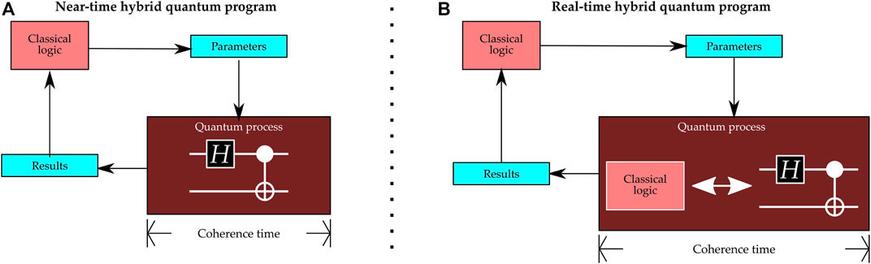
Have you heard of the concept of hybrid computing? It combines both quantum and classical computing, and it's not an either/or situation. The QIR Alliance has been doing some amazing work in this area. Check out their homepage and research article to learn more. #hybridcomputing #quantumcomputing #classicalcomputing

Homepage: https://www.qir-alliance.org/

Research article: https://www.frontiersin.org/articles/10.3389/fphy.2022.940293/full

QIR Alliance

A community effort to develop a forward-looking, fully interoperable specification for quantum programs.

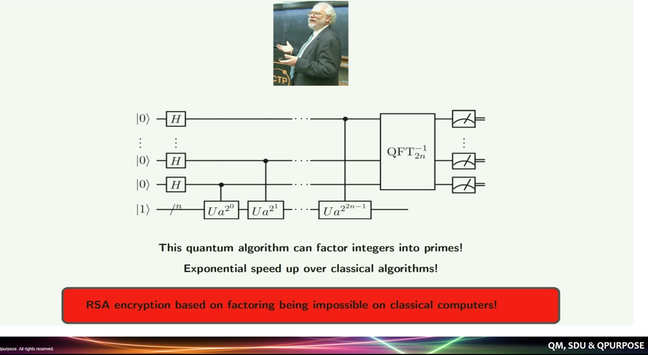
Given the dependence of #ClassicalComputing on #RSA encryption, the pace of development of #QuantumComputing seems like a *very* big problem...

#Encryption

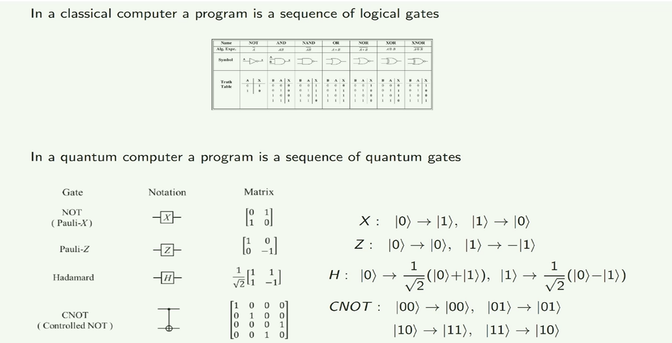
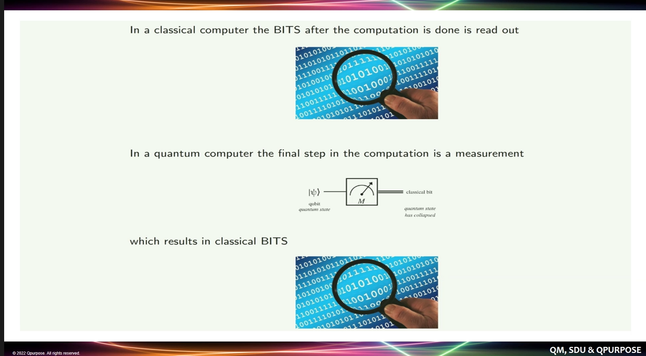
SImilarities and differences between classical and quantum computers

#ClassicalComputing #QuantumComputing