 CRAE
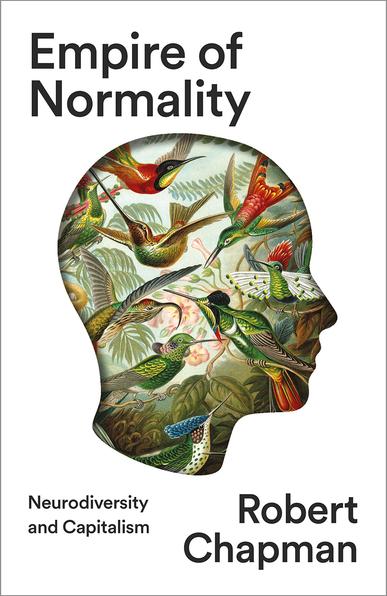
CRAELast week there I saw a couple of copies of Robert Chapman’s Empire of Normality were scudding around the CRAE office (and today I see it at half price).
#CRAEisReading
‘A Lovely Safe Umbrella to Describe Yourself With’ or ‘Meaningless’
…“people are not prejudged and can explain their difference in a way that is suitable to them, if necessary”
#CRAEisReading
Nathan Keates on Improv Comedy for Autistic Adults
”improv classes seem to offer the contrary to the usual imbalanced power dynamics of non-autistic and autistic interpersonal relations”
This Autism Acceptance/Appreciation Month #CRAEisReading two great papers:
Raymaker et al's 2022
[I] don’t wanna just be like a cog in the machine
https://doi.org/10.1177/13623613221080813
2/3
Raymaker et al's 2022
[I] don’t wanna just be like a cog in the machine
https://doi.org/10.1177/13623613221080813
2/3
#CRAEisReading
On this #TDOV we are reading about belonging and power in Transgender and gender diverse autistic adults’ experiences of (un)belonging - Munday, Kapp & Morris (2025)
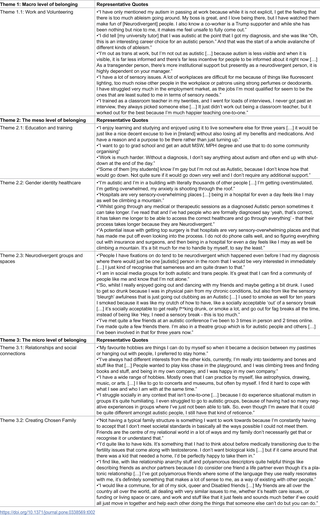
Transgender and gender diverse autistic adults’ experiences of (un)belonging
Introduction Clinical impressions suggest a significant overlap of autistic as well as transgender and gender diverse identities, implying a need for research that explores TGD autistic experiences in greater depth, including experiences of (un)belonging. Methods We shared trans and gender diverse autistic adults’ experiences of belonging and unbelonging to contribute to knowledge around their lived experiences. We present findings from biographical narrative interpretive interviews with thirteen trans and gender diverse autistic people (aged 20–50). We used reflexive thematic analysis to generate themes across three levels of belonging: macro, meso and micro. Analysis within these levels clarified (un)belonging within power dynamics and structures, as well as collective and individual identities. Results Participants discussed their experiences of (un)belonging across three levels: macro, encompassing work and volunteering; meso, including education, gender identity healthcare, and neurodivergent groups and spaces; and micro, including relationships and creating chosen families. Participants faced workplace exclusion and healthcare gatekeeping, often turning to self-employment or community spaces for inclusion. Some found belonging in autistic or queer communities, while others struggled with accessibility and sensory barriers. Conclusion Chosen families and communal living were key sources of affirmation and support for participants, highlighting how belonging for TGD autistic people can be shaped through intersecting structural, social, and interpersonal factors.
#CRAEisReading
Identifying as Autistic Without a Formal Diagnosis: Who Self-Identifies as Autistic and Why?
Trait measures are similar, but the self-id experience seems to be linked to worse MH, probably owing to a lack/hesitancy in access to services.
https://doi.org/10.1177/25739581251409920
Identifying as Autistic Without a Formal Diagnosis: Who Self-Identifies as Autistic and Why?
Trait measures are similar, but the self-id experience seems to be linked to worse MH, probably owing to a lack/hesitancy in access to services.
https://doi.org/10.1177/25739581251409920