 Daily Times - Latest Pakistan News, World, Business, Sports, Lifestyle [Unofficial]
US panel’s hepatitis B vaccine shift sparks backlash
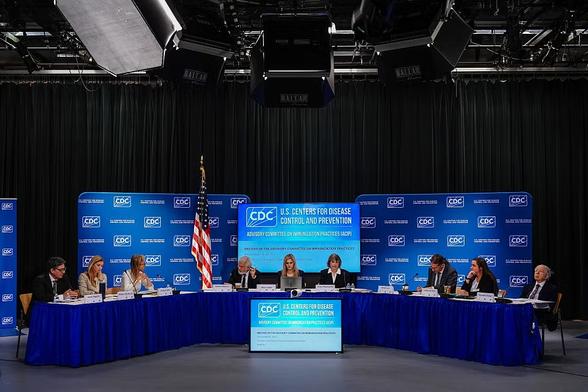
US panel’s hepatitis B vaccine shift sparks backlash
"The pandemic changed everything — especially how outreach teams connect with people experiencing homelessness. 🏙️ Street Care’s latest blog breaks down the CDC guidelines that helped outreach workers stay safe and effective. Read more 👉 https://streetcare.us/blog_street-outreach-and-the-pandemic-cdc-guidelines/
What stood out to you the most? How do you think outreach can be improved in future crises? 💬
#streetoutreach #pandemicresponse #publichealth #CDCguidelines #homelessnesssupport #communityhealth #healthandsafety #frontlineresponse "

Stay informed on the latest CDC and WHO guidelines for pediatric Hepatitis B vaccination. Learn about recommended schedules, dosages, and safety information.
https://mondaldaffodil.wixsite.com/besthealthcaretips/post/latest-cdc-who-pediatric-hepatitis-b-vaccine-guidelines
#HepatitisB #PediatricVaccines #VaccineGuidelines #CDCGuidelines #WHOGuidelines
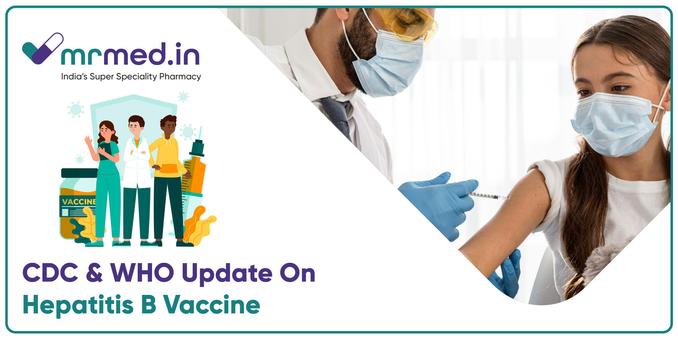

Hepatitis B is a serious liver infection that can affect people of all ages, but it is especially concerning for newborns and young children. To keep children safe, the Centers for Disease Control and Prevention (CDC) and the World Health Organization (WHO) have recently updated their guidelines for the pediatric Hepatitis B vaccine.As a parent or caregiver, you might have several questions: When should my child get vaccinated? Is it safe? What are the risks of not getting the vaccine? Let’s div
COLUMBUS, Ohio (WCMH) — As students head back to school, many parents might not be aware of the latest lice policies issued by the U.S. Centers for Disease Control and Prevention.
The CDC has recently updated its guidelines on how schools and families should handle head lice infestations. One significant change is that students with head lice no longer need to be sent home early from school. Students are now allowed to finish the school day, receive a home lice treatment and return to class as soon as the following morning.
When it comes to the "no-nit" policies of the past the health organization along with the American Academy of Pediatrics and the National Association of School Nurses advocate for discontinuing children to be completely free of nits before returning to school.
Restraint of a student spurs investigation, resignations and community divideThe CDC states that while nits (lice eggs) may remain in the hair after treatment, successful treatment should kill the crawling lice, significantly reducing the risk of transmission.
[🖼 nbc4i.com/wp-content/uploads/s…]Collage showing woman's hair before and after lice treatment, closeup. Adobe Stock.The CDC and the other organizations argue that:
• Many nits are more than a quarter-inch from the scalp, making them unlikely to hatch or become crawling lice.
• Nits bond to hair shafts and are unlikely to transfer to others.
• The burden of missing school days due to nits far outweighs the minimal risk of transmission, especially when the lice have been treated.
• When performed by non-medical professionals, misdiagnosis of nits is common.
Despite these updated guidelines, a recent survey by Nix, a well-known lice treatment brand, revealed that numerous parents are unaware of these changes. The survey, which focused on parents of children ages 5-11, found that:
‘Therapeutic’ space for customers to smash objects coming to Columbus• 66% of parents are unaware that schools are not required to report a lice outbreak.
• 58% of parents reported that their children have had lice before, and surprisingly, one in four of these parents admitted to knowingly sending their child to school with lice.
• 28% of parents chose to keep their child's lice infestation a secret.
The CDC listed these symptoms on its website:
• A tickling feeling or a sensation of something moving in the hair
• Irritability and sleeplessness
• Sores on the head caused by scratching, which can sometimes become infected with bacteria normally found on your skin
Additionally, these steps were listed to help prevent and control the spread of head lice:
• Avoid head-to-head (hair-to-hair) contact during play and other activities at home, school, and elsewhere (sports activities, playground, slumber parties, camp).
• Do not share clothing such as hats, scarves, coats, sports uniforms, hair ribbons, or barrettes.
• Do not share combs, brushes, or towels. Disinfect combs and brushes used by an infested person by soaking them in hot water (at least 130°F) for 5 – 10 minutes.
• Do not lie on beds, couches, pillows, carpets, or stuffed animals that have recently been in contact with someone infested with head lice.
• Machine wash and dry clothing, towels, bed linens, and other items that a person infested with lice wore or used two days before treatment. Use the hot water (130°F) laundry cycle and the high heat drying cycle. If you can't wash or dry clean items, seal them in a plastic bag and store them for two weeks.
• Vacuum the floor and furniture, particularly where the infested person sat or lay. However, spending much time and money on housecleaning activities is not necessary to avoid reinfestation by lice or nits that may have fallen off the head or crawled onto furniture or clothing.
• Do not use fumigant sprays or fog; they are not necessary to control head lice and can be toxic if inhaled or absorbed through the skin.
The CDC suggests treating lice infestations with both over-the-counter and prescription medications.
In addition, the CDC recommends treating all respiratory illnesses the same.
#Coronavirus #HealthScience #Healthcare #News #Cdc #CDCGuidelines #COVID
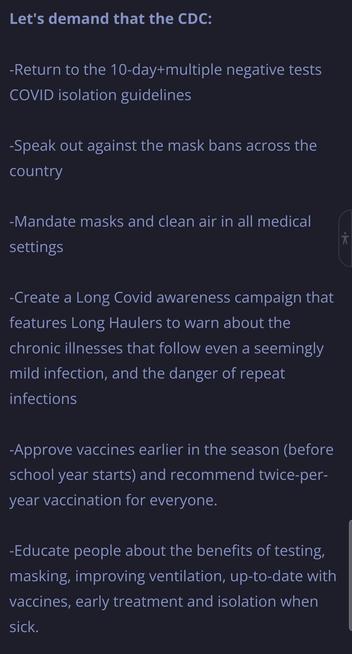
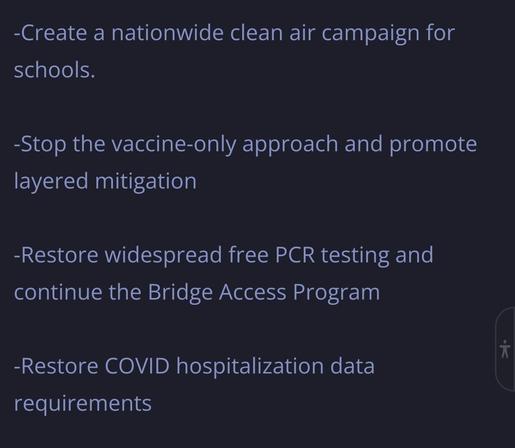
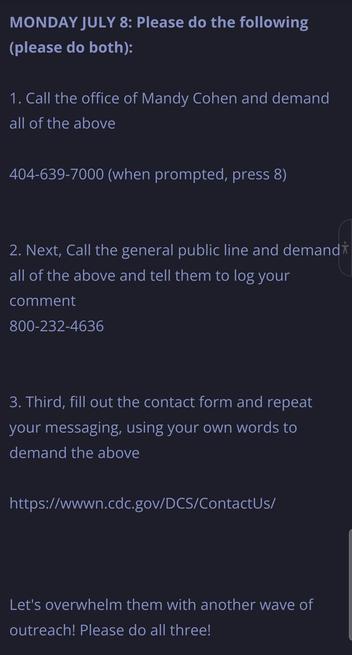
Sign the petition and tell the CDC and your state's officials to maintain or lengthen their current isolation policy → https://actionnetwork.org/letters/state-isolation-policies
#CDCGuidelines #COVID19Precaution #Immunocompromised #PublicHealth #COVID19 #Isolation #CDC

California's recent COVID-19 isolation policy change, which allows asymptomatic people to not isolate at all and symptomatic people to isolate only until fever-free for 24 hours and their symptoms are improving, is actually based on Oregon's bad isolation policy that the state put in place last May. Now, Oregon says that they have met with six other states and the CDC to promote their isolation policy, and that they will meet with Washington state at the end of January. These policies are dangerous, anti-science, anti-public health, and discriminatory. Despite California's and Oregon's claims, COVID-19 continues to strongly impact people, and there is no lasting immunity. Most people remain infectious with COVID-19 for more than five days, and an isolation period longer than five days, not significantly less as CA and OR have done, is scientifically needed. California has changed the definition of "infectious period" for asymptomatic people to "there is no infectious period for the purpose of isolation or exclusion," although asymptomatic people are also infectious, and reduced the isolation period for symptomatic cases, which reduces state employee protections. Using a symptoms-based approach does not work with a virus like COVID-19 where it's known to have a large number of people who are asymptomatic yet infectious. Disabled people, people of color, older individuals, and everyone who is high-risk have an equal right to access public spaces without an increased risk of severe outcomes. This policy will also lead to far increased rates of Long COVID. Oregon and California are currently shirking their responsibility to public health and equal rights under the law; tell your state that you expect they not do the same. This letter will allow you to write specifically to the officials in your state, as well as to officials at the CDC. Additionally, you can also use this link to write to California's officials and this link to write to Oregon's officials asking them to remove their harmful policies and reinstate a longer isolation policy.
The importance of ongoing risk assessment in HIV screening
#HIVtesting #patientcare #riskassessment #CDCguidelines
Maranda C. Ward is a clinical research assistant professor.
https://youtube.com/shorts/k2TekwZSMng
Listen here: https://kevinmd.com/podcast

 StreetCare
 MrMed : Online Pharmacy
 Columbus - Feeds
 Aftab Alam
 Just Your Luck, You'll Survive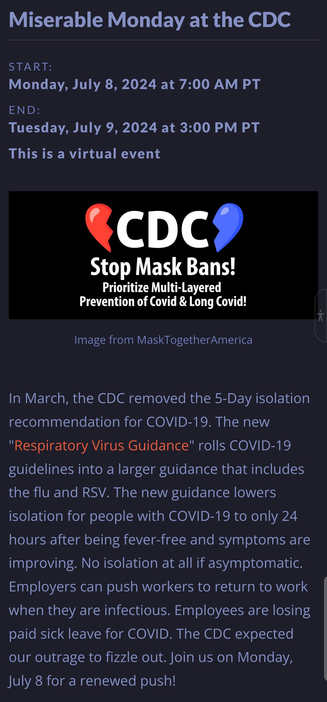
 Houston Public Media
 WHN
WHN Kevin Pho, MD