#CAIStoRead📚: Our former #CAISfellow Javier Toscano has written 2 great articles on "the #algorithm". The 1st article, published in Lo Sguardo, looks at the "Intentionalities of the Algorithm: Historical Practices and Socio-Computing Infrastructures".
http://www.losguardo.net/wp-content/uploads/2023/04/2022-34-Algoritmo.pdf
Asking "But seriously: what do algorithms want?", the 2nd article attempts to define an algorithm in a broad sense as a cultural activity of key importance to make sense of socio-cognitive structures.
https://zfn.edu.pl/index.php/zfn/article/view/596
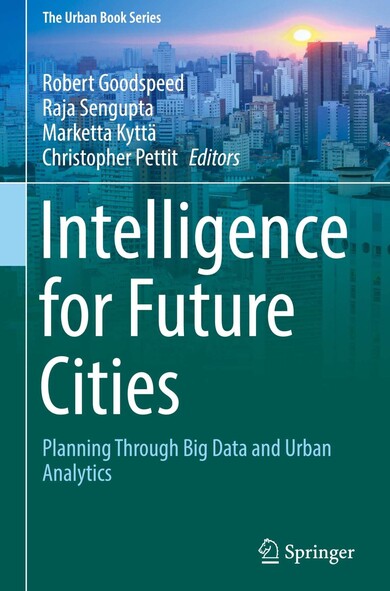
#CAIStoRead📚:In the new book "Intelligence for Future Cities"🏙️, our postdoc Mennatullah Hendawy & I.F.K. da Silva explore "Hybrid Smartness: Seeking a Balance Between Top-Down and Bottom-Up Smart City Approaches" in the 2nd chapter. #SmartCity https://link.springer.com/chapter/10.1007/978-3-031-31746-0_2
Hybrid Smartness: Seeking a Balance Between Top-Down and Bottom-Up Smart City Approaches

The idea of smart citiesSmart City has been the subject of a range of views in recent years. A review of the terms and concepts around the “smart city” reveals three distinct ways of making urban development “smart”: a techno-centric approach...

SpringerLink
#CAIStoRead: A new paper by Dennis Zyska, Nils Dycke, Jan Buchmann, Ilia Kuznetsov, and our former #CAISfellow Iryna Gurevych introduces "CARE: Collaborative AI-Assisted Reading Environment". The study in the paper was conducted during Iryna's fellowship.
https://aclanthology.org/2023.acl-demo.28.pdf

#CAIStoRead📚
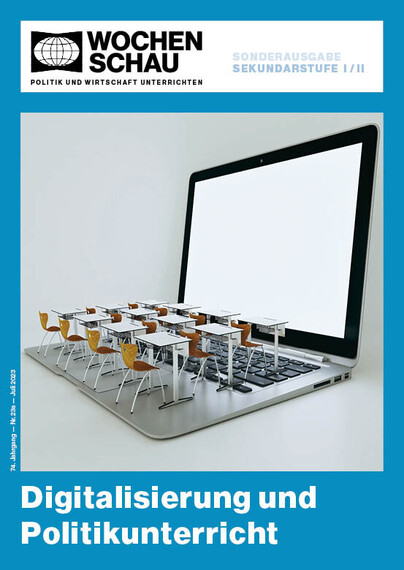
In der neuen Sonderausgabe "#Digitalisierung und #Politikunterricht" des Wochenschau Verlags gibt es gleich 2 Essays aus unserem #TeamCAIS:
"Politische Bildung in der 'algorithmischen Sozialmaschine' und die neue digitale Aufklärung"
von unserem ehemaligen #CAISfellow Harald Gapski

und

"Das (digitale) Leben ist eine Baustelle. Ein Zwischenruf zum Stand der digitalen politischen Bildung in Deutschland" von unserem Forschungsprofessor Christoph Bieber.
👇
https://www.wochenschau-verlag.de/Digitalisierung-und-Politikunterricht/23s

Digitalisierung und Politikunterricht | Print | 23s

Was bedeutet Digitalisierung für die politische Bildung und den Politikunterricht? Die vorliegende Sonderausgabe Digitalisierung widmet sich – auch in kritischer Perspektive – den verschiedenen Ebenen von Digitalisierung und geht schließlich konzeptionel…

Wochenschau Verlag

📚#CAIStoRead: Unsere Josephine B. Schmitt hat für einen neuen Tagungsband den Beitrag "Ein audiovisueller Blick in die Geschichte der Demokratie" geschrieben. Es geht um die Herausforderungen & Chancen von Webvideos in der politischen Bildungsarbeit.
Der Tagungsband entstand im Nachgang zu der Tagung "Die Revolution 1948/49 - Wie nach 175 Jahren den Meilenstein der Demokratiegeschichte vermitteln?".
https://revolution-1848.de/wp-content/uploads/tagungsband.pdf

Alle Vorträge der Tagung im Video:
https://revolution-1848.de/mitmachen/1899/

#CAIStoRead📚
New conference proceedings: our visiting scholar Tetiana Gorokhova participated in the International Scientific and Practical Conference "Reforming international economic relations and the world economy in modern conditions" in March and writes here about the "Challenges and Perspectives for the Development of the Circular Economy in Ukraine. EU Experience". 👇
https://doi.org/10.36059/978-966-397-295-4-38
PDF view of the file omptestuser, 40.pdf

#CAIStoRead📚🤓: In the new open acces book "The Power of Peer Learning", Prof. Dr. Nikol Rummel & Dr. Sebastian Strauß from our #EdTech and #AI research program wrote a chapter on "Feed-Back About the Collaboration Process from a Group Awareness Tool."
https://link.springer.com/chapter/10.1007/978-3-031-29411-2_9

We also recommend a Frontiers article written by Nikol Rummel, Sebastian Strauß and Anouschka Van Leeuwen on the "Participatory design of teacher dashboards,"
https://www.frontiersin.org/articles/10.3389/frai.2023.1039739/full

Feed-Back About the Collaboration Process from a Group Awareness Tool. Potential Boundary Conditions for Effective Regulation

During collaborative learning the learners of a group need to monitor and regulate their interaction processes which requires collecting feed-back about past interaction and using it to adapt the collaboration. In this chapter, we argue that group awareness tools...

SpringerLink