Electroscincus zedi: Compound Osteoderms preserved in #Amber reveal the Oldest Known Skink https://novataxa.blogspot.com/2024/07/electroscincus.html

"#Scincidae is one of the most species-rich and cosmopolitan clades of squamate #reptiles. Abundant disarticulated #fossil material has also been attributed to this group, however, no complete pre-#Cenozoic crown-scincid specimens have been found. A specimen in #Burmite (99 MYA) is the first fossil that can be unambiguously referred to this clade."
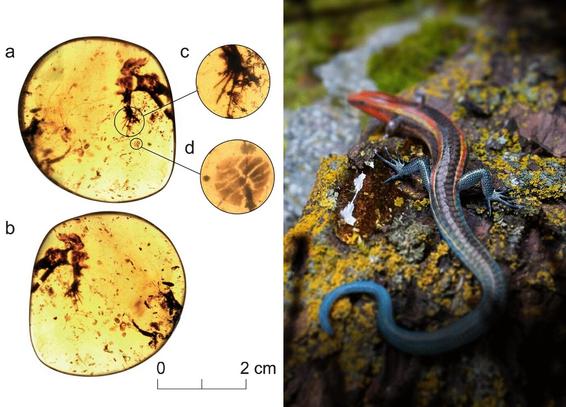
[Paleontology • 2024] <i>Electroscincus zedi </i>• Compound Osteoderms preserved in Amber reveal the Oldest Known Skink

Electroscincus zedi Daza, Stanley, Heinicke, Leah, Doucet, Fenner, Arias, Smith, Peretti, Aung & Bauer, 2024   DOI:  10.1038/s41598-024-6645...

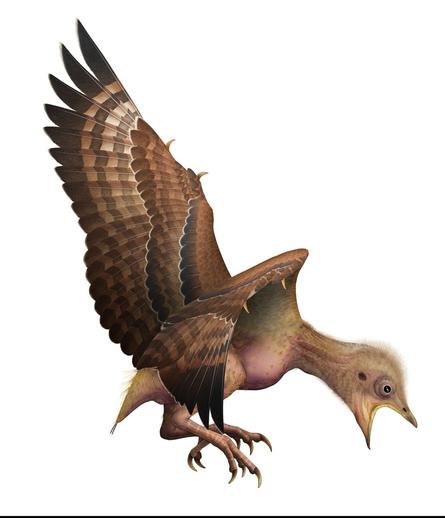
#Fossils reveal how ancient #birds molted, could explain why modern birds survived while other #dinosaurs died https://phys.org/news/2023-07-fossils-reveal-ancient-birds-molted.html

Immature #feathers preserved in #Burmite provide evidence of rapid molting in #enantiornithines: Jingmai O'Connor et al. https://www.sciencedirect.com/science/article/abs/pii/S0195667123001003

"the pressures of being a #precocial baby bird that had to keep itself warm, while undergoing a rapid molt, might have been a factor in the ultimate doom of the Enantiornithines."

Fossils reveal how ancient birds molted, could explain why modern birds survived while other dinosaurs died

Every bird you've ever seen—every robin, every pigeon, every penguin at the zoo—is a living dinosaur. Birds are the only group of dinosaurs that survived the asteroid-induced mass extinction 66 million years ago. But not all the birds alive at the time made it. Why the ancestors of modern birds lived while so many of their relatives died has been a mystery that paleontologists have been trying to solve for decades. Two new studies point to one possible factor: the differences between how modern birds and their ancient cousins molt their feathers.

Phys.org