'Sustainable Giant-Sites?: Resilience and Continuance in Large Low-Occupation-Density Settlements' - an article published by #Brepols in the Journal of Urban Archaeology (JUA) on #ScienceOpen.
📄🔗 https://www.scienceopen.com/document?vid=3402d118-4c43-4f63-ae37-2d3befa4e355
#UrbanArchaeology #GiantSites #LowDensityUrbanism #Sustainability
Sustainable Giant-Sites?: Resilience and Continuance in Large Low-Occupation-Density Settlements
<p xmlns:xsi="http://www.w3.org/2001/XMLSchema-instance" class="first" dir="auto" id="d3099e55">Most large low-occupation-density settlements (LLODS) in the size range up to around
100 km
<sup>2</sup> were enlarged versions of local settlement forms with deep ancestry in both their
own cultures and in broader, more sustained transcultural interaction networks. They
rarely outlasted their culture systems and did not usually reappear in successive
cultures in the same region. They were dependent on the sustainability of the regional
systems which produced them and tended not to outlast changes which impacted on their
baseline capacities. Under very specific circumstances a few LLODS, however, continued
to grow and transform by adapting their operational parameters to accommodate larger
regional shifts. They played distinctly different long-term roles from conventional
compact urbanism and did not apparently lead to sustainable transformations which
produced the large agrarian urban low-density settlements.
</p>
'Were the Oppida Sustainable? Examining the Persistence and Provisioning of Late Iron Age Agglomerations in Temperate Europe' - an article published by #Brepols in the Journal of Urban Archaeology (JUA) on #ScienceOpen.
📄🔗 https://www.scienceopen.com/document?vid=550a3d54-622c-476f-a190-9c70db9888f7
#UrbanArchaeology #Oppida #Sustainability #IronAge
Were the <i>Oppida</i> Sustainable? Examining the Persistence and Provisioning of Late Iron Age Agglomerations in Temperate Europe
<p xmlns:xsi="http://www.w3.org/2001/XMLSchema-instance" class="first" dir="auto" id="d3772e66">During the last two centuries
<span style="font-variant: small-caps">bc</span>, large fortified settlements known as
<i>oppida </i>developed across extensive parts of temperate Europe, from France to Hungary and from
Spain to Britain. Due to their significant size and socio-economic roles, the
<i>oppida </i>— or at least most of them — have traditionally been identified as the first towns
of pre-Roman temperate Europe. However, research over the last few decades has shown
that urban centres had already developed earlier in the Iron Age, both in the form
of fortified sites (the so-called ‘princely seats’) and open agglomerations. Some
authors have argued that the
<i>oppida </i>represented a ‘wrong step’ towards urbanization that surpassed the economic potential
of Late Iron Age societies, making these settlements destined to fail. Others, contrastingly,
envisage the
<i>oppida </i>as the culmination of urbanization trajectories in the Iron Age. In this article,
we review the question of the sustainability of the
<i>oppida </i>focusing particularly on settlement persistence (i.e. how long did the
<i>oppida </i>last) and the provisioning of these centres with foodstuffs and other goods. General
reflections are combined with references to selected case studies from Western and
Central Europe, challenging some previous notions but also highlighting gaps in our
knowledge.
</p>
The Journal of Urban Archaeology (JUA) is the first dedicated scholarly journal to recognize #UrbanArchaeology as a field within its own right. 🏺🏙️ #Brepols
Discover the Collection on #ScienceOpen ⤵️
https://www.scienceopen.com/collection/Brepols_JUA

Journal of Urban Archaeology
<p>The <em>Journal of Urban Archaeology</em> is the first dedicated scholarly journal to recognise urban archaeology as a field within its own right. Published by Brepols.</p>
nice! The Neulateinisches Jahrbuch is now on #Brepols online: https://www.brepolsonline.net/loi/neulat
It's closed access, unfortunately, but at least the articles have a DOI now and the metadata can be retrieved online.
@neolatin cc @digneolatin
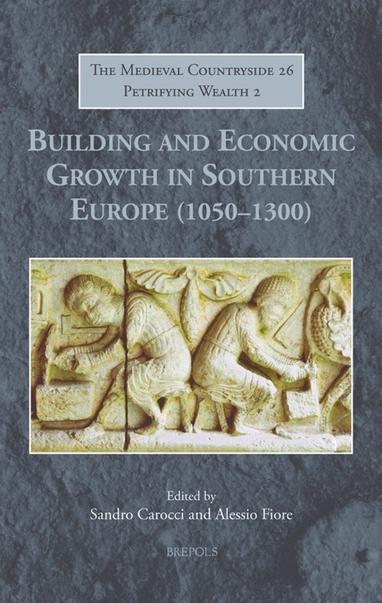
Primer volumen de la serie Petrifying Wealth en la editorial #Brepols:
Building and Economic Growth in Southern Europe (1050–1300). Editado por Sandro Carocci y Alessio Fiore: https://www.brepolsonline.net/action/showBook?doi=10.1484%2FM.TMC-EB.5.132952 #OpenAccess
Das #Neulateinische Jahrbuch erscheint ab nächstem Jahr bei #Brepols: https://www.brepols.net/series/NEULAT
Es wird nun erstmals auch eine digitale Version geben.
@digneolatin @neolatin
Brepols - Series - Neulateinisches Jahrbuch
Brepols is an international academic publisher of works in the humanities, with a particular focus in history, archaeology, history of the arts, language and literature, and critical editions of historical sources
 ScienceOpen
 La Science, CQFD
 Alexander Winkler
 FID Romanistik