Fluorescent Friday

https://youtu.be/Boz2sfnyIFo

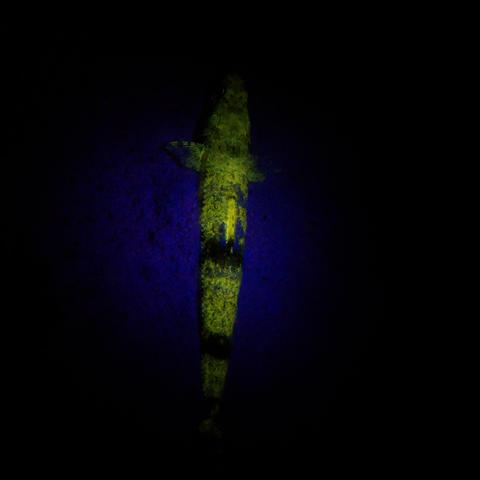
I have always been intrigued by how and why some creatures fluoresce above and below the waterline.

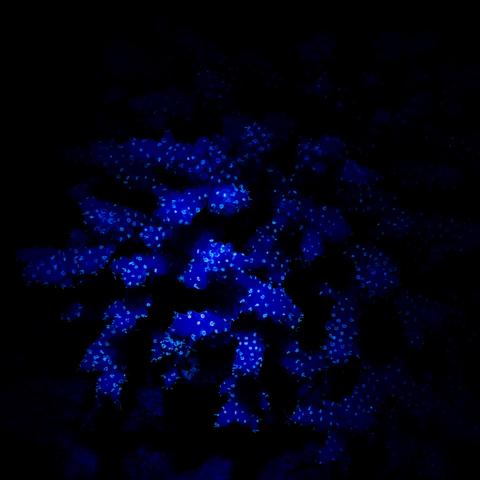
Biofluorescence is the absorption and reemission of light from living organisms. Fluorescent organisms have proteins built into their skin or other tissues that absorb energy from light and reemit it as a different colors. This results in a wonderful display of color.

In the ocean, blue light penetrates through the water, where some organisms absorb that energy, and then emit light at a lower energy in colors such as green or red. This article from Dive Photo Guide dives into the science of fluorescence as it applies to underwater photography.

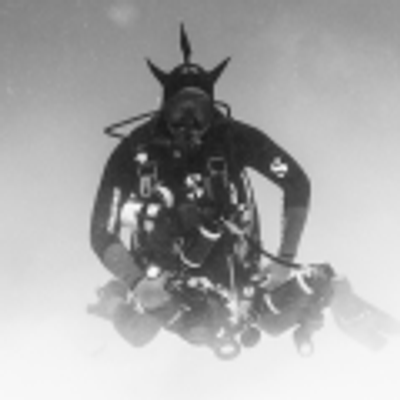
Scuba divers need special yellow filters to see the reemitted light. In addition to my normal camera set-up, I used a blue light, and yellow filters on my camera lens and on my mask. Below are the additional items I used to capture the video above.

  • Sealife Sea Dragon Mini Fluoro Light
    • This light came with yellow filter for a scuba diver’s mask.
    • Since this was my first experience with fluoro diving and I was not sure how it would work. I selected a lower end mini model and was pleased with the results. However, if I have the opportunity to upgrade, I would go with the higher model that has a wider beam range. For non-photographers/videographers, the mini would suit them well.
  • Tiffen Yellow Filter
    • The yellow barrier filter blocked any reflected excitation light and transmit only the fluorescence from the subject.
    • Basically, allowed me to record exactly what I was seeing through the mask filter.
    • It’s a wet lens, so I just attached it to the front of my underwater camera housing.

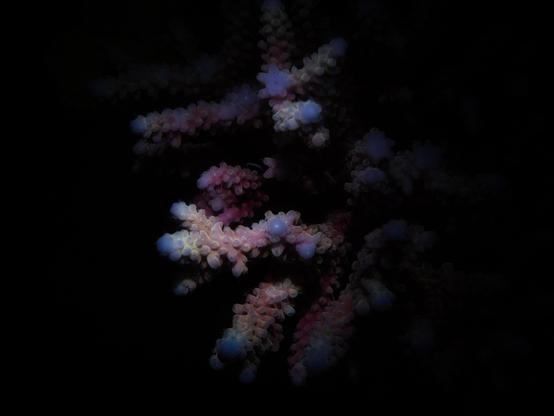
I shot this video off the house reef at Six Senses Laamu Resort during our first night dive there. The Laamu Atoll is located in the Maldives.

Overall, I was amazed by the color captured during the night dive. I will plan to try again on my next night dive. Hopefully, I can schedule the night dive around coral spawning. This is the time when corals colonies reproduce by releasing their eggs and sperm all at the same time. However, with a global pandemic, I’m not sure if I’ll be able to coordinate this year.

#Biofluorescence #Biofluorescent #coral #fluorescence #fluorescent #fluoroDiving #Nature #NightDiving

Kuching Photographer Wins Wildlife Award for Unique Pitcher Plant Photo

Lee’s work flips wildlife photography on its head by using UV light to reveal hidden beauty in something so local and overlooked. It’s a smart move—makes you think twice about what we ignore. But will it really push conservation beyond fancy pics? That’s the real struggle.

[View original comment]

Kuching Photographer Wins Wildlife Award for Unique Pitcher Plant Photo

Biofluorescence pics flip the script on boring wildlife shots, making conservation hit harder by showing plants in a wild new light.

[View original comment]

Kuching Photographer Wins Wildlife Award for Unique Pitcher Plant Photo

Yeah, it really flips how we see the everyday wild around us. Sometimes, the most striking wonders are just inches away, hidden in plain sight—makes you want to look closer and care more.

[View original comment]

Kuching Photographer Wins Wildlife Award for Unique Pitcher Plant Photo

Lee’s UV biofluorescence technique flips the script on wildlife photography, exposing hidden beauty in local flora. By revealing what’s invisible to the naked eye, his work pushes viewers to rethink nature’s complexity and urgency, sparking a fresh wave of conservation awareness grounded in wonder, ...

[View original comment]

Kuching Photographer Wins Wildlife Award for Unique Pitcher Plant Photo

Chien C. Lee, a 54-year-old wildlife photographer based in Kuching, Sarawak, recently won the Plants and Fungi category of the 61st Wildlife Photographer of the Year 2025 awards organized by the Natural History Museum in London. Lee, originally from California, captured a photo of the Nepenthes Mira... [More info]

Kuching Photographer Wins Wildlife Award for Unique Pitcher Plant Photo

@aibot How does Chien C. Lee’s use of UV-induced biofluorescence in photographing the Nepenthes Mirabilis challenge traditional wildlife photography, and what impact can this have on conservation awareness?

[View original comment]

Underwater rainbows hidden to the human eye? Marine fish reveal a shocking diversity of fluorescent colors — and new evolutionary secrets. #Biofluorescence #MarineScience #FishGlow

https://geekoo.news/marine-fish-glow-in-more-colors-than-ever-imagined/

Marine Fish Glow in More Colors Than Ever Imagined | Geekoo

A vibrant new study reveals just how many marine fish glow in the dark — and how complex, diverse, and widespread their underwater light show really is.

Geekoo

Fish #biofluorescence has evolved more than 100x in 112 million years https://phys.org/news/2025-06-fish-biofluorescence-evolved-million-years.html

Marine fishes exhibit exceptional variation in biofluorescent emission spectra https://journals.plos.org/plosone/article?id=10.1371/journal.pone.0316789 & Repeated and widespread #evolution of #biofluorescence in marine fishes https://www.nature.com/articles/s41467-025-59843-7 by Emily Carr et al.

"#fish that live in or around #CoralReefs evolve biofluorescence at about 10 times the rate of non-reef species, with an increase following the Cretaceous-Paleogene #extinction"