Made in Hanover 🇩🇪
79kWh 2300kg NL price 2025 €63K
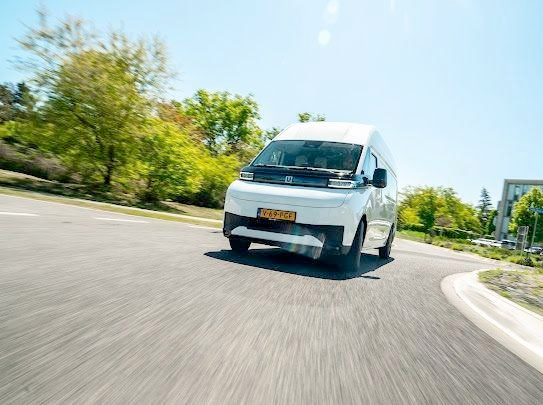
Made in China 🇨🇳
106kWh 2400kg NL price 2026 €69K
steer by wire (!)
cell-to-pack 🔋
#alwaysbecharging
#battchat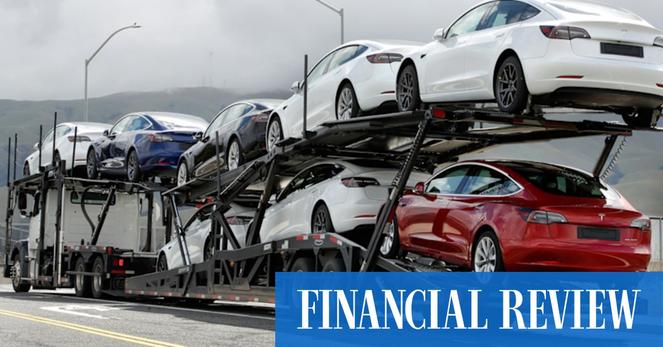
Tesla car sales in Australia slump as battery revenues climb
Profits at the company’s Australian operations, which include home storage batteries and grid-scale energy systems, as well as cars, slumped 19 per cent.
@csis.org (CSISCBE):
"Why are batteries important for technology leadership?
@[email protected] breaks down the key role batteries play throughout the innovation ecosystem as a part of the ongoing CSISEST "Tech Edge" project."
#alwaysbecharging #battchat www.youtube.com/shorts/skcSo...Tech Edge: Why Batteries Matte... 
Tech Edge: Why Batteries Matter for Technology Leadership
A must-follow:
@[email protected]
His Latest Global Cleantech Tracker is staggering:
"🔋 The volumes baffle the mind: China goes big with no less than 110 GWh of manufacturing capacity announced by a single company, EVE Energy (!)"
#alwaysbecharging #battchat
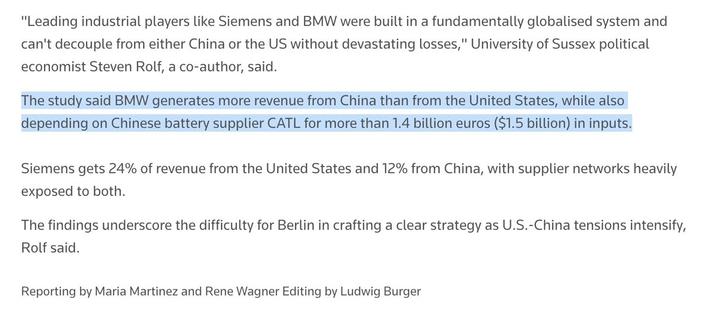
www.linkedin.com/posts/activi..."The study said BMW generates more revenue from China than from the United States, while also depending on Chinese battery supplier CATL for more than 1.4 billion euros ($1.5 billion) in inputs."
⚡️⚡️⚡️
#alwaysbecharging #battchat
www.reuters.com/business/aut...Jesse Peltan:
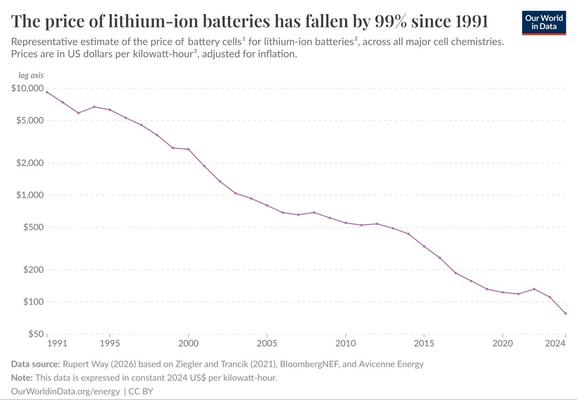
"Lots of “impossible” things suddenly seem inevitable when costs come down by a few orders of magnitude.
This happened with batteries, and people still haven’t realized it."
#battchat #alwaysbecharging nitter.net/JessePeltan/...
RE: https://bsky.app/profile/did:plc:xf53ujprnmfktaxb77fztor6/post/3mhhz4qadnk2h"Koreans are ramping R&D intensity to historic levels and are not under-investing, yet CATL's scale advantage (larger revenue base, profitability, ecosystem) lets it outspend them in absolute terms while spending a lower % of revenue."
#battchat 🔋🔋🔋
www.linkedin.com/posts/christ...Korean battery makers spent mo...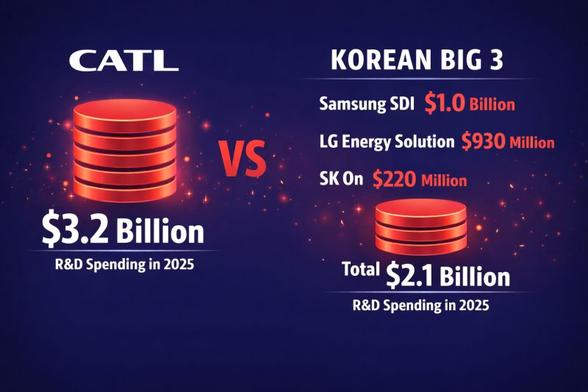
Korean battery makers spent more on R&D than ever in 2025.
CATL still outspent all three combined.
Samsung SDI led the group with KRW 1.42 trillion ($1.0 billion) in R&D.
That equals 10.7% of… | Christopher Chico
Korean battery makers spent more on R&D than ever in 2025.
CATL still outspent all three combined.
Samsung SDI led the group with KRW 1.42 trillion ($1.0 billion) in R&D.
That equals 10.7% of revenue, the highest ratio among Korean makers.
LG Energy Solution invested KRW 1.33 trillion ($930 million).
SK On added KRW 312 billion ($220 million).
The Korean Big 3 totaled KRW 3.06 trillion ($2.1 billion) for the first time.
CATL spent RMB 22.1 billion ($3.2 billion) on R&D in 2025.
Most see record R&D as a sign that the gap is closing, but what really matters is the scale behind the ratio.
The Korean Big 3 generated roughly KRW 44 trillion ($31 billion) in combined revenue.
CATL alone posted RMB 423.7 billion ($61.3 billion).
The Korean Big 3 spent 7.0% of combined revenue on R&D while CATL spent 5.23%.
The results: Higher intensity but lower investments from the Koreans.
At half the revenue, a higher ratio still produces fewer research dollars.
CATL reported RMB 72.2 billion ($10.5 billion) in net profit the same year.
Samsung SDI posted a net loss of KRW 584.9 billion ($409 million).
LG Energy Solution reported net income of KRW 80.8 billion ($57 million).
SK On has not reported a full-year net profit since its spin-off.
Koreans are ramping R&D intensity to historic levels and are not under-investing, yet CATL's scale advantage (larger revenue base, profitability, ecosystem) lets it outspend them in absolute terms while spending a lower % of revenue.
That is what a 2x revenue gap does to an R&D race.
--
Every week, I deliver in-depth analysis of the battery industry to 6100+ professionals: https://lnkd.in/eaBWN6uX
 Felix Hamer • electricfelix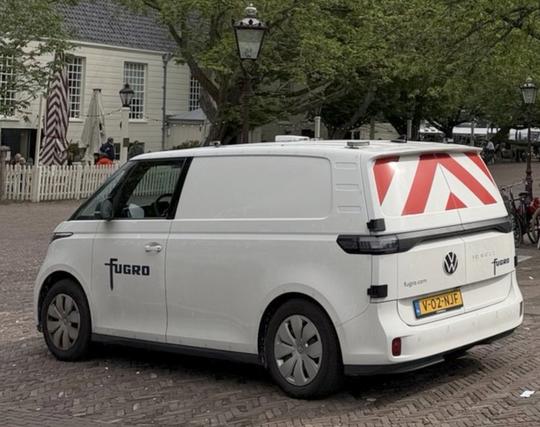

 Well-tarred Flask 🇮🇹🇺🇦🇨🇦