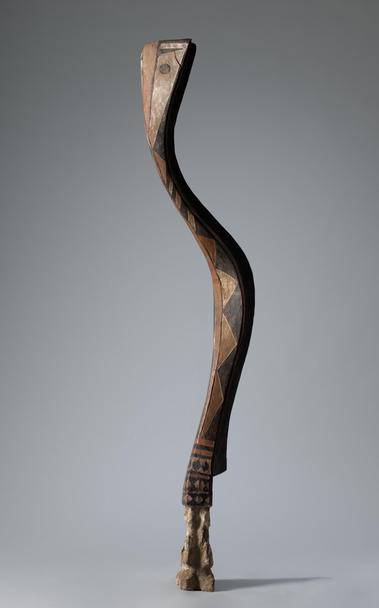
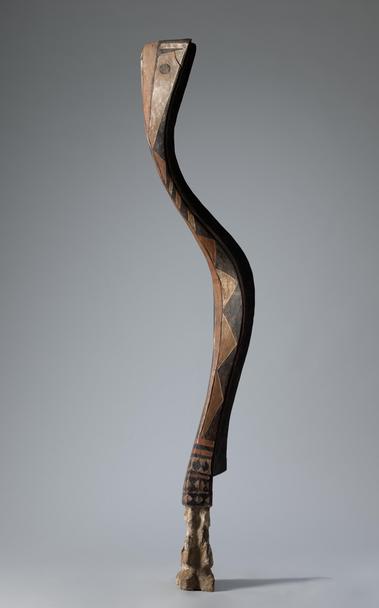
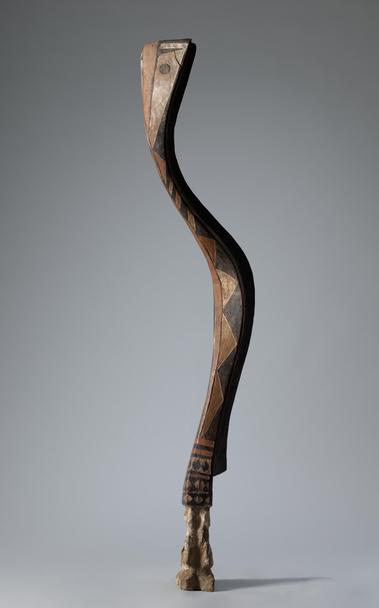
The headdress curves like a living spine, its polished wood catching light in shallow grooves. Labels mar its surface, yet the serpent’s presence lingers in the rhythm of its undulating form—what else does this object hold beyond its documented past?
#BagaArt #AfricanSculpture #ClevelandMuseumofArt
https://clevelandart.org/art/1960.37
The Serpent Headdress exemplifies Baga artistry, merging spiritual significance with rich tradition. Its serpentine form and vibrant patterns highlight deep cultural narratives of life, death, and lineage. What stories do you see reflected in its intricate design?
#BagaArt #ClevelandArt #CulturalHeritagehttps://clevelandart.org/art/1960.37The Serpent Headdress from Baga culture is a stunning blend of artistry and spirituality, embodying the serpent spirit Ninkinanka. Its intricate design and cultural significance reflect deep traditions of life, death, and initiation. How does this resonate with modern artistic expressions?
#BagaArt #ClevelandArt #CulturalHeritagehttps://clevelandart.org/art/1960.37The Serpent Headdress at
#ClevelandMuseumofArt embodies rich Baga traditions, symbolizing the serpent spirit Ninkinanka that brings rain and life. Its intricate design merges function with cultural significance. What stories do you see in this striking piece?
#BagaArt #CulturalHeritage #AfricanArthttps://clevelandart.org/art/1960.37The Serpent Headdress embodies the rich cultural tapestry of the Baga, bridging the spiritual with the societal. Its intricate patterns and symbolism mark the rites of passage through initiation, evoking the cycle of life. How do you see tradition shaping art today?
#BagaArt #ClevelandArt #ArtAndCulturehttps://clevelandart.org/art/1960.37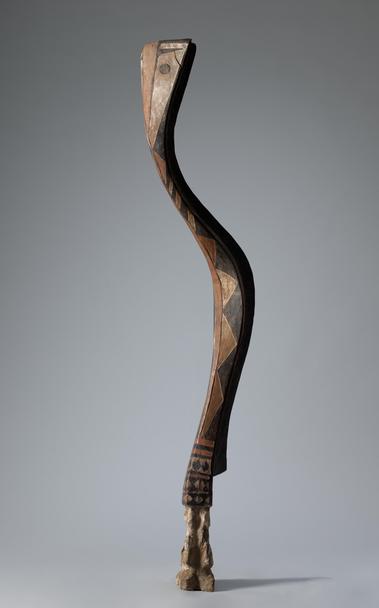

Serpent Headdress | Cleveland Museum of Art
Traditionally, Baga society was ruled by village councils of elders who derived their power from their direct contact with spirit entities through lifelong initiation rituals and the accumulation of secret knowledge. Two different religious orders controlled initiations, providing the context for much Baga art. One was identified as female, the other as male, though only men belonged to both groups. Initiations in each order followed three stages, culminating in the revelation of the highest spirit being. This type of Baga headdress embodied the serpent spirit Ninkinanka, honored for giving rain, bestowing riches, and bringing forth children. The serpent figure would be placed on top of a conical framework of palm branches carried on a male dancer’s head. It appeared at the end of the first level of the initiation for boys and girls or just before the circumcision at the beginning of the boys’ initiation.
Serpent Headdress: a symbol of power & spirituality in Baga society, representing the revered Ninkinanka spirit. What roles do such headdresses play in modern times? 🐍
#ClevelandMuseumofArt #BagaArt #CulturalHeritagehttps://clevelandart.org/art/1960.37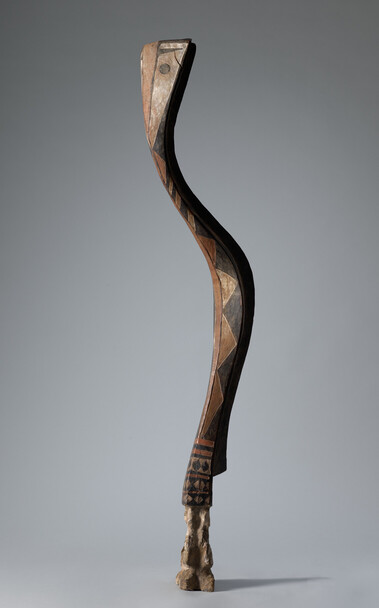
Serpent Headdress | Cleveland Museum of Art
Traditionally, Baga society was ruled by village councils of elders who derived their power from their direct contact with spirit entities through lifelong initiation rituals and the accumulation of secret knowledge. Two different religious orders controlled initiations, providing the context for much Baga art. One was identified as female, the other as male, though only men belonged to both groups. Initiations in each order followed three stages, culminating in the revelation of the highest spirit being. This type of Baga headdress embodied the serpent spirit Ninkinanka, honored for giving rain, bestowing riches, and bringing forth children. The serpent figure would be placed on top of a conical framework of palm branches carried on a male dancer’s head. It appeared at the end of the first level of the initiation for boys and girls or just before the circumcision at the beginning of the boys’ initiation.
 Hidden Gems