🌐 The involvement of the Voices in international bodies, the recognition of the association’s special role, and the expectations it arouses increasingly transcend borders, as evidenced by the Voices’ international activity since September: 🧵

➡ Participation in discussions with the European Commission on how to treat nuclear energy to achieve European climate commitments #Euratom🇪🇺 in Luxembourg

➡ Participation in the World Nuclear Association Symposium 2023 #WNA

➡ Attendance at the Atlantic Council's Nuclear Energy Policy Summit 2023 on the sidelines of #ClimateWeek

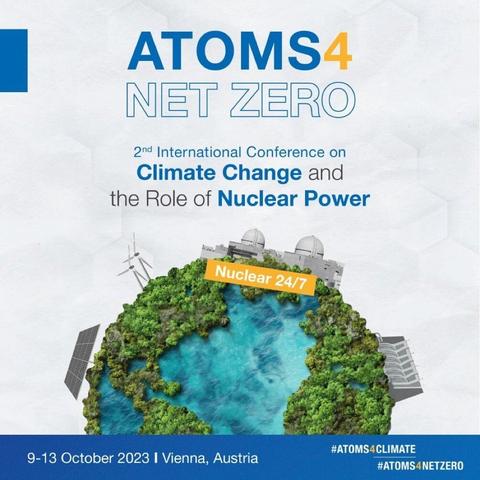
➡ Presentations at the IAEA’s second international conference on the role of nuclear energy in combating global warming #Atoms4NetZero

➡ Participation in the European #SMR (Small Modular Reactor) pre-Partnership meeting

➡ Participation in the European Nuclear Energy Forum 2023 #ENEF, where civil society has traditionally been represented only by anti-nuclear associations.

▶ Coming soon: participation of the Voices as an exhibitor at the World Nuclear Exhibition #WNE in Paris and as an accredited stakeholder at #COP28 including our own events within the blue zone.

Beyond affirming their role within the official bodies of the world nuclear community, the Voices define, formulate, and embody what it means to be an NGO in favour of #nuclear energy.

Neither affiliated with the industry nor against it, but an attentive, rigorous, constructive presence that expresses citizens’ demand to benefit from the unprecedented scientific advance in energy supply represented by nuclear power, under the best possible conditions.

A benevolent counter-power, but a counter-power nonetheless.

💠 Join the association ⤵️
https://voix-du-nucleaire.org/en/become-a-member/

💠 Donate ⤵️
https://www.voix-du-nucleaire.org/en/donate/

#energy #environment #citizencommitment

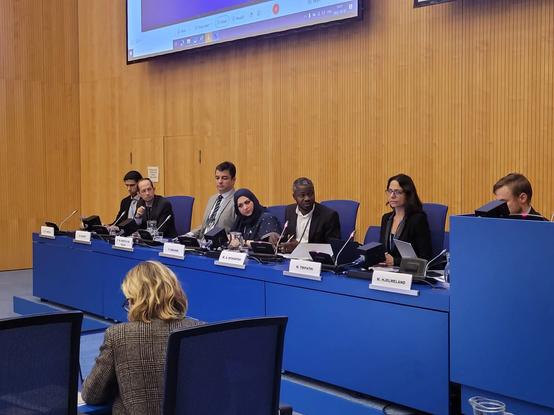
Les Voix du Nucléaire sont cette semaine à la deuxième Conférence internationale sur le rôle du nucléaire pour la préservation du #climat organisée par l’AIEA #Atoms4NetZero. Après la présentation du scénario #TerraWater💠 : une course de relai énergétique, Myrto TRIPATHI intervient aujourd’hui 10 octobre pour présenter la seconde publication des Voix ▶️ "La contribution de la société civile à un traitement juste de l’énergie nucléaire : les leçons du cas français"

Construire avec succès une centrale nucléaire nécessite beaucoup de choses, mais aussi efficace et compétente soit l’industrie qui en est chargée, cela nécessite avant tout une grande volonté politique. Dans les démocraties cette volonté politique ne peut exister que si l’opinion publique la soutient. Et sur un sujet aussi complexe que l’énergie nucléaire, le public se tourne vers les institutions en qui il a confiance pour se forger un avis.

Jusqu’à récemment, dans le domaine de la transition énergétique, ces institutions étaient principalement des ONGs comme Greenpeace, le WWF, et les partis verts. Certains de ces mouvements sont apparus après la Seconde Guerre mondiale et ont pris position contre les armes nucléaires, d’autres au début des années 70 s’opposaient à la technologie, ou ont imputé la consommation de masse à l’abondance énergétique.

Dans de nombreux cas, l’hostilité à l’égard de l’énergie nucléaire est également liée à sa capacité à défier l’hégémonie du charbon, du pétrole et du gaz, mettant en jeu d’importants intérêts publics et privés.

Le succès de ces organisations a été d’engendrer une des plus grandes fausses nouvelles de notre époque : aux yeux du public, les mythes sur l’énergie nucléaire ont été transformés en faits. Une perception tellement imbriquée dans l'opinion et le tissu législatif et réglementaire que l'industrie nucléaire a été prise dans une spirale d’étouffement.

En 2017 il était devenu clair que l’influence des ONG antinucléaires rendait pratiquement impossible la réalisation d’un projet nucléaire dans le monde occidental.

En 2018, à la création de l'association, 86% des français de 18 à 35 ans considéraient l'énergie nucléaire comme une cause majeure du changement climatique. Les médias reflétaient la rhétorique antinucléaire devenue une réalité dans les esprits, et la loi conduisait inexorablement vers la fermeture prématurée d’une part importante du parc nucléaire français.

Cet article, bientôt publié sur notre site, décrit la manière dont les Voix ont participé à renverser cette tendance.

Aujourd’hui l’association, forte de ses 50 000 abonnés réseaux sociaux et newsletter, et 500 membres dont près de la moitié n’ont aucun lien avec l’industrie nucléaire, est devenue un acteur majeur du débat énergétique en France, et de plus en plus en Europe.

L’association a encore de nombreux défis à relever, mais son initiative pour la reconnaissance du #nucléaire dans la transition énergétique fonctionne, et mérite d’être poursuivie, et élargie.

Voices of Nuclear are at the second International Conference on Climate change and the role of Nuclear power #Atoms4NetZero organized by the #IAEA this week, and will present two papers during the sessions 💬

On Tuesday, October 10th, in the Net Zero modelling: integrated energy system modelling scenarios session ▶️ #TERRAWATER💠 ENERGY SCENARIO: AN ENERGY RELAY RACE

On Wednesday, October 11th, in the effective stakeholder engagement strategy session ▶️ CIVIL SOCIETY CONTRIBUTION TO LEVEL THE PLAYING FIELD FOR NUCLEAR ENERGY DEPLOYMENT: LESSONS LEARNED FROM THE FRENCH CASE

Today, France must decide anew what its future energy system will be to achieve #carbonneutrality by 2050, while delivering reliable, low-carbon electricity to everyone, and on what criteria to base its choice.

Voices of Nuclear propose an approach that has been radically missing in the debate: a search for the technical optimum, free from dogma, interests, and presumptions, aiming for optimally achieved #climate protection, minimization of environmental footprint, solidarity at all levels and sovereignty of national energy supply, using energy sources for what they are good at.

We believe the methodology applied and its conclusions may be of interest to France’s neighbors and beyond. First because due to its location and size, the French #electricity system is central to the European interconnected area. Second, because the trajectory envisioned in this scenario is meant to set an example, for hydropower- and nuclear-able countries, of a strategy that works to achieve a carbon-neutral electricity mix while preserving national targets.

This scenario sorts the #energy sources into three categories following what they are best suited for:
🔹 #Nuclear: the concrete-slab like basement, long-term but slower to build, low impact, solid base of production to fulfil the bulk demand for decades to come.
🔹 #Wind and #solar: filling materials, providing quick-to-deploy burst of clean energy to jump start the short-term mass electrification of uses.
🔹 #Hydropower (mainly PSP) and marginally biomass: cement of the grid, providing the storage component essential to stability without fossil fuels, without the need for technological bets.

In this relay race, the TerraWater scenario is designed to avoid traditional energy transition modelling pitfalls, with ambitious objectives, clear criteria, and realistic resources.

It makes the demonstration that positioning nuclear energy at the center of an #energytransition strategy with the right use of renewables gives it its best chances of short-term success and long-term sustainability, combined targets that seem out of reach for most existing scenarios relying heavily on technologies that are either immature or not deployable at scale.

🌐 Link to the TerraWater scenario page ➡️ https://lnkd.in/exaZjWrq

🗎 To download TerraWater documents ➡️ https://lnkd.in/enA-Bkzn

LinkedIn

This link will take you to a page that’s not on LinkedIn

💠 Les Voix du Nucléaire sont présentes cette semaine à la 2ème Conférence Internationale sur le rôle de l'énergie nucléaire pour la préservation du climat #Atoms4NetZero organisée par l'#AIEA, et présenteront dans deux tables rondes ⬇️⬇️⬇️
#énergie #climat #transitionenergetique

https://www.iaea.org/atoms4netzero

Atoms4NetZero | IAEA

Atoms4NetZero is an IAEA initiative that supports efforts by Member States to harness the power of nuclear energy in the transition to net zero. The initiative provides Member States and stakeholders including industry, financial institutions, and international organizations with technical expertise and scientific evidence on the potential of nuclear energy to decarbonize