"3 Reasons Aliens Probably Aren't Visiting Us, According to Science" by @ScienceAlert - So far, science's best guess is the same prohibitive distance, energy and time requirements that prevent us from traveling to other stars, probably also prevents any other life out there from reaching us, if they exist. Any hypothetical civilization advanced enough to do that has no need for anything from Earth, either. Sorry, #DisclosureDay movie fans. https://www.sciencealert.com/3-reasons-aliens-probably-arent-visiting-us-according-to-science #space #astronomy #astrobiology
3 Reasons Aliens Probably Aren't Visiting Us, According to Science

The United States government's recent release of hundreds of previously classified Unidentified Anomalous Phenomena (UAPs) cases spanning the 1940s to the present, along with the new Steven Spielberg movie, Disclosure Day, about extraterrestrial life, has fuelled the idea that aliens are visiting Earth.

ScienceAlert
Oddball exoplanet challenges what it means to be a hot Jupiter

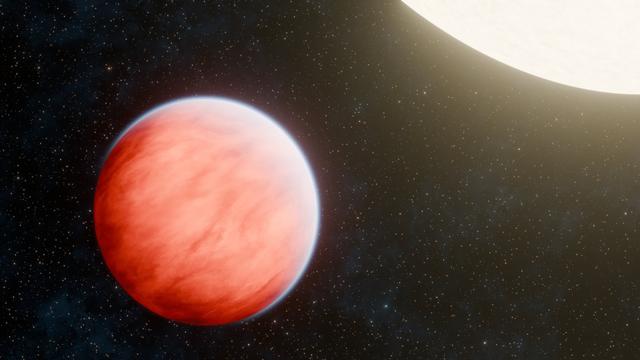
New research led by a scientist at IPAC—a science and data center for astrophysics and planetary science at Caltech—studying the hot Jupiter CoRoT-2 b has settled on one of the three leading hypotheses explaining why its atmosphere has a hot spot in the opposite direction from that seen on all other exoplanets of this type.

Phys.org
NASA's Webb catches exoplanet getting roasted

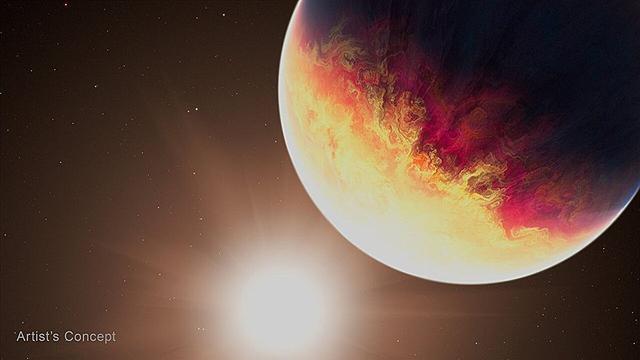
One well-done gas giant, coming right up! That's the latest from researchers analyzing NASA's James Webb Space Telescope observations of HD 80606 b, an exoplanet four times the mass of Jupiter with an extremely elliptical orbit that sweeps close by its sun-like star. The research team is presenting its study and preliminary findings Tuesday at the 248th meeting of the American Astronomical Society (AAS248) in Pasadena, California.

Phys.org

💁🏻‍♀️ TIL: 🛰️❓ #JPL astronomer T. Joseph W. Lazio published a #paper asking a single question: are there alien #artifacts in our solar system?

His conclusion: we have no idea. Our best surveys of the #Moon cover only meters per pixel, most of the #solarsystem is mapped at kilometer scale, and we can't reliably distinguish a dead probe from a random rock.

👉 https://www.universetoday.com/articles/are-alien-probes-hiding-in-our-backyard-a-new-study-says-weve-barely-looked

#astronomy #space #seti #aliens #probes #nasa #astrobiology #mars #asteroids #research

Are Alien Probes Hiding in Our Backyard? A New Study Says We’ve Barely Looked

Even at this early stage in our space faring age, humanity has already begun sending probes that will eventually reach other solar systems, even if that was not their original intention. Five robotic explorers - Pioneer 10 and 11, Voyager 1 and 2, and New Horizons - are all on escape velocities out of the solar system, and might someday enter another one. They will no longer be operational at that point, but they serve as a proof of concept that spacefaring civilizations do indeed build interstellar probes. Which raises the obvious question - has anyone else sent their own robotic explorers to ours? In a recent paper, published in the Proceedings of the IAU Centenary Symposium, astronomer T. Joseph W. Lazio, points out a painful truth - we still have no idea, and our technology will need to get much better if we plan to find out.

Universe Today

The search for extraterrestrial life is somewhat limited by what we can measure and detect. We can detect some organic molecules, which are inconclusive as they can have varied sources, but only life produces diversity.

Link: https://www.nature.com/articles/s41550-026-02864-z

#Astrobiology

💁🏻‍♀️ TIL: 🛰️❓ #JPL astronomer T. Joseph W. Lazio published a #paper asking a single question: are there alien #artifacts in our solar system?

His conclusion: we have no idea. Our best surveys of the #Moon cover only meters per pixel, most of the #solarsystem is mapped at kilometer scale, and we can't reliably distinguish a dead probe from a random rock.

👉 https://www.universetoday.com/articles/are-alien-probes-hiding-in-our-backyard-a-new-study-says-weve-barely-looked

#astronomy #space #seti #aliens #probes #nasa #astrobiology #mars #asteroids #research

Are Alien Probes Hiding in Our Backyard? A New Study Says We’ve Barely Looked

Even at this early stage in our space faring age, humanity has already begun sending probes that will eventually reach other solar systems, even if that was not their original intention. Five robotic explorers - Pioneer 10 and 11, Voyager 1 and 2, and New Horizons - are all on escape velocities out of the solar system, and might someday enter another one. They will no longer be operational at that point, but they serve as a proof of concept that spacefaring civilizations do indeed build interstellar probes. Which raises the obvious question - has anyone else sent their own robotic explorers to ours? In a recent paper, published in the Proceedings of the IAU Centenary Symposium, astronomer T. Joseph W. Lazio, points out a painful truth - we still have no idea, and our technology will need to get much better if we plan to find out.

Universe Today

🚨 We're live in one hour!

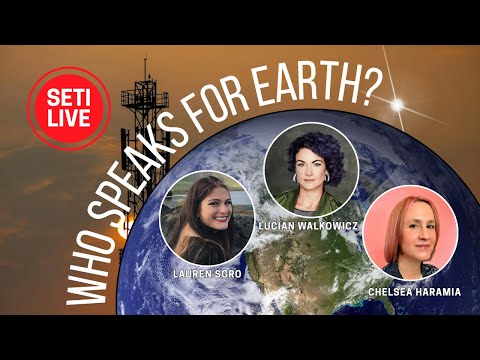
What happens if scientists discover evidence of extraterrestrial intelligence? Who verifies it? Who announces it? And how would humanity respond?

Join Dr. Lauren Sgro, Dr. Lucian Walkowicz, and Dr. Chelsea Haramia as they discuss the newly updated SETI protocols and the launch of the Discovery and Futures Lab.

🖥️ Watch: https://youtube.com/live/38gom_71pUw

#SETILive #SETI #Astrobiology #ScienceCommunication

Humanity's Plan for First Contact: Who Speaks for Earth?

YouTube
New study assesses Titan's resources and their potential uses

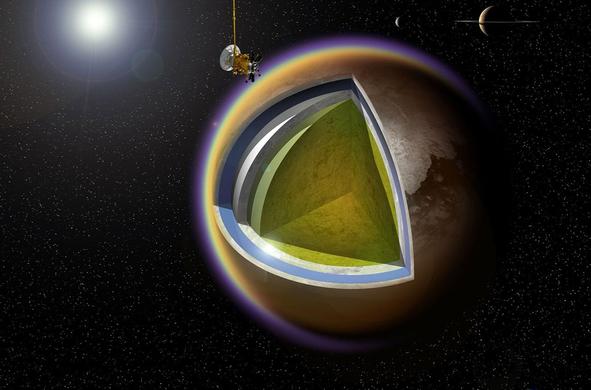
Saturn's largest moon, Titan, is a unique environment in our solar system. It is the only moon (or body beyond Earth) to have a dense, nitrogen-rich atmosphere, and its methane cycle is very similar to Earth's hydrological cycle, in which solid and liquid methane evaporate to form clouds and return to the surface as precipitation. In addition, its prebiotic surface environment and rich organic chemistry make it a prime destination for astrobiology missions, such as NASA's Dragonfly mission (set to launch no earlier than July 2028).

Phys.org
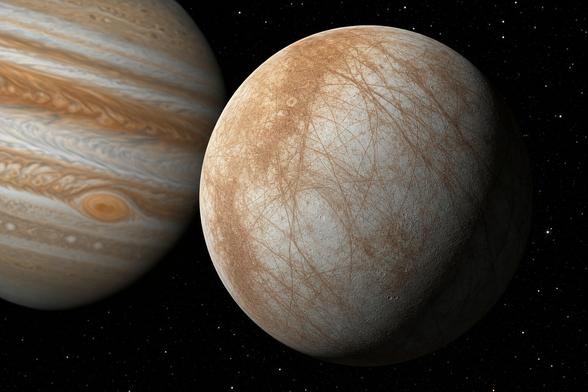
Could Earth have sent life to Jupiter's moon Europa?

Could Earth have seeded Jupiter's moon Europa with bacterial life, where it could have taken hold in Europa's ocean and perhaps evolved into something more? That's the hypothesis of a new paper in the International Journal of Astrobiology by Zaza Osmanov of the Free University of Tbilisi in Georgia.

Phys.org
The best place to look for alien megastructures might be moon dust

Our search for technosignatures—clear signs of advanced civilizations beyond Earth—takes many forms. Many are driven by the famous Drake equation, which attempts to estimate how many technological civilizations there are in the Milky Way. However, there's a big fat question mark at the end of that equation in the form of a variable intended to account for the "longevity" of a civilization. And to be clear, that doesn't mean how long the civilization itself survives. It simply means how long it actively creates a signature that is detectable by our current technology.

Phys.org