#Conservation Success: For the first time an #InvasiveSpecies was completely removed from a large island https://www.indianapoliszoo.com/gcss/blog/conservation-lessons-from-japan/

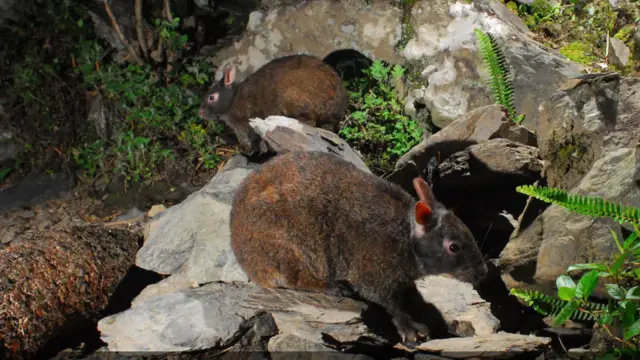
"the Japanese Ministry of the Environment declared the eradication of an invasive species from #Amami-Oshima... The #mongooses attacked the Endangered #AmamiRabbit – a species only found in #Japan and a natural treasure of the country."

Conservation Lessons from Japan

For the first time an invasive species was completely removed from a large island. How did our Japanese colleagues do it? And what does that mean for the rest of the world?

Indianapolis Zoo

Endangered #Amami rabbit disperses seeds for non-photosynthetic plant https://phys.org/news/2023-01-endangered-amami-rabbit-disperses-seeds.html

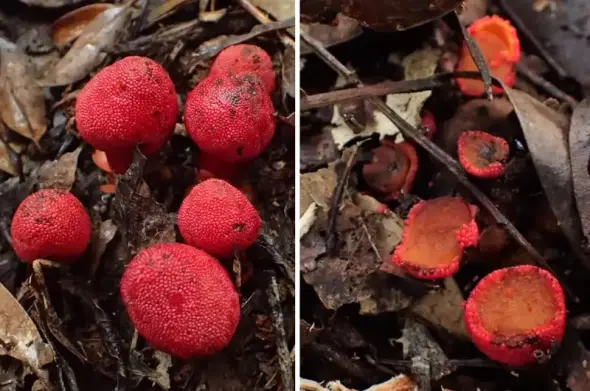
Researchers had previously been puzzled about how the seeds of the #Balanophora #plants, with some of the smallest fruits among angiosperms, were dispersed. B. yuwanensis is a host-specific obligate parasite. Efficient seed transportation likely requires the seed to be deposited near the roots of a host. The #AmamiRabbit may facilitate this through digging, defecating underground in burrows.

Endangered Amami rabbit disperses seeds for non-photosynthetic plant, reveals study

The iconic yet endangered Amami rabbit (Pentalagus furnessi) has been shown to play a key role in seed dispersal for the non-photosynthetic plant Balanophora yuwanensis. This discovery, made by Professor Suetsugu Kenji and graduate student Mr. Hashiwaki Hiromu of Kobe University's Graduate School of Science, sheds light on the previously unknown ecological role of the world's only dark-furred wild rabbit.

Phys.org