3 Reasons to engage in early career networks
There are several early career groups, which are affiliated with cryosphere-based research in one way or another. APECS (Association of Polar Early Career Scientists) is an international network that is present during many occasions and events in the world of polar research. Have you ever wondered why busy early career researchers (ECRs) use their time also for volunteering in such groups? Today, three members from the board of APECS Germany will give you their reasons why. “Learning by doing” – Alexandra (Board member since 2018 and part of the Leadership team since 2021) Every beginning is difficult. So can be the start in a new community when starting a masters or PhD project. I chose to join APECS Germany during my master’s thesis with the aim of finding like-minded people with similar interests for polar regions. Besides learning to code, lab techniques, and scientific writing, a number of soft skills are essential for an academic career. As with many things in life, it’s easier to learn by doing. For me, the work within APECS Germany and the international network provided me a comfortable, fun, and exciting environment. I learnt how to manage projects, how to engage with different groups from school children to senior scientists, how to motivate and lead a group of people, how to host a podcast and many more. The list is long and so are the skills I gained, as well as the memories associated with these projects. Examples are our seminar on fieldwork experiences and opportunities and the resulting resources page as well as the experience to interview guests for the APECS podcast Polar Times (check out this episode or this). In the end, I didn’t even notice how fast I went from being a newbie in 2018 to leading the entire APECS Germany board some years later as board members trusted in the skills I acquired. “Getting instant gratification” – Marek (Board member since 2018 and part of the Leadership team since 2021) During my first years within APECS Germany, I realized at some point that I really enjoy the behind-the-scenes type of work: preparing meetings, conducting internal communication, remembering timelines, trying to streamline projects and more. I basically try to make sure that the “normal business” works as smoothly as possible so that we have resources for interesting projects. On a first glance, this can sound really boring, I know that. One part is that I love a good to-do list. Additionally, having concrete and easy to complete tasks within a sea of longer-term projects, like a master thesis or now my doctoral studies, is beneficial for my mental health and my sense of accomplishment. My current favorite project is keeping our “Let’s talk” seminar series running and encouraging our whole board to come up with new topics, from funding to having kids to being part of the queer community, while doing polar research. Of course, spending my time on these “mundane” tasks would not feel impactful, if I would not enjoy the community work and outreach APECS Germany is doing and be proud of what we achieve. “Sharing is caring” – Lena (Board member since 2021) During the height of the Corona pandemic it was very helpful and motivating for me to meet like-minded, energetic people. When organizing events and other projects together, I experience a positive feedback loop: people excite each other to do something which is fun, helpful, and informative at the same time. As an example of such an activity, we created an overview on funding opportunities on our website and published a short paper on the topic of research funding in the DGP Journal Polarforschung. Based on these, we also organized an online seminar titled “Let’s talk funding” late last year (2022). On a different note, we have a saying in Germany. “Geteiltes Leid ist halbes Leid” (“Shared misery is only half the misery”). While there is maybe self-amplifying feedback when it comes to motivation, sharing stories about the things that do not work can lighten the individual load from time to time. Knowing that someone else is sitting in the same boat makes tough situations a bit less frustrating and sharing best practices of coping strategies, e.g. through our board call or during our seminars, is very useful. APECS Germany APECS Germany, one of many National Committees of APECS International, was founded in 2016. Since then, we are continuously evolving as a voluntary group of young polar researchers and enthusiasts – based in or associated with Germany. We aim to create a lively community for students, researchers, and others with interests in polar and alpine regions. And thus, we organize opportunities for career development, promote education and outreach, and are committed to making the polar sciences a welcoming and inclusive place. You can read more about our work on our website or follow us on social media (@apecs_germany; twitter and instagram). Edited by Stefan Thiele and Giovanni Baccolo Marek Muchow is a doctoral researcher at Aalto University (Finland) within the Marine and Arctic Technologies group. He studies sea-ice mechanics and deformation with a focus on sea-ice ridges and their development. Therefore, he models them using a simulation tool based on discrete element methods. Contact Email: [email protected] Lena Nicola is a doctoral researcher and member of the Ice Dynamics working group at the Potsdam Institute for Climate Impact Research, Germany. She studies the short- and long-term effects of extreme events on Antarctic ice dynamics with the Parallel Ice Sheet Model, PISM. Contact Email: [email protected] Dr. Alexandra Zuhr is a research associate and pursued her PhD at the Alfred Wegener Institute, Helmhotz-Zentrum für Polar- und Meeresforschung in Potsdam, Germany. She investigated the process of signal formation in palaeoclimate archives, such as marine sediments and polar ice. For her PhD, she joined the EastGRIP project twice and spent some weeks in Taiwan. Contact Email: [email protected]
 oiger
oiger
 Fraunhofer HHI
 Ruth Mottram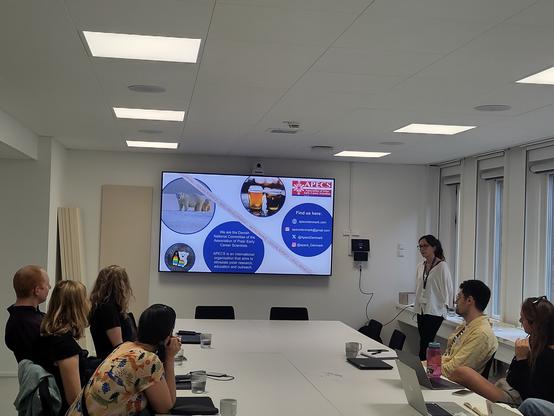
 APECS Germany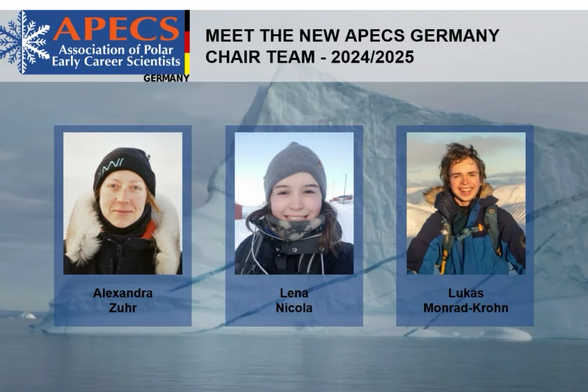
 Zeitgeisty Aphorisms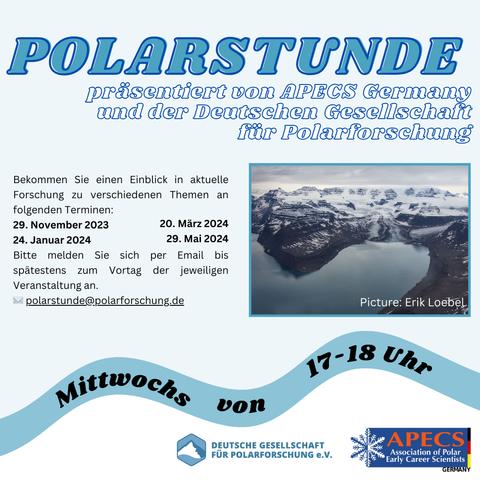
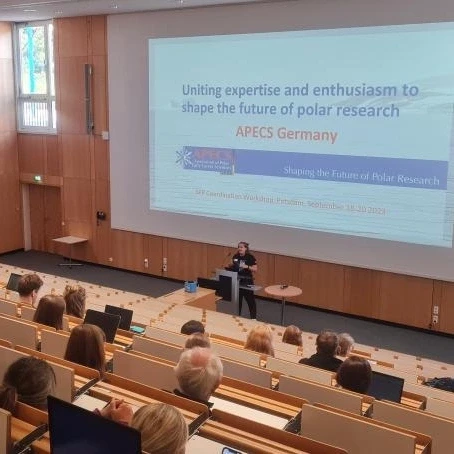
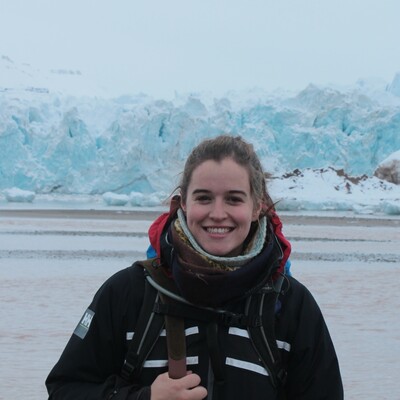 Lena Nicola
 LemarLab