 screwlisp
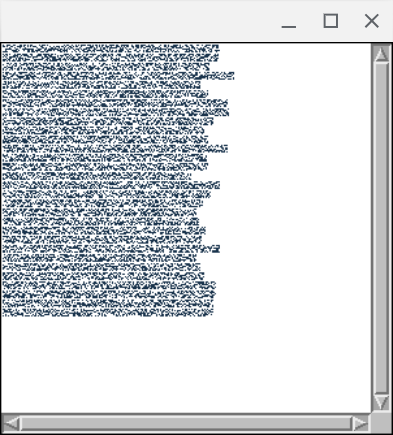
Things got a little screwy, but I added parsing for the historic #sixel notation.
"P #0;2;3;4#3;2;3;4
#0abcde$
#0abcde-
#3abcde$
\\"
CL-USER> (with-input-from-string (in *) (read in))
(BASICALLY-SIXELS (#1=(1/50 3/100 1/25) #2=(1/50 3/100 1/25)) (#1# A B C D E $)
(#1# A B C D E -) (#2# A B C D E $))
That output e.g. renders sixels in a #mcclim application pane & also makes it clear why that macro looks how it does. #commonLisp #programming #unironic #retrocomputing