Zoë Blade

@zoeblade
400 Followers
19 Following
250 Posts
Musician, writer, programmer. Analysis and synthesis.
Download my musichttps://www.zoeblade.com

On the humble 1980s word processor:

http://notebook.zoeblade.com/Word_processor.html

I'm not sure who has a use for this, but I've transcribed the default font of the Hitachi HD44780 LCD controller. (If you have anything with a 16×2 char LCD, it's probably using this.)

https://github.com/robhagemans/hoard-of-bitfonts/pull/52/changes

Never one to shy away from controversy, I talk about CRT... that is, cathode-ray tubes, how screens used to work back in the 20th century:

http://notebook.zoeblade.com/CRT.html

On how these newfangled video terminals from the 1970s and early 1980s changed the way we interact with computers:

http://notebook.zoeblade.com/Video_terminal.html

I love how geeky the Mastodon crowd is, you're my kinda of people! ❤️

Bluesky: "Huh, a thread on how 'easy' Unix is. I'll never use this information."

Mastodon: "Oh wow, a teleprinter! That takes me back! Why, I'd program the local minicomputer on one of these! If it was down, we'd just punch holes in cards instead. Then we'd get the leftover bucket of chads and spray it everywhere like confetti. A programmer's wedding, we'd call it! Those were the days!"
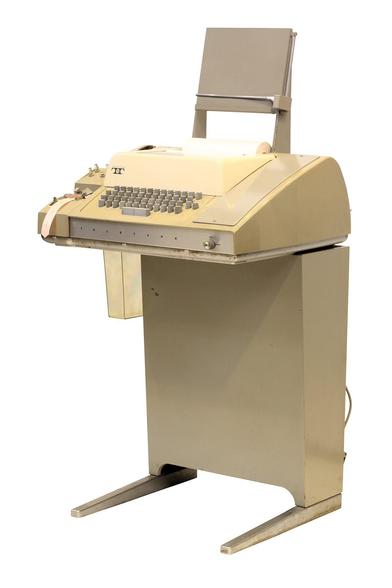
You know how things used to be built to last? These utilities were designed for you to use them via this thing, a Model 33 teleprinter, that worked like a typewriter possessed by a demon, having a conversation with you. (Hence the terse names. It's slow, and paper's expensive!) They've barely changed since then, and they still work.
These utilities are all extremely fast (they'll happily work on an old 386-based PC from the 1990s), completely free, bundled with the operating system, and you can examine the source code to see how they work. Contrast with corporations charging you, forcing you to watch adverts, and spying on you.
OK, here's one: you can split up large files into manageable chunks with "split". You can put them back together again with "cat" (concatenate). This was especially useful in the days of physical media, to spread out a large file onto multiple floppy disks or CD-Rs.
And if you use macOS, you're already using Unix! Crack open a terminal in Applications → Utilities. (But seriously, don't mess around with "rm", I won't be held responsible if you accidentally delete all your files.)