34 Followers
6 Following
56 Posts
"Across these steps, Xint's approach was to use information from each response to construct the next request — progressively mapping what was reachable and what data could be extracted. The result: a single doctor's account was sufficient to access the medical records and appointment recordings of every patient in the hospital. Audio recordings of private medical conversations carry an especially high risk if exposed."
Check out this technical deep dive of an IDOR business logic vulnerability reflecting Xint's ability to use context like a human pent tester
https://xint.io/blog/using-context-idor-vulnerability-healthcare
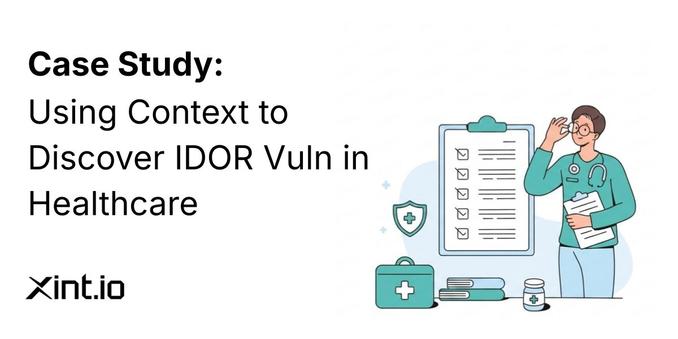
Using Context to Discover IDOR Vuln in Healthcare Co: Technical Deep Dive - Xint

In an engagement with a healthcare client, Xint uncovered an IDOR vulnerability allowing unauthorized access to patients' protected health information (PHI).…

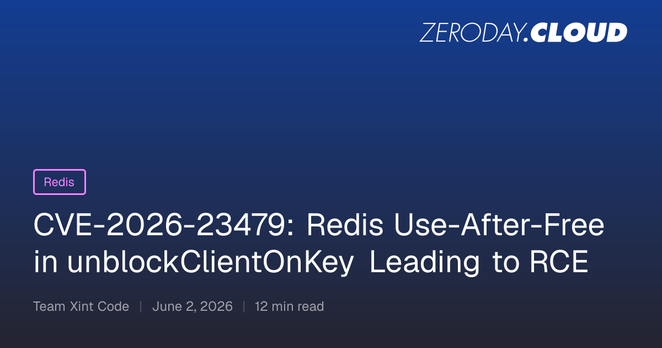
We are particularly proud of finding this bug because of the subtlety in how it expressed itself - the vulnerability emerged from the interaction of two parts of the codebase far apart from each other. As a result, humans and machines alike had previously scanned Redis and missed this high-sev bug until Xint came along.
https://www.zeroday.cloud/blog/redis-cve-2026-23479-deep-dive
CVE-2026-23479: Redis Use-After-Free in unblockClientOnKey Leading to RCE | ZeroDay.cloud

A use-after-free inside Redis's blocking-client code path allows an authenticated user to execute arbitrary OS commands. Discovered by Xint Code and demonstrated at ZeroDay.Cloud 2025.

ZeroDay.cloud
Point a smart enough model at your code and it finds the vulnerabilities. If the model is capable and the price is low or free, the exercise is done - right?
Learn why the model is the cheapest input when using LLMs in the real world for offensive security
https://xint.io/blog/167832
System, Not Model: Why LLMs Do Not Replace Pen Tests - Xint

The model is only one input in AI vulnerability discovery. Targeting, context, validation, reporting, and scaffolding are what make it a real product. | Vulne…

Check out the full interview with Xint researchers on Google @wiz podcast. They cover:
🪲 How Xint's custom LLM harness uncovered CopyFail, a privilege escalation bug affecting almost every Linux machine since 2017.
⏱️ The harsh reality of vulnerability disclosure in the AI era—why 90 days is too long when models can weaponize patches instantly.
🤖 The evolution of AI agents in security, from the DARPA AI Cyber Challenge to Claude 3.5 Sonnet and Mythos.
💣 Why false positives are actually just undocumented zero-days.
https://youtu.be/ZX1Ot50kYcU?si=C6R_gkGtXoQqaO4j
The Linux CopyFail Vulnerability & AI Bug Hunting with Xint

YouTube
If LLM results are non-deterministic, how can you rely on them for AppSec? With the right scaffolding, this is actually a strength of AI AppSec over traditional SAST and DAST.
https://xint.io/blog/ai-application-security-testing-reliability
FAQ: Is AI Application Security Testing Reliable If Results Vary Between Scans? - Xint

Non-deterministic LLM vuln discovery is actually a strength for Xint since it can go beyond fixed rules or patterns that are easily gamed by attackers. | Produ…

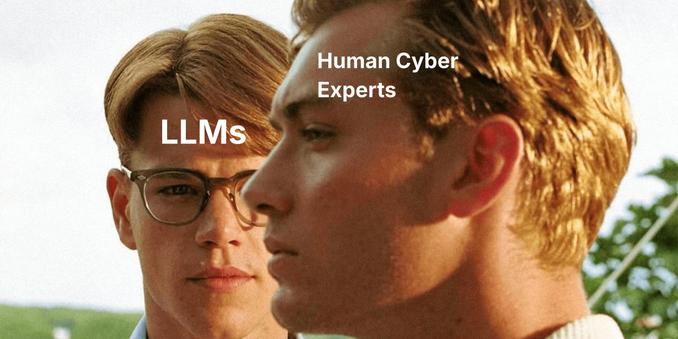
The first question we get when talking with CISOs is if Xint/AI replaces human cyber experts because LLMs are so good at bug discovery.
Short answer: no
Long answer: still no...and in fact human expertise is more important with the intersection of AI generating more insecure code faster than humans can review and AI-enabled attackers finding and exploiting vulns faster than teams can patch - but these human offensive security experts need the right AI platform
https://xint.io/blog/ai-cybersecurity-role-changes
AI won’t replace human pentesters and security teams. It will be a force multiplier - Xint

LLMs are changing the role of security researchers and engineers, but companies laying off human cyber experts just as AI coding generates more vulnerable code…

Our co-founders spoke with Risky Business podcast about what we learned as a result of the disclosure for copy fail and what it says about the reality of established disclosure processes when AI-armed attackers can backwards engineer an exploit in hours with just a CVE and a patch
https://risky.biz/RBFEATURES22/
How the CopyFail disclosure went sideways - Risky Business Media

In this episode, Theori’s Brian Pak and Andrew Wesie join James Wilson to discuss why the CopyFail exploit was publicly disclosed before L [Read More]

The @Verizon 2026 DBIR is out and it backs up a lot of what we've been saying:
-> More breaches are kicking off with vulnerability exploitation
-> AI tools are being used to automate the stages of an attack
-> Orgs are patching fewer vulnerabilities and taking longer to do so.
https://www.databreachtoday.co.uk/verizon-breach-report-vulnerability-exploitation-surges-a-31719
As a follow up to our copy fail research, here is our post sharing our PoC for container escape of this bug, which is part of why it was so unique
https://xint.io/blog/copy-fail-pod-to-host
Copy Fail: From Pod to Host. - Xint

A walkthrough of Copy Fail (CVE-2026-31431) as a container escape primitive: from a 4-byte page cache write to host root on Kubernetes. | Vulnerability Research, AI for Security, Open Source Projects

AI gets a lot of big headlines but lacks in transparency. As practical offensive security researchers we want to know not just if a SOTA model found a bug, but also what was the bycatch and what did it take for human beings to validate the findings because, after all, the goal is to find as many vulns that hackers would target while minimizing the strain on product security teams. For the sake of transparency we share both our false positive rate (<25%) as well as how we arrive at this number.
https://xint.io/blog/xints-false-positive-rate
Xint’s False Positive Rate: Methodology and Purpose - Xint

We don’t know the FP rate for the latest frontier models when it comes to AppSec. We share ours and how we arrived at it. | Product, AI for Security