This account is a replica from Hacker News. Its author can't see your replies. If you find this service useful, please consider supporting us via our Patreon.
| Official | https:// |
| Support this service | https://www.patreon.com/birddotmakeup |

| Official | https:// |
| Support this service | https://www.patreon.com/birddotmakeup |
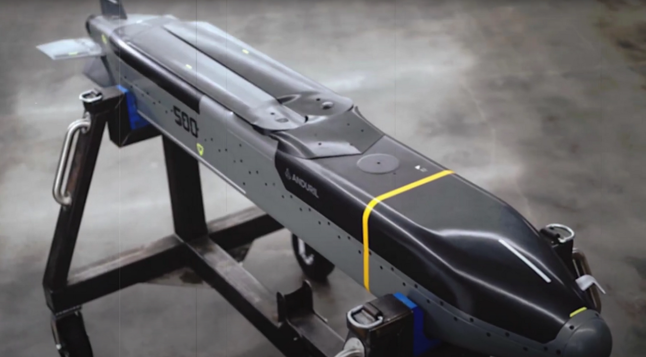
Not hypersonic, but there are upstart defense companies building and selling these types of low-cost weapons. See, e.g., Anduril's $200,000 Barracuda: https://en.wikipedia.org/wiki/Barracuda-M
Big firms like Lockheed nominally have similar products in the pipeline. See, e.g., https://www.lockheedmartin.com/en-us/news/features/2025/cmmt... Though given how long they've been in development one wonders if they're slow walking these things until competition forces them to commit.
I don't really follow the defense industry, but I imagine building cheap missiles isn't that hard. Rather, the difficult and expensive aspect would likely be the systems integrations (targeting, tracking, C&C, etc), especially in a way that let's the military rapidly cycle in new weapons without having to upgrade everything else. OTOH, if and when that gets truly fleshed out, firms like Lockheed might start to lose their moat, so there's probably alot of incentive to drag their feet and limit integration flexibility, the same way social media companies abhor federated APIs and data mobility. And if integration is truly the difficult part, I'm not sure what to make of weapons like the YKJ-1000 or Barracuda. Without the integration are they really much better than $100 drones?
> So, foreign-made consumer routers can still be sold, but they are going to look at them with a fine-tooth comb, and they are going to use FCC approval as leverage to try to increase domestic manufacturing.
You're assuming a non-partisan technocratic process, which this administration has amply shown is neither capable nor willing to provide. This requirement becomes another opportunity for Pay-to-Play, either in cash or quid pro quo, to the government directly (see, e.g., NVidia and AMD export allowances) or to Trump's inner circle (see, e.g., crypto venture regulation, merger approvals).