Vlad-Stefan Harbuz

444 Followers
159 Following
85 Posts

I work on protecting the Open Source infrastructure the world depends on. I live in Edinburgh and love cats & birds.

※ Executive Director @stewardshiplab
※ Director @opensourcepledge
※ Adviser https://endowment.dev

More: https://opensourcesecurity.io/2026/2026-04-open-source-pledge-vlad/

websitehttps://vlad.website

This might be the first ligature-driven “smart” font I like because it’s clear that you’re not actually meant to use it in a text editor or any other WYSIWYG app – it’s only for a coding text editor (the input is JSON). Clever.

https://franktisellano.github.io/datatype

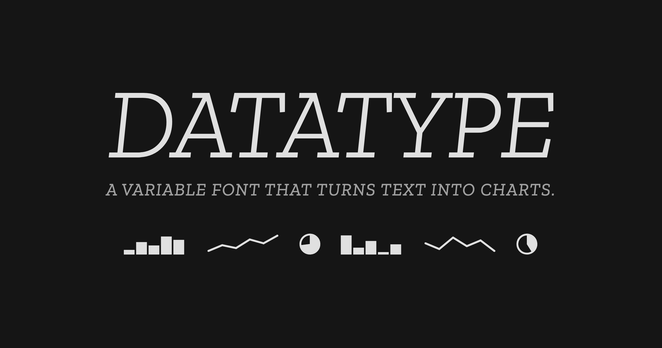
Datatype — variable font that turns text into charts

An OpenType variable font that turns simple text expressions into inline charts. No JavaScript, no images — just type.

> Crises happen to “problematic” people, too; often in such cases people who would otherwise consider themselves allies of social justice can find in a problematic person a convenient excuse to participate in these gleeful humiliation rituals themselves.

https://drewdevault.com/blog/Circus-freaks-of-FOSS/

The circus freaks of open source

@sethmlarson love little moments of joy like this that your blog brings me ✨️

> Harbuz says “GitHub will say ‘oh, we realise [AI] agents have been such a problem, we’re gonna maybe do something to fix it’ and it’s like, it’s you, right? You, GitHub, did this”. GitHub did not respond to a request for comment.

I said it 🤷

https://bsky.app/profile/sparkes.bsky.social/post/3mnkeaubtys2m

Matthew Sparkes (@sparkes.bsky.social)

Open source software powers the modern world. But the volunteers who build and maintain it are burning out; a flood of AI "garbage" is making their job unsustainable. https://www.newscientist.com/article/2527761-flood-of-ai-garbage-is-pushing-open-source-developers-to-the-limit/

Bluesky Social
@zekjur @h3 I use feishin every day and it's a great Navidrome client.

I published an article in IEEE's Computer with advice and resources for improving open source project sustainability through good governance practices. It's only 4 pages, so it's a nice, easy read if you want to learn about how governance impacts project success and sustainability.

https://doi.org/10.1109/MC.2026.3667269

Sabon - Wikipedia

@emma This looks great. Good luck, Emma!

what I will say is this. there are pieces of software that are frankly "mission critical".

for example, pkgconf, as a key component of most build toolchains, cannot have regressions because those regressions will reverberate throughout the entire "software supply chain" in the form of build errors. it is a mission critical piece of software.

this is why as lead maintainer of pkgconf I have implemented a number of policies and initiatives to reduce the likelihood of software errors and promote correctness in pkgconf as part of the pkgconf 3.0 work.

these initiatives include banning LLM contributions, requiring DCO signoffs on commits, refactoring the codebase to remove entire classes of vulnerability, improving the quality of the windows port so it is equivalent to its unix counterparts and reimplementing and expanding the test suite from scratch.

why? because every single thing I listed reduces the likelihood for regressions.

rsync, like pkgconf, is used at all times of the day, all around the world. I try to visualize the scope to which pkgconf is used and it is just not possible.

rsync is the same way: everyone is using it somehow, either to back up their data, or to mirror data from one machine to another. there are numerous utilities which make use of it somehow to provide functionality.

a regression in rsync is even less tolerable than a pkgconf regression: if you have errors in rsync, they can potentially cause data corruption or loss.

but rsync goes in basically the opposite direction from pkgconf: it embraces LLM contributions. it also has had several regressions since doing so.


@danielskatz Here is the Hawley paper: https://onlinelibrary.wiley.com/doi/10.1111/nous.12000

This page might be helpful: https://plato.stanford.edu/entries/trust/

Annette Baier speaks powerfully on the vulnerability that trust implies: https://www.jstor.org/stable/2381376

Are you looking for writing on trust specifically related to science? Either way, I'm happy to help look for further literature if you need that.