Visualizing Energy

@visualizingenergy
5 Followers
3 Following
14 Posts

We knit data analysis, visualizations, and the written word into stories that reveal how our energy system can be transformed to reduce inequity, steer humanity from climate disaster, improve health and other social outcomes, and lead to healthier natural systems.

visualizingenergy.org

Websitevisualizingenergy.org

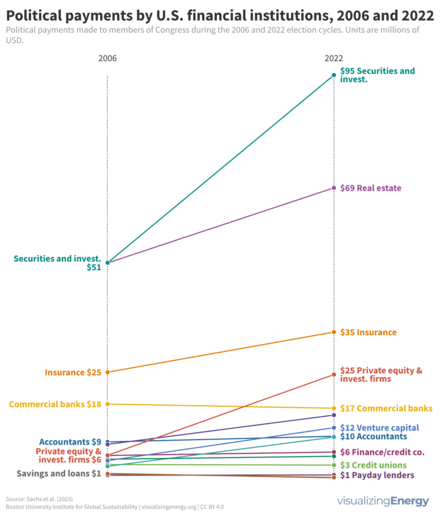
Total payments by financial institutions to members of Congress amounted to $303 million in 2022. Eleven of 15 institutional categories increased its campaign contributions from 2006 to 2022.

https://visualizingenergy.org/does-the-united-states-financial-system-support-global-climate-goals/
Does the United States financial system support global climate goals?

Major financial institutions' practices are not climate-friendly, with policies disconnecting short-term targets from required long-term climate actions. A Columbia University report highlights financial institutions' political influence, using lobbying and campaign contributions, often obstructing climate policy. The report suggests measures for shifting towards positive climate action.
Visualizing Energy

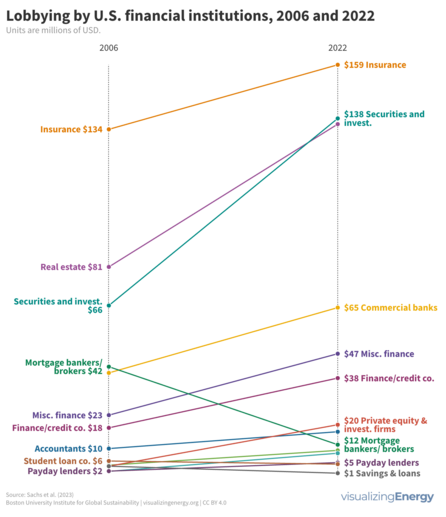
Twelve of the 15 biggest financial institutional categories increased spending on lobbying from 2006 to 2022. The three largest spenders on lobbying in 2022 were #insurance, securities and investment, and #realestate.

https://visualizingenergy.org/does-the-united-states-financial-system-support-global-climate-goals/

Does the United States financial system support global climate goals?

Major financial institutions' practices are not climate-friendly, with policies disconnecting short-term targets from required long-term climate actions. A Columbia University report highlights financial institutions' political influence, using lobbying and campaign contributions, often obstructing climate policy. The report suggests measures for shifting towards positive climate action.

Visualizing Energy

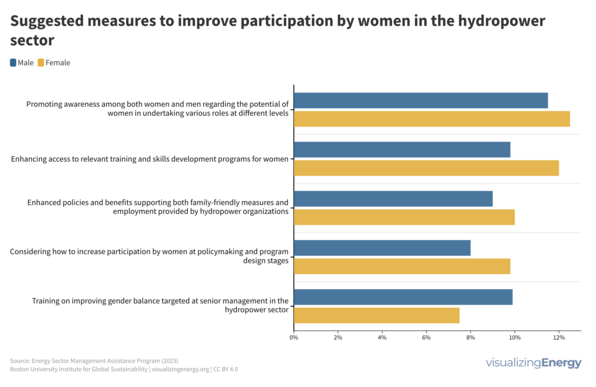
Women in the global #hydropower industry point to improved family-friendly policies and the inclusion of women in policymaking as a means to close the gender gap in opportunity and compensation. @AzuelaGabriela @WBG_Energy

https://visualizingenergy.org/what-is-the-status-of-women-in-the-global-hydropower-sector/

What is the status of women in the global hydropower sector?

Hydropower, the world's largest source of renewable, low-carbon electricity, faces a significant gender gap. Women hold only a quarter of jobs globally, mainly in non-technical roles. Factors hindering women include a lack of STEM skills, limited awareness, inadequate female role models, and managerial bias. Improved family-friendly policies and female inclusion in policymaking are required for industry advancement.

Visualizing Energy

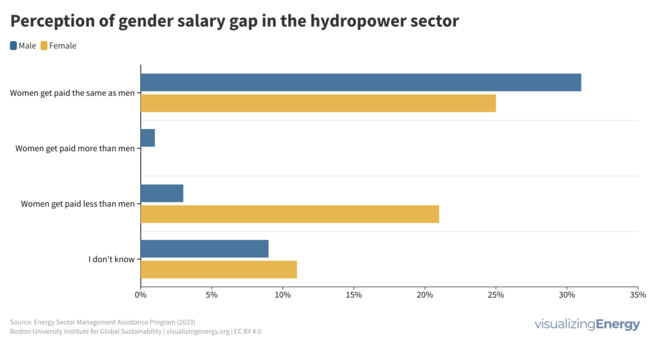
In the global #hydropower industry, women are more likely to perceive that they are paid less than men. Men are more likely to believe that salaries are equal between genders. @AzuelaGabriela @WBG_Energy

https://visualizingenergy.org/what-is-the-status-of-women-in-the-global-hydropower-sector/

What is the status of women in the global hydropower sector?

Hydropower, the world's largest source of renewable, low-carbon electricity, faces a significant gender gap. Women hold only a quarter of jobs globally, mainly in non-technical roles. Factors hindering women include a lack of STEM skills, limited awareness, inadequate female role models, and managerial bias. Improved family-friendly policies and female inclusion in policymaking are required for industry advancement.

Visualizing Energy

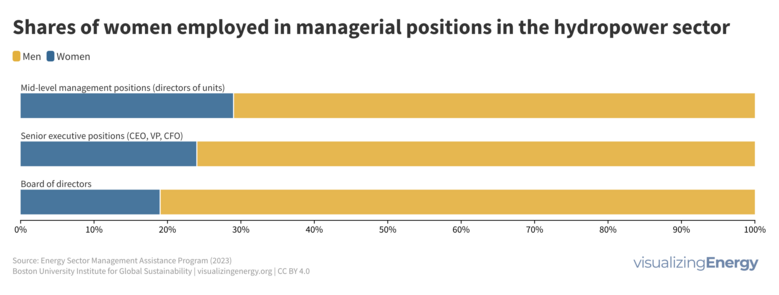
Women hold just 1 in 4 jobs in the global #hydropower industry. Women comprise very low fractions of managerial positions across boards (19%), senior executives (24%), and mid-level management positions (29%). @AzuelaGabriela @WBG_Energy

https://visualizingenergy.org/what-is-the-status-of-women-in-the-global-hydropower-sector/

What is the status of women in the global hydropower sector?

Hydropower, the world's largest source of renewable, low-carbon electricity, faces a significant gender gap. Women hold only a quarter of jobs globally, mainly in non-technical roles. Factors hindering women include a lack of STEM skills, limited awareness, inadequate female role models, and managerial bias. Improved family-friendly policies and female inclusion in policymaking are required for industry advancement.

Visualizing Energy
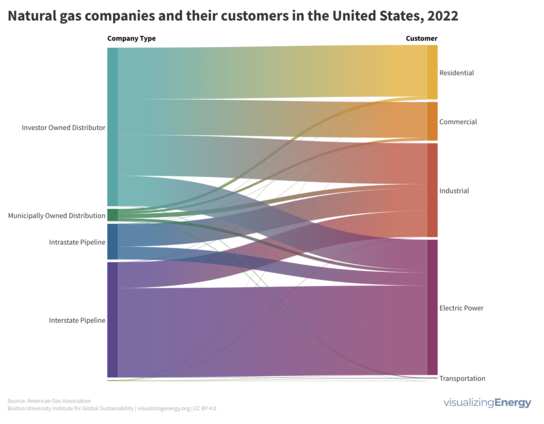
The largest end-use customer of #naturalgas is #electricity generation. Two-thirds of gas consumed by power plants is transported from out of state via interstate pipelines due to the massive gas volumes required by a single plant.

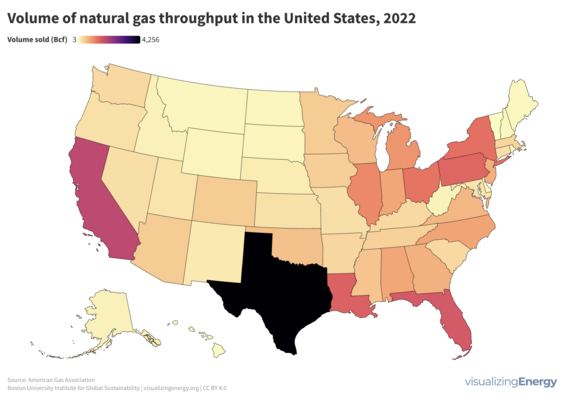
In 2022, the US consumed about 32 Tcf of #natural gas. That volume is equivalent to 367,000 Olympic-sized pools of natural gas a year.

https://visualizingenergy.org/natural-gas-sales-in-us/

Natural gas sales in the United States

In 2022, the US consumed 32 trillion cubic feet of natural gas, the highest level in 30 years due to increased fracking. Efforts towards carbon-neutral energy may reduce demand, as residential use is gradually being replaced by electrical alternatives. However, industrial demand is anticipated to remain strong in the near term.

Visualizing Energy

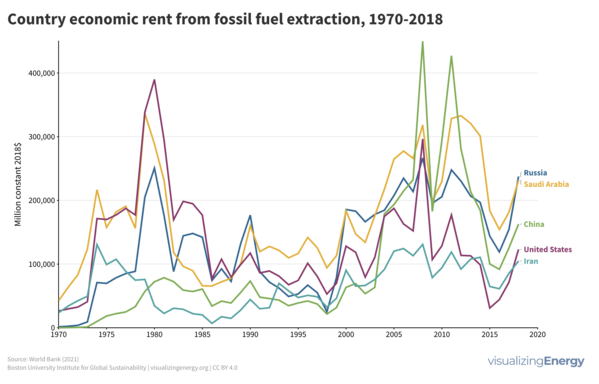
The value of #fossilfuel assets increased by a factor of 2 to 3 in many nations from 1995-2015 due to increasing energy reserves and rising prices. Fossil wealth declined through 2018 due to falling energy prices.

read more: https://visualizingenergy.org/what-nations-profit-the-most-from-fossil-fuel-extraction/

What nations profit the most from fossil fuel extraction?

A nation's wealth, comprising physical, human, and natural assets significantly influences population well-being. Fossil fuels represent a significant portion of this wealth, bringing economic benefits and challenges. While some countries have used this wealth to improve citizens' lives, it doesn't always lead to desirable social outcomes like reduced income inequality or political corruption.

Visualizing Energy
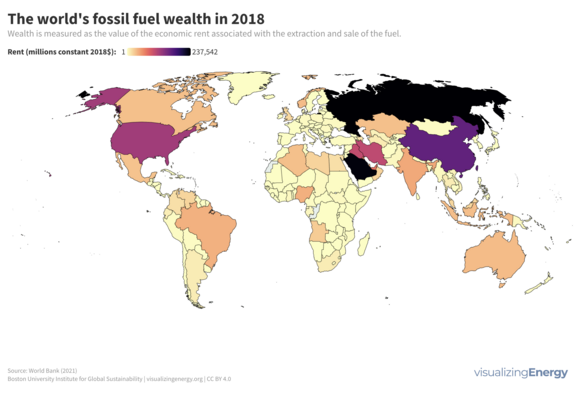
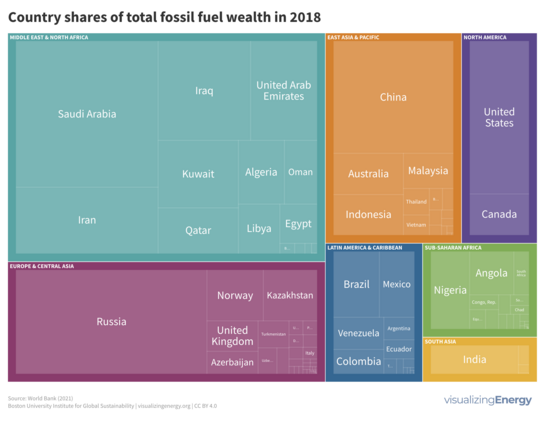
Countries such as Saudi Arabia, Russia, the United States, and China measure their #fossilfuel wealth in trillions of dollars.
#Oil wealth is highly concentrated in the Middle East and North Africa with Saudi Arabia holding a $5 trillion asset. Russia has more than a trillion dollars in #naturalgas wealth, but its invasion of Ukraine in 2022 made it difficult to sell gas to European customers.