🎉About 140 graduates & their families celebrated their succes at the first joint D-USYS Master's graduation ceremony. Thanks to everyone who made this possible.
Congratulations to all our grads! 👏 🎓
We can't wait to see the impact you'll make in the world.
https://usys.ethz.ch/en/news-events/news/archive/2025/06/masterfeier-2025.html
🌱 💡 Reallabore stehen für eine enge Zusammenarbeit zwischen Forschung und Praxis. Ein Beispiel ist das Projekt Jurapark Aargau. Arbeiten Sie auch in einem #Reallabor oder Ähnlichem? Kommen Sie zur 1. Tagung der Schweizer Reallabore am 20. August 2025!
👉 https://tdlab.usys.ethz.ch/de/tagungreallabore.html

Tagung der Schweizer Reallabore
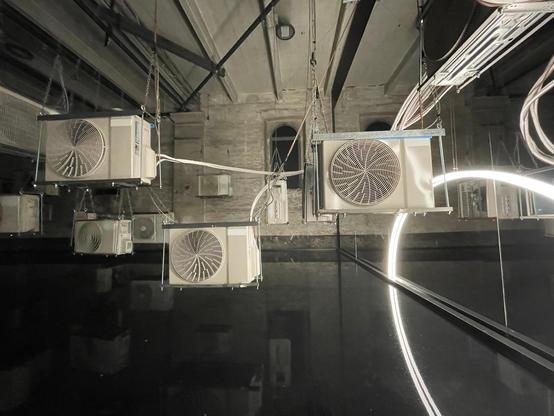
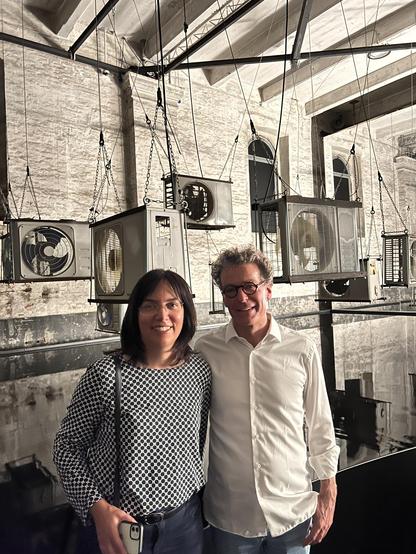
@soniaseneviratne.bsky.social and David N. Bresch contributed to an installation at the Venice #ArchitectureBiennale. For the installation, they calculated what the air temperature would be if we didn't have air conditioning mitigation.
🌡️🤯🌍
The heating is generated with air conditioners that cool the adjacent room but heat this room🔥.
The calculation was done by Lorenzo Pierini, Mathias Hauser also participated: https://lnkd.in/eABeYh6A.
LinkedIn
This link will take you to a page that’s not on LinkedIn
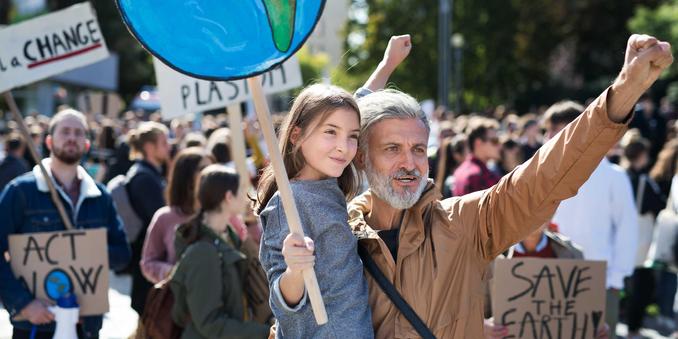
🚨 Research by VUB and ETH Zurich shows millions of children will suffer most from heatwaves, crop failures, floods, fires and storms due to climate change. We must act now to protect their future!
➡️ https://usys.ethz.ch/news-veranstaltungen/news/archiv/2025/05/climate-change-children-suffer-the-most.html
@SoniaSeneviratne

Klimawandel: Kinder leiden am stärksten
Millionen Kinder von heute werden unter der derzeitigen Klimapolitik im Laufe ihres Lebens in beispielloser Weise von Hitzewellen, Ernteausfällen, Überschwemmungen, Dürren, Waldbränden und tropischen Stürmen betroffen sein. Dies zeigt eine Studie von Klimaforschenden der Vrije Universiteit Brussel (VUB) in Zusammenarbeit mit der ETH Zürich.
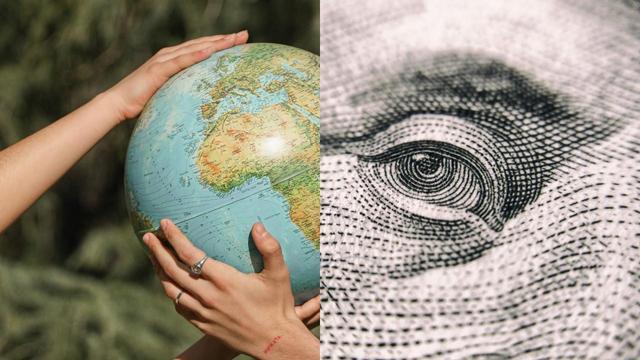
💰🌍 Research by Sarah Schöngart et al. shows the wealthiest 10% caused TWO-THIRDS of global warming since 1990. The top 1% have an even bigger impact on extreme weather like
#heatwaves and
#droughts, hitting vulnerable regions hardest.
🔗
https://usys.ethz.ch/en/news-events/news/archive/2025/05/the-worlds-wealthiest-10-percent.htmlThe world’s wealthiest 10% caused two thirds of global warming since 1990
Wealthy individuals have a higher carbon footprint. A study published in Nature Climate Change quantifies the climate outcomes of these inequalities. It finds that the world’s wealthiest 10% are responsible for two thirds of observed global warming since 1990 and the resulting increases in climate extremes such as heatwaves and droughts.
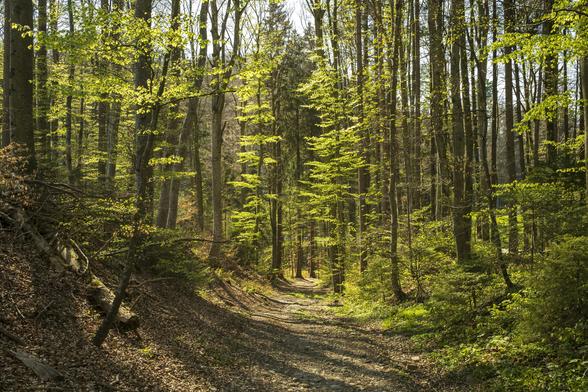
Today’s International Day of Forests celebrates "Forests and Food", highlighting their role in nutrition, livelihoods, and biodiversity. Beyond providing food, fuel, and income, forests enrich soil, protect water, and offer habitats for biodiversity, including vital pollinators. 🌲💚
From #SpaceFarming to STEM education: Grace Crain-Wright is making science exciting! 🌱💡
As part of the European Space Agency’s #MELiSSA project, she tackled a wild challenge: growing plants using human waste-derived nutrients (yes, really!). Her research at ETH Zürich helped shape the future of sustainable space travel and circular agriculture on Earth.
👉 https://www.alumni.ethz.ch/en/news/we-are-eth-podcast/podcast/2025/02/naehrstoffrecycling-raumfahrt-veraendern.html
Transforming Space Travel with Nutrient Recycling
Grace Crain-Wright, a plant ecologist and STEM educator, takes us on an extraordinary journey from her academic roots in the US to her cutting-edge research at ETH Zurich.
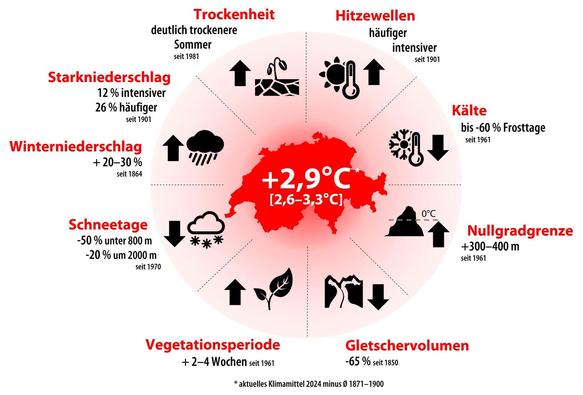
As every January, MeteoSwiss has updated their #ClimateChange website with the latest figures. Among other things, it now reports that Switzerland has warmed by 2.9 [2.6-3.3] degrees Celsius since pre-industrial times. 🌡️🇨🇭
https://www.meteoswiss.admin.ch/climate/climate-change.html
Graphic by Simon Scherrer
Climate change - MeteoSwiss
Key messages about global and Swiss climate change: What has happened so far? What is coming? How can risks be minimised and opportunities exploited?