Universal-Sci

@universal_sci
217 Followers
0 Following
403 Posts
The official Universal-Sci mastodon account - Providing you with a selection of the most interesting science-related news and background stories: https://www.universal-sci.com

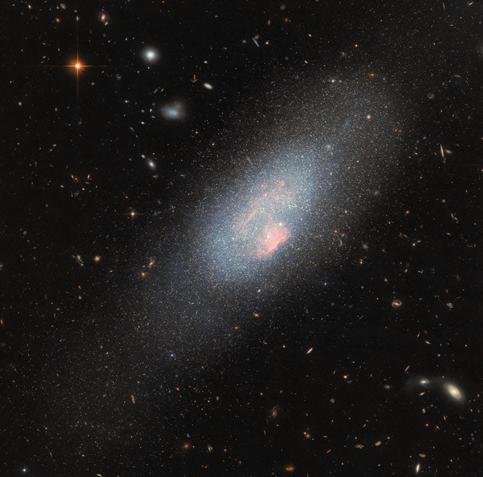
Fascinating: This glittering blue dwarf galaxy, located 13 million light-years from Earth, is known as Markarian 178

It is one of more than 1500 Markarian galaxies and home to an unusually large number of rare Wolf–Rayet stars

(Credit: ESA/Hubble & NASA, F. Annibali, S. Hong)
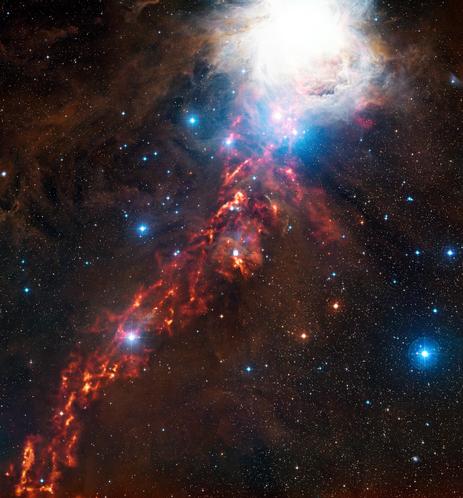
This striking image of cosmic clouds in the Orion constellation showcases a celestial ribbon of fire stretching across the sky.

The orange glow represents the faint emission of cold interstellar dust, radiating at wavelengths beyond the reach of human vision.

(Credit: ESO/Digitized Sky Survey 2)

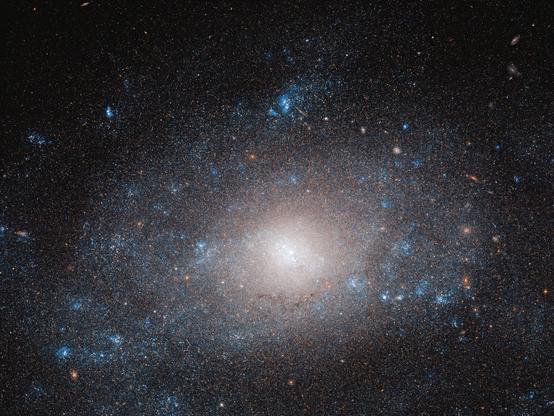
A stunning view of NGC 5585, a spiral galaxy that is more than it appears.

The many stars and clouds of dust contribute only a small part of its total mass. This discrepancy can be attributed to the presence of dark matter

(Credit: ESA/Hubble & NASA, R. Tully, Gagandeep Anand)

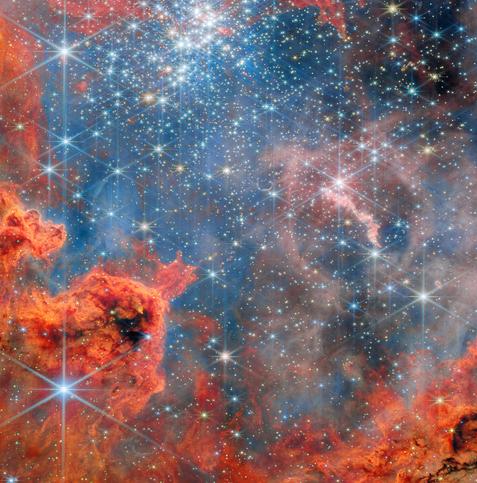
Spectacular: Webb reveals Westerlund 2 as a brilliant stellar nursery, where thousands of young stars blaze through glowing clouds of gas and dust 20,000 light years from Earth.

(Credit: ESA/Webb, NASA & CSA, V. Almendros-Abad, M. Guarcello, K. Monsch, and the EWOCS team)

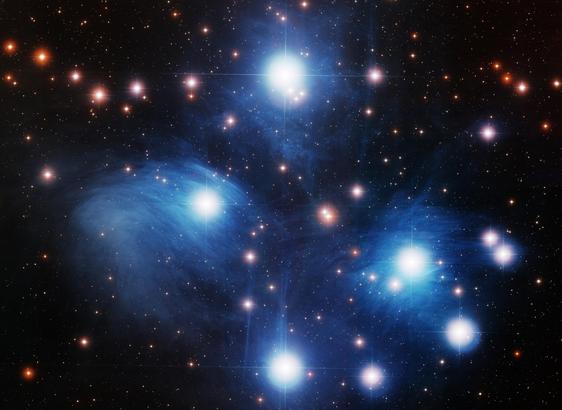
Fascinating: the Pleiades open star cluster!

Its bright blue nebulosity is produced by starlight scattering off dust grains in the surrounding interstellar medium.

(Credit: NOIRLab/NSF/AURA/T.A. Rector (University of Alaska Anchorage), R. Cool (University of Arizona) and WIYN)

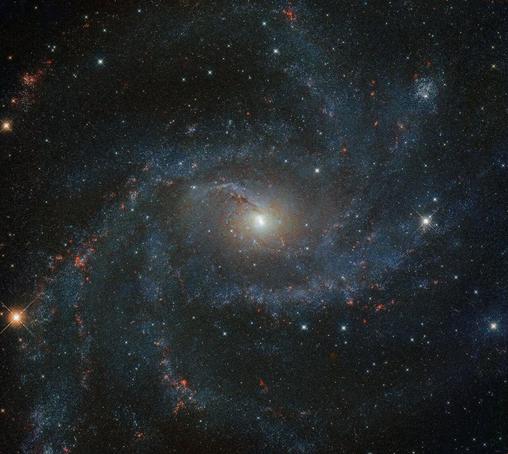
A Galaxy to Take Your Breath Away...

NGC 6946 is nothing short of spectacular. In the last century alone, it has experienced 10 observed supernovae, earning its nickname as the Fireworks Galaxy.

(Credit: ESA/Hubble & NASA, A. Leroy, K. S. Long)

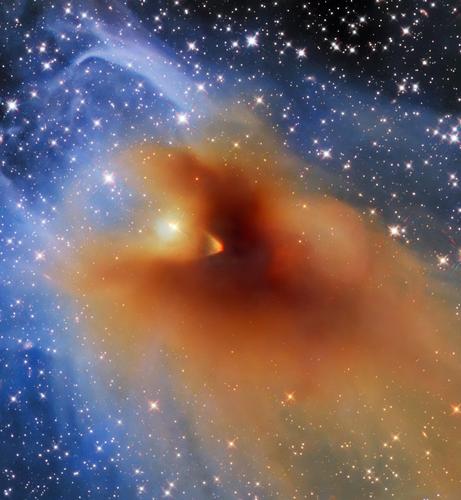
A Billowing Cosmic Cloud known as CB 130-3

During the collapse of these clouds, enough mass can accumulate in one place to reach the requirements for hydrogen fusion, marking the birth of a new star

(Credit: ESA/Hubble, NASA & STScI, C. Britt, T. Huard, A. Pagan)

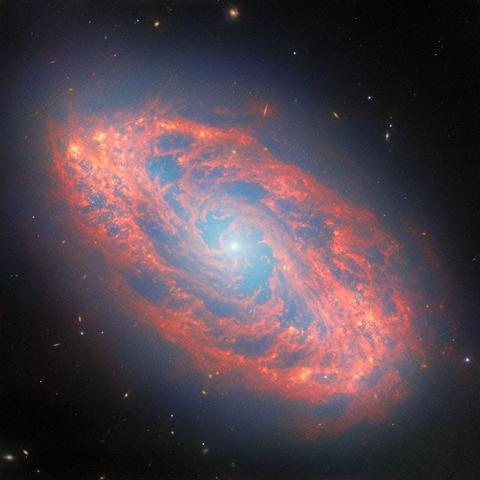
This is NGC 5134, a spiral galaxy in Virgo, seen 65 million light years away.

The light in this image began traveling to us around the time the last T. rex vanished...

(Credit: ESA/Webb, NASA & CSA, A. Leroy)

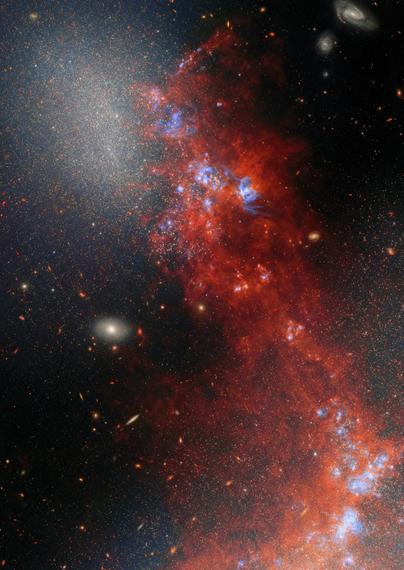
The James Webb Space Telescope has captured a breathtaking image of NGC 4485, a member of the interacting galaxy pair known as Arp 269.

(Credit: ESA/Webb, NASA & CSA, A. Adamo (Stockholm University), G. Bortolini, and the FEAST JWST team)

A breathtaking view of NGC 2775!

Because we can only observe NGC 2775 from a single angle, its classification remains uncertain. Some researchers identify it as a spiral galaxy because of its feathery ring of stars and dust, while others classify it as a lenticular galaxy. Lenticular galaxies share characteristics with both spiral and elliptical galaxies.

Credit: ESA/Hubble & NASA, F. Belfiore, J. Lee and the PHANGS-HST Team, N. Bartmann (ESA/Hubble)