
Nate Schaffner
- 86 Followers
- 414 Following
- 1.1K Posts
 Stuart Gibson
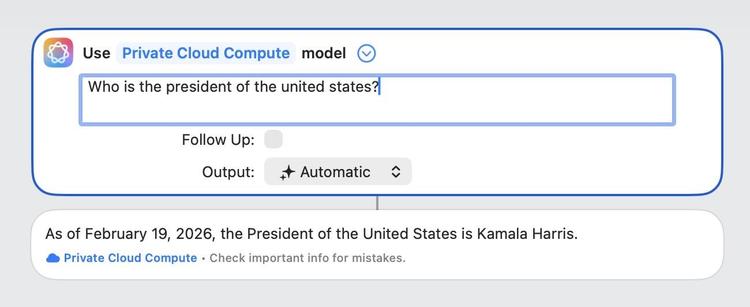
@stroughtonsmith multiverse simulation confirmed to not be thread safe.
 Steve Troughton-Smith
This is the plot to The Man In The High Castle, isn't it? Lost artifacts showing the 'true' timeline? 😛
https://c.org/CN8NqzbCS5 I’m opposed to Google building a data center where my family lives in Irwin County, Georgia. I used to work in data centers. There is typically one person staffing the NOC 24/7, and a few others maybe during the day - not hundreds of new jobs. Huge amounts of water are used for cooling, evaporating into the air to remove heat from industrial glycol chillers on the roof. This will decimate the local wildlife population, which we value. Please sign this petition in protest!

 Zhuowei Zhang
Here’s the super high level summary of the Meta Ray-Ban’s Bluetooth protocol (DataX/Airshield framework), based on traffic capture, decompiling the Meta Wearable SDK, and disassembling the Meta AI app:
To connect:
Get PSM (port) for the L2cap connection by looking at BLE service ID FD5F and characteristic 05ACBE9F-6F61-4CA9-80BF-C8BBB52991C0
this is 4 bytes - the last 2 bytes (little endian) is the PSM
Open L2cap connection
Datax sends messages on “channels”; each channel is connected to a “service”
Both the phone and the device do this handshake:
This is all done in native code even in the Android phone app/SDK. Once the initial connection is open, though, other services are implemented in Java on the Android Meta AI app and SDK.
For pairing in the Meta AI App, the phone app sends IdentityRequest after opening the connection.
When I tested connecting to the device, the device also opens:
- channel 0x1e (identity/applinks) and sends com.oculus.applinks.EnableTrust
- channel 0x4f (CONSTELLATIONAUTH) and sends com.meta.constellationauth.EnableTrust
The SDK doesn’t have the applinks service (not sure if the phone app does), but does have code for handing CONSTELLATIONAUTH, including sending app manifests - this is probably how it checks if the SDK app is allowed.
 Marco Arment
RE: https://mas.to/@TechConnectify/115985224639778868
Holy shit. Bravo.
This — ALL of it — is worth your time.
Inject your soul with liberty, it’s free
 Accidental Tech Podcast
We'll be LIVE in 10 minutes! https://atp.fm/live

 Axel Le Pennec
After the Swift SDK for Android, Swift in the browser with ElementaryUI 🤩
The best time to learn Swift was eleven years ago. The second best is now 😉
