Legitimately the best anti-cop movie I've ever seen.
A film director who rejects auteur theory ("movies are collaborations"), rejects the new wave, and just wants to make pop films with radical politics? Is Elio Petri our new favorite director? Criterion only has one of his movies, so he must be!
https://www.lostincriterion.com/e/spine-682-investigation-of-a-citizen-above-suspicion/
Spine 682: Investigation of a Citizen Above Suspicion | Lost in Criterion
What if all the people in charge were actually criminals, but so insulated by power that no amount of clear evidence could lead to them being investigated? Crazy right?
Investigation of a Citizen Above Suspicion (1970) is our only film from Elio Petri in the Criterion Collection, which is disappointing because from what we can tell his work is like if Pier Paolo Pasolini only did mass market genre stuff. Of course it's also just impeccable mass market genre stuff filled with radical politics, which Petri termed PolPop, political popular film. It's right up our alley.
Just remembered that there is a season two of Watson.
Holmes shows up at the end of Ep1. He is not played by Matt Berry.
But he IS played by Robert Carlyle, so now I'm imagining every cast member of Trainspotting getting to play Sherlock Holmes on CBS. But Ewan McGregor probably won't show up until the massive crossover event Oops All Sherlock Thursday.
Anyway, Watson is not better than it was last season.
Our friend Casey B. joins us to talk about Frances Ha (2012), the delightful film where Greta Gerwig as writer and star eclipses director Noah Baumbach.
https://www.lostincriterion.com/e/spine-681-frances-ha/
Spine 681: Frances Ha | Lost in Criterion
Greta Gerwig's writing and acting in the titular role go a long way to make us like our second Noah Baumbach film much more than our first. While Kicking and Screaming (Spine 329) was a little too Whit Stillman for us - and over half the podcast ago - we found 2012's Frances Ha much more relatable and entertaining. It also helps that our friend Casey B. dropped everything to talk with us about a movie she loves.
I think The Bride! is going to be one of those movies that I really liked but can't talk about without sounding like I didn't.
Modern The Americanization of Emily about a guy who just wanted to do some minor profiteering on polymarket who now has to be the first to person to shout Leeroy Jenkins on Kharg Island for a White House tiktok.
I know we joked about it on the Patreon episodes, but discussing City Lights this week I think it's apparent that after Zatoichi we need to relearn how to do the podcast. Thankfully, Criterion is giving us an amazing run of films to recover with.
https://www.lostincriterion.com/e/spine-680-city-lights/
Spine 680: City Lights | Lost in Criterion
Charlie Chaplin's first movie with synced sound (as opposed to his first film to feature onscreen dialogue) is the great silent film star saying no thank you to the concept of synced sound. City Lights is a great first start as we decompress from 24 Zatoichi films and relearn how to do the podcast, but I'll be honest it's rough going rewiring our brains from that.
Importance of Being Earnest with Ncuti Gatwa is now free on YouTube!
(alt-text: YouTube link to National Theatre's Importance of Being Earnest, full show)
https://youtu.be/obX-HGs-PS8
#DoctorWho
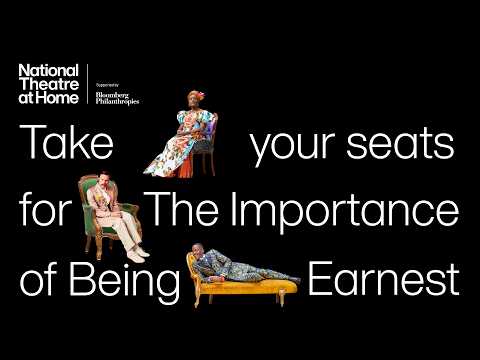
The Importance Of Being Earnest (Full Show) | Take Your Seats | National Theatre at Home
Customer left their shoes under their table tonight. Did not come back for them before close.
The Zatoichi boxset ends on an entirely middling note, but at least Ichi gets to hide in a container too small to contain him.
https://www.lostincriterion.com/e/spine-679-zatoichi-the-blind-swordsman-disc-9/
Spine 679: Zatoichi the Blind Swordsman Disc 9 | Lost in Criterion
We say goodbye to the Zatoichi the Blind Swordsman Boxet with film #25: Zatoichi's Conspiracy (Kimiyoshi Yasuda, 1973), and we end with neither a highlight or lowlight, but a solidly middling entry. It doesn't help that not only are we tired of this, last week's set contained both the best and worst the series has to offer and this last one is just an inoffensive end to the series. We also cover the additional materials in the set with commentary from Tony Rayns and a short documentary on the life of Shintaro Katsu during the Zatoichi tv series of the late 70s from John Nathan.

 Euan
Euan