 Omar
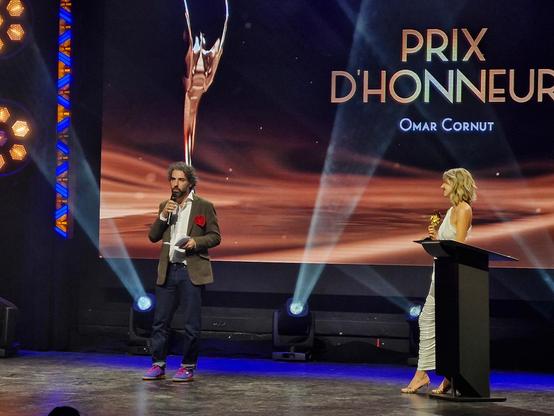
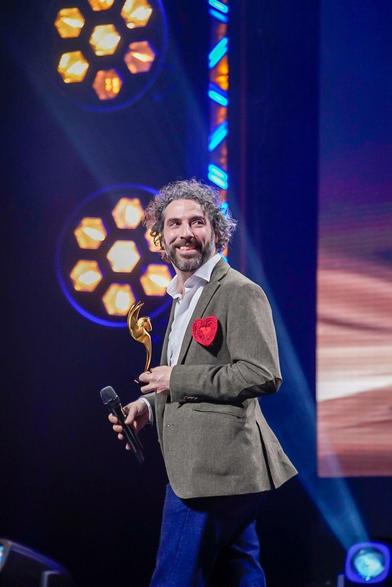
OmarAn unexpected thing happened: somehow I received a special award at the Pégases (french game industry awards), partly recognizing the continued work on Dear ImGui. Thank you🙏 https://academiejeuvideo.org
| Github | https://github.com/jamesmcgill/ |
Happy to announce that DREAMM 4.0 is now available for Windows, macOS, and Linux!
https://dreamm.aarongiles.com/
Now with support for all Lucas-family games released prior to 2000 on DOS, Windows, and FM-Towns, including all 8 Lucas Learning games. Network play is also now supported (experimentally).
Hey All, I made a header only C++ library where it's 1 line of code to init, then you can start writing to pixels on the screen.
I call it thirteen.h, as it is inspired by the simplicity of the 13h days.
Examples include a mandelbrot viewer and a playable mine sweeper game.
MIT licensed.


So yeah, the recently released Rayman collection is using a slightly modded version of my DREAMM emulator to run the DOS versions of the games, including the extra level packs. Happy to see more DOS ports making it into these kinds of collections and onto consoles!
https://www.ubisoft.com/en-us/games/rayman/editions/30th-anniversary
RE: https://mastodon.social/@Blerkotron/115968671879198257
Damn. I remember so many of Graeme Baird’s games fondly; Starstrike, Starglider, Carrier Command and Killing Cloud all contributed to me wanting to learn how to make 3D graphics
ooft, a new mesh track landed and it's a banger

Fixed a long-standing Windows emulation bug this morning.
Afterlife uses a lot of DIBs and BitBlts to render its video using standard Windows GDI, and it mostly works well. However, ever since I first brought it up, the opening logo would not be displayed; you'd just get a black screen.
It turns out that the game composes its video to an intermediate 8bpp bitmap, which it then BitBlts to the screen. The logo graphic is another 8bpp DIB that is copies to the intermediate bitmap.
When doing a copy from one 8bpp bitmap to another 8bpp bitmap, I generate an intermediate 256-entry lookup table that maps the colors of the source bitmap to the colors of the target. This is necessary because you can't guarantee that the two bitmaps have the same palette.
Today I realized that at the moment when the game copies the logo bitmap to the intermediate bitmap, both bitmaps have color tables filled with all 0 (black). My logic in this case mapped every color in the source bitmap to the best matching color, which is color 0 in the destination (really, any color would match in this case, but 0 is preferred).
I'm guessing the game expects the bitmap in this case to copy the raw pixels 1:1 with effectively no translation. But how to square this with the need to map palettes?
I decided that when creating my mapping table between bitmaps, I would first check for each color n to see if a 1:1 mapping would produce the correct color (in this case black color n in the source maps correctly to black color n in the target for all cases), and if so, use that as the mapping. If the mapping isn't perfect, then scan the target palette to find the closest match.
Not sure if this is Windows' real logic here, but it makes a certain kind of sense, so I wouldn't be surprised.


I really like the woolly, clay-like look of this remake of the Day of the Tentacle intro 😃
➡️ Full intro here: https://youtube.com/watch?v=2LYPfMBie9Y
It was made using Blender.
#DayOfTheTentacle #DOTT #ManiacMansion #LucasArts #AdventureGame #PointAndClick #RetroGaming #Blender #Clay
Return to Monkey Island Panel
Two years ago five members of the #ReturnToMonkeyIsland dev team were on a panel at the 2023 @devcom_global in Cologne, Germany. The video was never publicly available, until now…
Panelists are the game’s designers @grumpygamer & @thatdave
Art director @rexbox
Artist Zoé Nguyen Thanh
Me (Lead game programmer @DavidBFox
Moderator Paul Toderas
@terribletoybox @devolverdigital

 Aaron Giles
 demofox
 The Seven Voyages Of Steve
 Thomas Leroy 🍣🐈⬛
 David Fox 🌻🥸