RT @ladisputeband
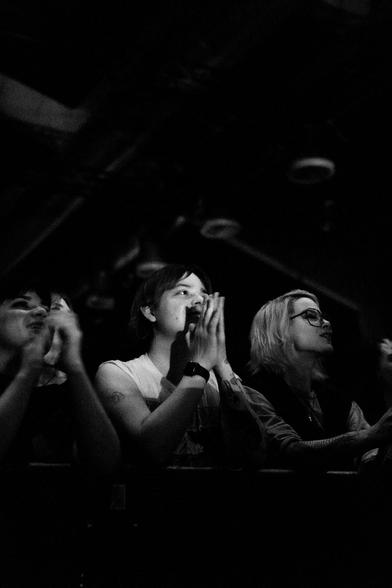
SCHLACHTHOF. WIESBADEN. MAY 3RD
SCHLACHTHOF. WIESBADEN. MAY 3RD


| Google Scholar | https://scholar.google.com/citations?hl=de&user=Sz-2qz4AAAAJ&view_op=list_works&sortby=pubdate |
RT @Knoblich_lab
📣 Preprint alert!
Check out our latest story, led by @catarinacsmc.
The corpus callosum safeguards interhemispheric communication in the human brain.
𝘈𝘙𝘐𝘋1𝘉 mutations cause agenesis/absence of the CC.
We wanted to know why. 🤓


Welcome! You are invited to join a meeting: Evolutionary Psychiatry: From Theory to Therapy. After registering, you will receive a confirmation email about joining the meeting.
RT @KLIAustria
Next #KLIcolloquium: "Making a Whole Biont: An Organizational Account of Physiological Individuality" with @Leo_Bich
🗓️May 4th, 3pm CET
🌐Hybrid (KLI & Zoom)
Abstract & registration link for the zoom meeting (no need to register to join in person!): https://kli.ac.at/en/events/event_calendar/view/661
RT @ReillyLikesIt
Out today in @ScienceMagazine as part of @ZoonomiaProject : our deep dive on evolutionary DELETIONS in conserved regions. Learn about this counter-intuitive source of mammalian innovation!
Here's a tweetorial on what these surprisingly missing elements are doing in humans
RT @whyvert
New paper attempts a genetic timeline of humans.
Two key eras: "old peak" (around the time of fire) + "new peak".
(Stephen Jay Gould: "There’s been no biological change in humans in 40,000 or 50,000 years" is false.)
RT @MitoPsychoBio
How we think and talk about mitochondria matters to our science and to newcomers in the field.
The powerhouse analogy is expired and we need specific vocabulary to capture the beautiful complexity of mitochondrial biology.
We propose a framework and some nomenclature.
