Rana Safvi

@ranasafvi
1.5K Followers
160 Following
286 Posts
Am @iamrana on Twitter 
believer~GangaJamuni Tehzeeb |author,translator,columnist |Unka jo farz hai,wo ahl-e-siyasat jaanein~Mera paigham mohabbat hai jahan tak pahunche
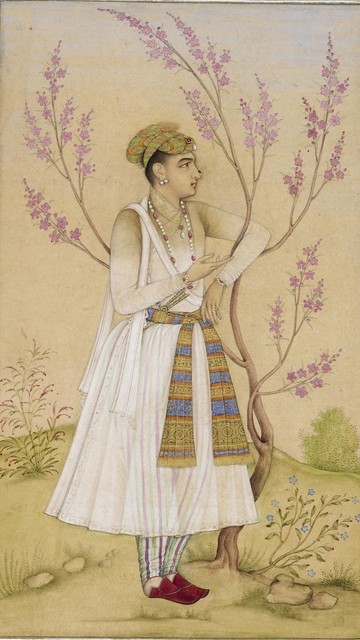
Dara Shukoh:
"Now, thus sayeth this unafflicted, un-sorrowing fakir Dara Shukoh that after knowing the Truth of Truths & ascertaining the secrets and subtleties of the true religion of Sufis& having being endowed with this great gift, he thirsted to know the tenets of the religion of Indian monotheists. And having had repeated & continuous discussion with the doctors and perfect divines of this Indian religion,He did not find any difference, except verbal, in the way they sought & comprehended
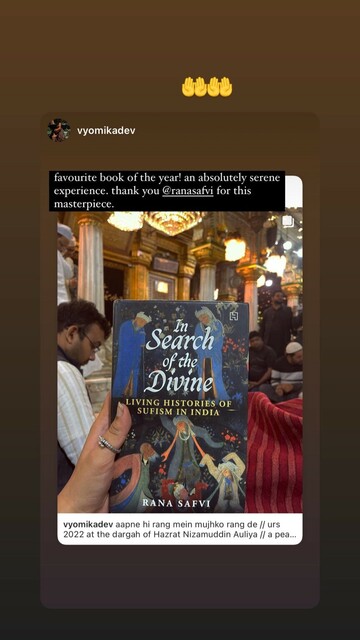
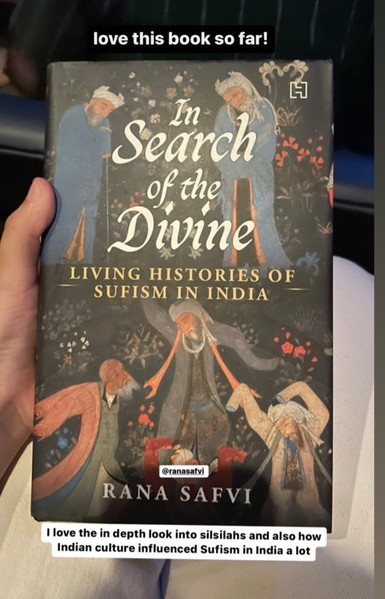
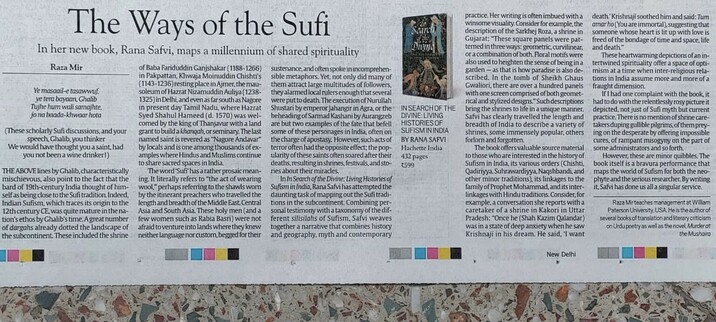
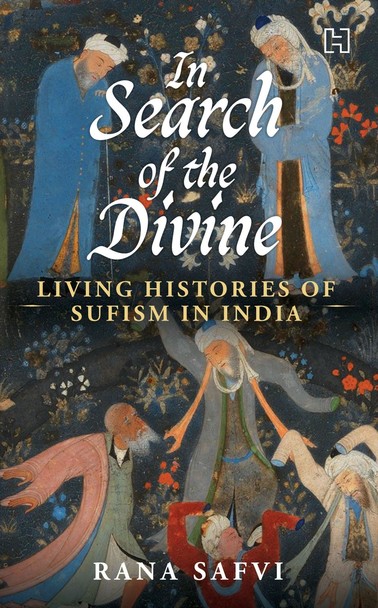
In ‘In Search of the Divine: Living Histories of Sufism in India’, Rana Safvi maps a millennium of shared spirituality | Raza Mir writes in the @IndianExpress
@HachetteIndia
https://indianexpress.com/article/books-and-literature/in-search-of-the-divine-living-histories-of-sufism-in-india-rana-safvi-spirituality-book-review-8276784/
In ‘In Search of the Divine: Living Histories of Sufism in India’, Rana Safvi maps a millennium of shared spirituality

The writer weaves together a narrative that combines history and geography, myth and contemporary practices of Sufism, writes Raza Mir

The Indian Express
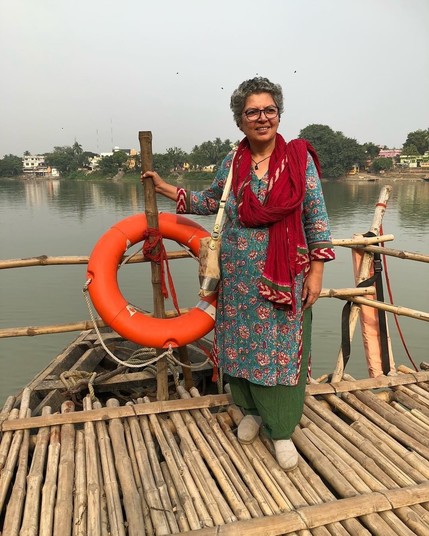
Crossing the Bhagirathi River
From Lalbagh to Khosbagh in Murshidabad in 2018.
#Khosbagh houses the graves of #Sirajuddaula and #AliVardiKhan
#memories
Aajkal main dunia kam ghoomti hun, thanks to menieres disease & vertigo meri dunia zyada ghoomti hai 🥺

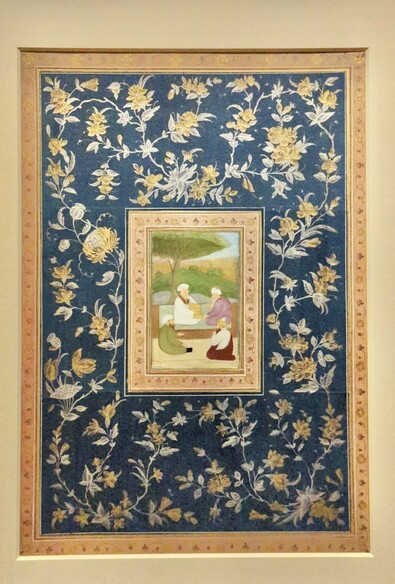
This remarkable painting from c 1750 shows Miyan Mir and Mullah Shah with two mystics.

Miyan Mir (1531/32–1653 CE) preached that there were two paths to finding God. The first was when a devotee was drawn to God himself; the other was through meditation and contemplation under a Sufi saint’s guidance.
You can read about the Qadriya silsilah and the two saints in my book

This painting is part of the Mystical Encounters series currently ongoing in @pergamonmuseumberlin sent by my son

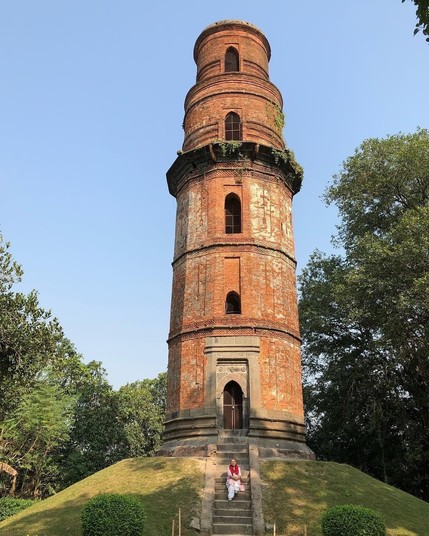
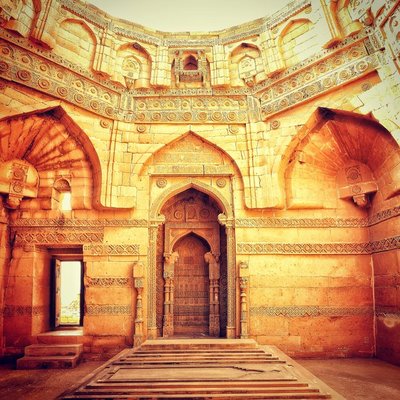
Firoz Minar in Gaur ~
built by Saifuddin Firuz Shah (1488-90 AD), the second ruler of the Abbyssinian Slave dynasty.
It is 25.6m (84ft) high and comprises five storeys, the first three of which are decorated with chain motifs while the upper two are covered with parallel borders. On each floor there is a door which faces west and an internal staircase of 73 steps leads to the top. It was originally associated with an accompanying mosque that no longer survives.

#worldheritageweek

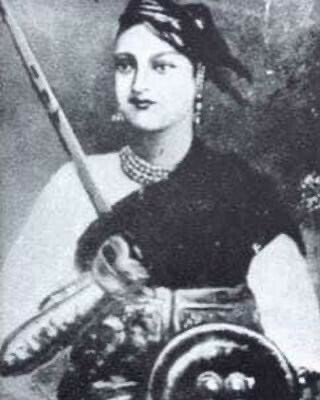
tribute to Rani Laxmi Bai on her birth anniversary

Nagaha chup huye sab, a gayi bahar Rani
Fauj thi ek sadaf, us mein gauhar Rani
Matla-e-jahad pe hai gairat-e-Akhtar, Rani
Azm-e-paikar mein mardo’n ke barabar Rani

Rahi Masooma Raza

[Suddenly there was silence, here comes the Rani
The army was the oyster, the pearl was the Rani
In the battlefield, shining like the stars, Rani
In bravery and courage, equal to men is the Rani]

RT @[email protected]

Dadi Leela Tai went to jail in 1942 during the freedom movement.
Who's cutting onions ?! 🥹

🐦🔗: https://twitter.com/CaptainGzb/status/1593116960056782848

Captain Ghaziabad on Twitter

“Dadi Leela Tai went to jail in 1942 during the freedom movement. Who's cutting onions ?! 🥹”

Twitter
Book Review: @ siasat daily:
Safvi’s writing through out the book reminds one of those poems which stick like a toffee, haunt like a dream. The book perhaps even makes one dispossessed of faith wonder if the materiality of the world is enough for the soul’s sustenance.
https://www.siasat.com/rana-safvis-new-book-on-sufism-is-dignified-powerful-and-heart-touching-2458714/
Rana Safvi’s new book on Sufism is dignified, powerful and heart-touching

The general perception of Sufism for those uninitiated with Islam (true of a major chunk of India) is perhaps reduced to paintings.

The Siasat Daily

Via @ranasafvi : Khusrau darya prem ka – Ulti wa ki dhaar;
Jo utra so doob gaya,
Jo dooba so paar.

Read more : In Search of the Divine: Living Histories of Sufism in India

Link : bit.ly/3Lzjxnl

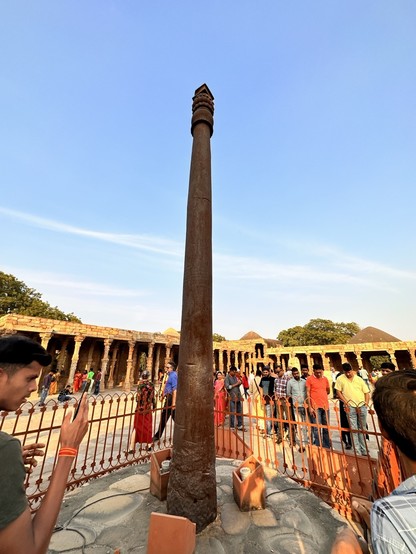
But Raja Anangpal, anxious for the prophecy to be true, doubted him somehow and had the pillar dug up to check, only to find that the pillar was indeed placed on the serpent’s head and its bottom was still wet with blood. All attempts to fix the pillar after that were unsuccessful and it stayed loosely attached to the ground.
This the term dheeli killi from which as per legend the name Dhilli ( later Delhi) also originated.

( Note: the pillar was brought from Udaigiri by Iltutmish)
#delhi