
🎤 Join us for the next ELLIS Turin Talk!
Patrick Pérez, CEO of
Kyutai (Paris), will present:
“A multistream multimodal foundation model for real-time voice-based applications”
🗓 May 12th, 2025
🕙 10:00 AM CET
🌐 Online (Zoom)
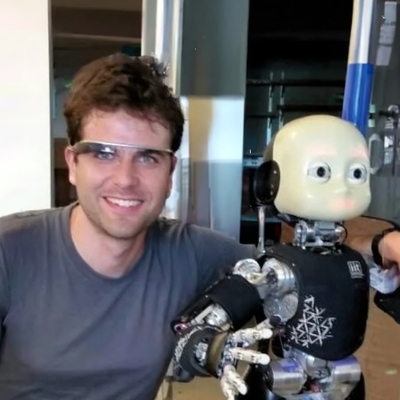
From building the first full-duplex spoken-dialogue system Moshi to the innovative real-time voice translation model Hibiki, Patrick will explore the future of seamless human-machine voice interaction, powered by cutting-edge multimodal AI.
📎 Zoom link & details: https://www.polito.it/ateneo/comunicazione-e-ufficio-stampa/appuntamenti/news?idn=25848
🎤 Join us for the next ELLIS Turin Talk!
Patrick Pérez, CEO of
Kyutai (Paris), will present:
“A multistream multimodal foundation model for real-time voice-based applications”
🗓 May 12th, 2025
🕙 10:00 AM CET
🌐 Online (Zoom)
This work is a significant milestone in an ongoing research stream on ML for MyoControl in collaboration between Rehab Technologies Lab @ Istituto Italiano di Tecnologia, Politecnico di Torino, and INAIL, Istituto Nazionale Assicurazione contro gli Infortuni sul Lavoro.
📄 Paper: https://ieeexplore.ieee.org/stamp/stamp.jsp?arnumber=10654558&tag=1
📜 Pre-print: https://arxiv.org/abs/2412.16271
💽 DELTA Dataset: https://zenodo.org/records/10801000
🧮 Code: https://github.com/DarioDiDomenico/Incr_HDsEMG
To tackle performance degradation over time, we introduce an efficient incremental learning system allowing continuous adaptation to changes in the user's muscle signals, ensuring robust and accurate control over extended periods.
We also release the DELTA dataset, a new benchmark for long-term incremental learning on HD-sEMG data. This public dataset, along with the experimental code, empowers researchers to develop and evaluate novel data-driven myocontrol models under realistic conditions.
🖥️🦾 We are pleased to announce that our paper "Long-Term Upper-Limb Prosthesis Myocontrol via High-Density sEMG and Incremental Learning" has been published in the November 2024 issue of the IEEE Robotics and Automation Letters.
This work has been led all the way up from sensing to ML by Ph. D. Candidate Dario Di Domenico, in collaboration with Nicoló Boccardo, Andrea Marinelli, Michele Canepa, Emanuele Gruppioni, and Matteo Laffranchi.
🔔 The 19th International Conference on Intelligent Autonomous Systems (IAS-19) will take place next summer in Genoa, Italy, June 30th - July 4th 2025, with many stimulating sessions, activities, and invited speakers!
We invite you to submit your recent work on intelligent systems, autonomy, robot learning, and more.
Check out the Call for Papers & full list of topics: https://ias-19.org/call-for-papers/
Deadline for paper submissions: February 15th, 2025.

Many decisions in life involve the tradeoff between risk and reward. Perhaps one has to choose between a "low risk, low reward" course of action, that plays it safe, but does not achieve any big wins; or a "high risk, high reward" choice which could potentially give greater benefits, but also greater downsides.
Risk management is a complex task, but one can explore it initially with some very simplified models, always keeping in mind George Box's dictum that "all models are wrong, but some are useful". For this simple model, one can assume that each course of action comes with two numbers: the "reward", which is the average positive net gain (benefits minus costs) one expects to get from pursuing the action, and the "risk", which in this model can be thought of as a standard deviation of the fluctuation from the mean. For instance, a "safe" action might have a reward of 5 and a risk of 3, which I would represent as 5±3 in this model, the return would typically range anywhere from 2 to 8 units of net benefit. A "bold" action might have a reward of 9 and a risk of 10, which I would represent as 9±10; in this model, the return would typically range from -1 to 19 units of net benefit. Here we imagine that there is some sort of bell curve in effect; while a 5±3 action will *usually* give a net benefit between 2 and 8, there could be exceptional events that lead the return to be less than 2 or greater than 8. But I will gloss over these tail events for sake of this discussion.
(1/4)
🙏 We would like to thank our institutional partners for their invaluable support:
- Future AI Research: https://future-ai-research.it
- ELLIS Unit Turin: https://ellis.eu/units/turin
For any questions, feel free to contact us at: [email protected]

 Terence Tao