0 Followers
0 Following
4 Posts

Ideas for AI plugins welcome

https://lemmy.world/post/44466427

Ideas for AI plugins welcome - Lemmy.World

hey there, There is always a temptation to add “something AI” in new tools. Especially to tools that are somehow related to developer productivity. At the same time I wanted to avoid this temptation with Voiden. So there is currently nothing screaming “AI” in it even though I can potentially see many many use cases. This is also one of the main reasons I think that a plugin architecture is best. What was actually in my mind is that not adding AI is ok for now and the community will start coming up and building AI plugins. For example creating docs from specs and vice versa. Any other use cases you can think that could be applicable to a tool like this? (Dev Tool with executable markdown files for API specs, tests and docs). The first plugins we shipped were more around methods (grpc, graph ql, web sockets etc etc). repo: https://github.com/VoidenHQ/feedback [https://github.com/VoidenHQ/feedback] [https://lemmy.world/pictrs/image/40ca24c8-6581-4dfb-97e3-814a9cf6075e.png]

TIL that in uber in certain countries you can select a driver that does not talk for people who prefer silent drives

https://lemmy.world/post/44427790

TIL that in uber in certain countries you can select a driver that does not talk for people who prefer silent drives - Lemmy.World

Lemmy

If your API client supported Python scripting, would you use it over JavaScript?

https://lemmy.world/post/44326231

If your API client supported Python scripting, would you use it over JavaScript? - Lemmy.World

Note - This post is intended to look for feedback in a tool that solves a problem we have been seeing (around API clients not supporting Python) - and hopefully help Python folks (like it helped us when building it). So, a bit of a backstory - Something I noticed while we were building our internal tool for API testing: A lot of developer tools assume JavaScript scripting by default. API clients are a good example of this. scripting = JavaScript And yes it might not be always a huge problem, but it adds constant friction. Eventually we realized the real issue was not just JavaScript. The issue was and is that many tools force a single language. So when we started building our own API client (link below), we decided to approach scripting differently: Pre-request and post-request scripts support multiple languages and runs on real interpreters, not a limited sandbox like most Clients do. So we built this to support Python and JS from day 1 and now releasing shell script + more coming (perhaps Go would be the next??) The idea is simple: Your API tool should adapt to your stack, not the other way around. Some developers think in JS, some in Python, some in Go or Rust. The tool shouldn’t care. Q: Would you actually use Python for request automation inside an API client, or do you prefer handling that logic outside the tool? Repo: https://github.com/VoidenHQ/voiden [https://github.com/VoidenHQ/voiden]

TIL that kung fu (or gongfu) is not a martial art but means "proficiency, aptitude, or mastery" thats acquired over long, rigorous training.

https://lemmy.world/post/44219711

TIL that kung fu (or gongfu) is not a martial art but means "proficiency, aptitude, or mastery" thats acquired over long, rigorous training. - Lemmy.World

Lemmy

The night brings Charlie

https://lemmy.world/post/44219266

Promoting your API tool - Guide for founders on Reddit

https://lemmy.world/post/44078433

Open Source, Incentives, and Why 'Monetize Later' Often Backfires

https://lemmy.world/post/44030923

Open Source, Incentives, and Why 'Monetize Later' Often Backfires - Lemmy.World

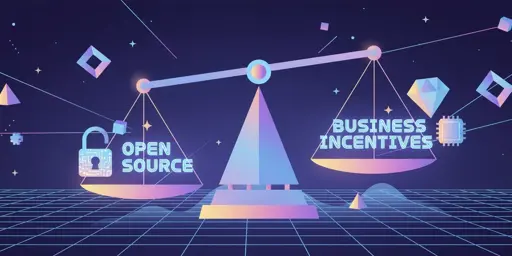
One of the things I discovered (or better said, something I suspected but had the chance to verify) while working on open-sourcing a tool (and API client tool): there is a big (mostly justified) trust deficiency out there . I could feel it immediately in every discussion: always that little question in the back of people’s minds: “Will this project “stay true”, or will it change the rules on me later?” We have seen this pattern repeatedly: Terraform > OpenTofu, Redis > Valkey, Elastic > OpenSearch… I understand this: it’s becoming hard not to become a little cynical. In some ways, SaaS starts to feel better only because its more honest and at least the incentives and motivations are explicit from day one. But why does this happen? One answer is simple: bad intentions, that yeah, they do exist some times. But then this might be an oversimplification. One aspect that is not often talked about: Many of the most durable open-source tools and frameworks (VS Code, React, Kubernetes, and Backstage among others) were built by companies where the tool itself was NOT the primary revenue engine. Their core business lived elsewhere. This means that these tools could function as ecosystem infrastructure rather than direct monetization vehicles. They could stay open because they weren’t carrying payroll, sales targets, and investor expectations on their own. In contrast, when an open-source project becomes the business, the incentives start to shift. The tool now has to “fund” teams, meet SLAs, satisfy investors, and deliver predictable growth. Over time, that pressure often leads to open-core models, licensing changes, community forks, and growing tension between “community” and “enterprise.” So yeah, the intentions might have not been alway bad…but the economics have spoken… The “open source first, monetize later” strategy feels super risky. Once adoption takes off and the tool becomes central to a company’s survival, teams are forced into trade-offs that often erode trust and fragment communities. My opinion is that Open Source thrives most easily when it IS NOT carrying the full weight of corporate survival. When it is, preserving its original spirit becomes much harder. If we want healthier developer ecosystems, we need to be more honest from the start. This means to either build an open-source project as genuine long-term infrastructure and commit to keeping it open, or build a commercial product with a clear monetization model from day one. Both paths are valid. Trying to blur the two is what repeatedly leads to broken trust (with developers), frustrated contributors, and fragmented communities. The takeaway? I guess it is that we just need to be upfront: If your project is commercial lets be upfront. If it’s truly open, lets commit to it. Anything in between makes people hesitate to believe and that’s how communities start to fracture. what do you think? what makes you trust an open-source project long term, and what are the red flags that make you cautious?