Thorsten Ball

@mrnugget
1.3K Followers
253 Following
2.1K Posts
Author of interpreterbook.com and compilerbook.com. Working at Sourcegraph. I like to program where the rubber hits the road — wherever that may be.
Websitehttps://thorstenball.com
Twitterhttps://twitter.com/thorstenball
GitHubhttps://github.com/mrnugget

Does someone here want to buy my Starbook?

I'm selling my little Linux laptop (preferably to folks in EU). I just don't use it that much and it's a kickass little machine that should be used more.

Details & how-to are here: https://gist.github.com/mrnugget/75a7e4339a7517433dbd8d69cdae9196
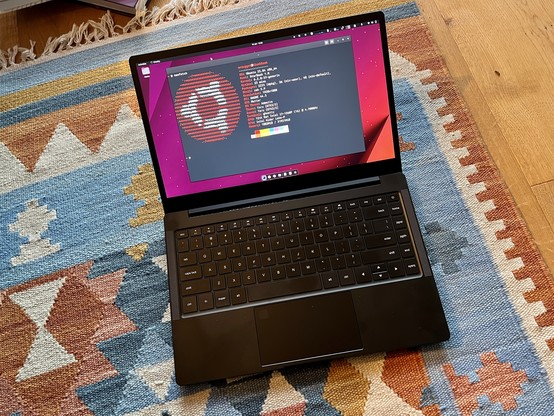
I'm selling my Star Labs Starbook. Who wants to buy it?

I'm selling my Star Labs Starbook. Who wants to buy it? - buy-my-starlabs-starbook.md

Gist
Wrote about how I setup a new macOS machine: https://registerspill.thorstenball.com/publish/post/140438370
New year, new job, new machine

Setting up a new MacBook Pro M3 Max

Register Spill
Original version of Merlin Mann's essay, "Better."

Original version of Merlin Mann's essay, "Better." - Better.md

Gist

Just published another issue of Register Spill.

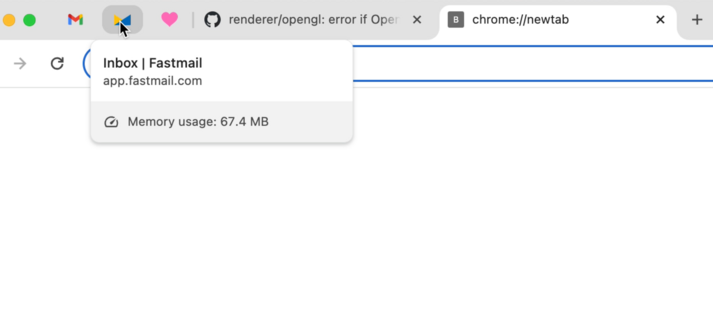
This time I wrote about the curiousity that is Chrome showing the memory usage of tabs. That lead me to writing about the sounds computers used to make.

Read it here: https://registerspill.thorstenball.com/p/the-hum-of-the-machine

The Hum of the Machine

Have you noticed that the newest versions of Chrome on macOS show how much memory a tab is using? I don’t mean something in the developer tools, or an internal process manager. No, you now only have to hover your cursor over a tab and Chrome tells you: this one uses 60MB, that one 200MB, the one at the end uses 400MB.

Register Spill

Find of the day: heaptrack. This is super nice.

https://github.com/KDE/heaptrack

GitHub - KDE/heaptrack: A heap memory profiler for Linux

A heap memory profiler for Linux. Contribute to KDE/heaptrack development by creating an account on GitHub.

GitHub

I'm really fascinated by Chrome's decisin to surface tab memory usage this prominently in the UI.

Who's the target audience? The average user? Are they that concerned about individual tab memory usage? Or is this (my theory) an attempt to get users to understand that it's not Chrome using memory but individual pages?

In any case, it's quite the odd choice to surface such a, uhm, mechanical detail to every user, no?

But then in January I'll join zed.dev to work on Zed. The team & product are impressive, lots of new technologies for me, lots to learn, lots to ship — I'm excited!

So let me end it here and say: thanks for having me, Sourcegraph!

Now, after 4.5yrs, I realized that I've become a bit too comfortable. My learning curve isn't that steep anymore.

But growing and learning is what I *need* and want to do every day.

So even though it makes me sad to leave and I'll miss so many people: I need something new.

What's next? First: a few weeks off.

Working here with some of the best engineers in the world, shipping software to some the best software companies in the world, finally seeing what a true US tech startup is from up close — a highlight of my life.

This isn't and never was "just a job" for me. No, *this is what I do*, man. I love building software, thinking about building software, talking & writing & reading about building software.

At Sourcegraph I could do just that all day long with many other, talented people.

Some personal news: this is my last week at Sourcegraph.

• 4.5yrs
• 1604 PRs
• 4 teams
• joined at ~20 people & saw us grow to ~300
• meetups in SF, San Diego, Berlin, Mexico, Amsterdam, Munich, ...
• reported to EMs, Heads of Eng, CEO

Now it's time for something new 🙂

I will forever look back at my time at Sourcegraph as life-changing in the best possible way and consider myself one of the luckiest bastards I know because Quinn and Beyang hired me.