Miguel Rebollo

@mrebollo
120 Followers
119 Following
64 Posts
bateriá del kindle cambiada por 10 euretes, que ya no duraba casi. Estaría bien que eso funcionara también con las personas
¯\_(ツ)_/¯
Anda, una falla de lego. Y oye, que no se porqué a M. Curie le han puesto un macintosh y un brazo robótico, pero son cuquis y me da que va a caer... como la manzana https://www.lego.com/es-es/product/the-evolution-of-stem-21355
La Evolución de STEM 21355 | Ideas | Oficial LEGO® Shop ES

Completamente enganchado a #misticas desde el minuto 1. Y ojo, el curro de edición que debe llevar para que parezca que no está editado O_o
Estaba viendo una serie tan agustito y me han clavado un Resines que la acaba de arruinar del todo 😶
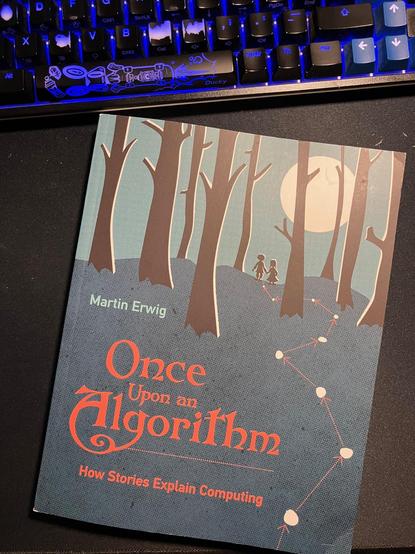
Estaba ahí, mirándome con carita triste, y no me pude resistir: cómo hansel y gretel, regreso al futuro, indiana jones, harry potter y otros ayudan a explicar algoritmos
El descubrimiento musical de la semana es HInder. Si, ya lo sé, tarde... pero es lo que tienen los malgoritmos y una demostración de que es mejor hacer caso a las personas https://www.youtube.com/watch?v=RiSfTyrvJlg
Hinder - Lips Of An Angel (Official Music Video)

YouTube
Después de 25 años, por fin tengo una asignatura relacionada con las cosas en las que investigo #agenteinteligentes #ain #nitanmal
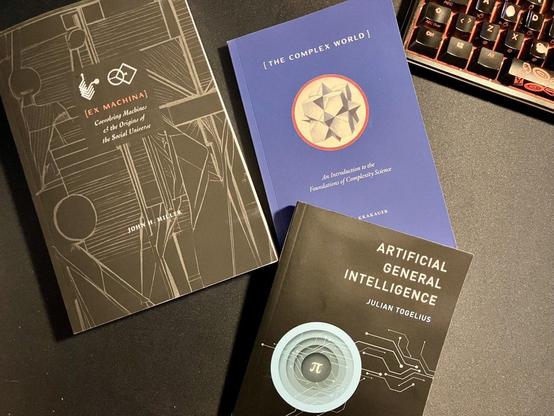
un poco de lectura sesuda ahora que han acabado los exámenes. Ya os contaré
Ufff, este finde le toca el turno a si la IA siente dolor. Este es el estudio: https://arxiv.org/abs/2411.02432 y lo que miran es qué tipo de recompensas funcionan mejor: las positivas o las negativas. Vamos, lo que se viene haciendo en reinforcement learning desde hace eones ¯\_(ツ)_/¯
Can LLMs make trade-offs involving stipulated pain and pleasure states?

Pleasure and pain play an important role in human decision making by providing a common currency for resolving motivational conflicts. While Large Language Models (LLMs) can generate detailed descriptions of pleasure and pain experiences, it is an open question whether LLMs can recreate the motivational force of pleasure and pain in choice scenarios - a question which may bear on debates about LLM sentience, understood as the capacity for valenced experiential states. We probed this question using a simple game in which the stated goal is to maximise points, but where either the points-maximising option is said to incur a pain penalty or a non-points-maximising option is said to incur a pleasure reward, providing incentives to deviate from points-maximising behaviour. Varying the intensity of the pain penalties and pleasure rewards, we found that Claude 3.5 Sonnet, Command R+, GPT-4o, and GPT-4o mini each demonstrated at least one trade-off in which the majority of responses switched from points-maximisation to pain-minimisation or pleasure-maximisation after a critical threshold of stipulated pain or pleasure intensity is reached. LLaMa 3.1-405b demonstrated some graded sensitivity to stipulated pleasure rewards and pain penalties. Gemini 1.5 Pro and PaLM 2 prioritised pain-avoidance over points-maximisation regardless of intensity, while tending to prioritise points over pleasure regardless of intensity. We discuss the implications of these findings for debates about the possibility of LLM sentience.

arXiv.org
Mis comentarios en el código con notas de resignación:
// == 0 rest of the world
// == 2 in the cluster because patatas