The White House's simultaneous condemnation of AI as a tool of exploitation and promotion of AI as an educational resource reveals an inconsistent and image-driven technology agenda that undermines its own stated commitment to protecting children.
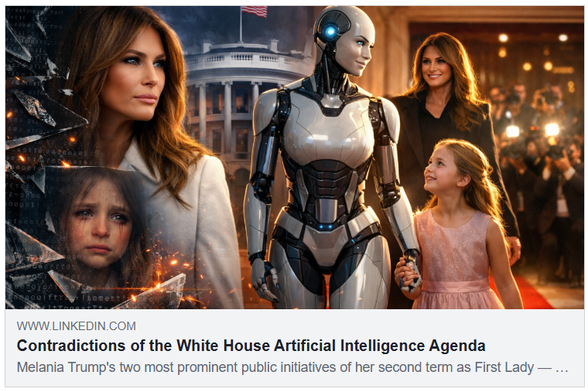

The White House's simultaneous condemnation of AI as a tool of exploitation and promotion of AI as an educational resource reveals an inconsistent and image-driven technology agenda that undermines its own stated commitment to protecting children.
This essay argues that Meta Superintelligence Labs, despite massive investment and top-tier hiring, quickly descended into instability and talent exodus, exposing cultural dysfunction and foreshadowing its shift from a vision of personal superintelligence toward militarized, institutionally aligned AI development.
Meta has centralized its AI operations into Meta Superintelligence Labs under Alexandr Wang, consolidating research, infrastructure, and product development to accelerate the pursuit of superintelligence, expand into virtual beings, and deepen its alignment with defense applications.

The paper traces how Army-backed ICT research, Oculus, Anduril, and Meta converge in SBMC Next to deliver AI-powered virtual beings for military use.
https://medium.com/@mendicott/from-oculus-to-eagleeye-and-new-roles-for-virtual-beings-2704d6752a23
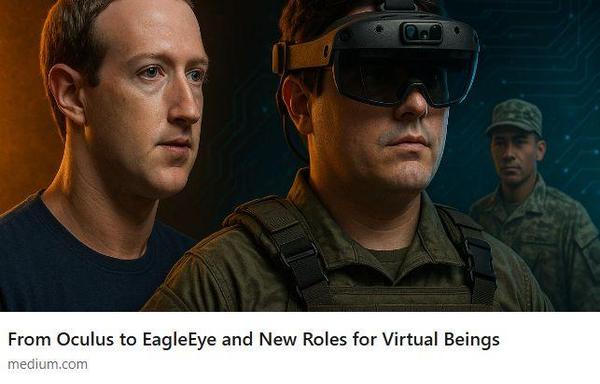
Meta’s Reality Labs, shaped by Yaser Sheikh’s leadership, transformed Oculus’s VR roots into a decade-long pursuit of photorealistic telepresence that now stands at the center of both groundbreaking innovation and deep controversy over its role in governance, surveillance, and militarization.

Marcus L. Endicott argues that Meta’s AI-driven enforcement in Australia disproportionately harms small businesses, artists, community groups, and publishers through opaque, automation-heavy account actions lacking effective appeals, creating structural bias that functions as persecution.

Over the past year, Facebook Groups have shifted control toward opaque, automated, centrally managed systems that reduce administrator agency, create unreliable and unpredictable enforcement, diminish third-party tooling, and push communities to diversify off-platform while calling for transparent controls, auditability, and effective appeals to restore trust.

Tijmen Blankevoort’s July 2025 resignation from Meta, accompanied by a 2,000-word memo likening its AI division’s dysfunction to “metastatic cancer,” exposed deep cultural and organizational problems that clashed with the company’s public image and sparked global debate on workplace culture in high-stakes AI research.
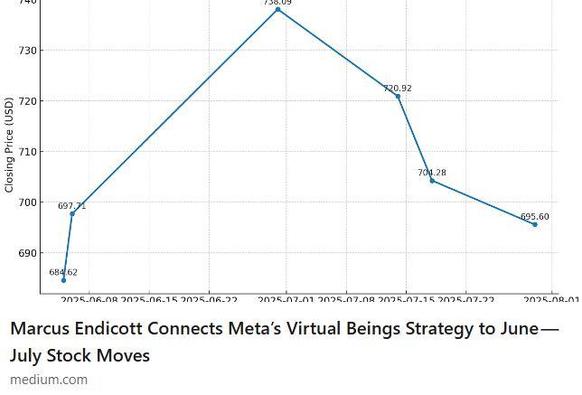
Marcus Endicott’s analysis links Meta’s June–July 2025 stock movements to its expanding “virtual beings” strategy—spanning AI assistants, consumer hardware, and military applications—arguing that investor optimism in June gave way in July to market, regulatory, and ideological pressures.
The 2021 Facebook news ban in Australia revealed the growing inability of national governments to regulate powerful global tech platforms, highlighting the ongoing tensions over media control, corporate accountability, and the future of democratic information governance.