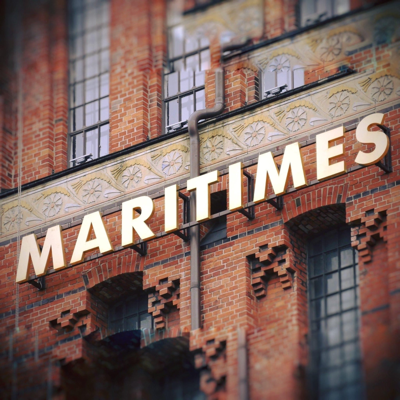
Am 09.02. bieten wir von 11 – 12:30 Uhr das „ #Museum zum Anfassen“ an. Mit akustischen, taktilen und riechbaren Elementen können die Teilnehmerinnen und Teilnehmer die Welt der #Seefahrt erleben.
Der Museumseintritt und Führung sind kostenlos. Anmeldung unter [email protected]
#Barrirefreiheit #hamburg
(10) her 1:100 scale model, used for special effects in the German ZDF TV-Production "Die Gustloff" (2008), stands on deck 4 of the museum.
(9) Sailing in deep waters with the torpedo boat Löwe as her single escort, a non-operational main radio system and by temperatures of -20°C that had frozen the mechanisms to lower the lifeboats. The exact number of persons who died most certainly exceeds 9.000.
(8) On January the 30th 1945 the ship left her port as part of the last-minute evacuation of the area. In the chaos of the situation the ship, that was recognizable as a military vessel, took thousands of civilian refuge seekers aboard.
(7) After Germany started World War II, the Gustloff served as a hospital ship until November 1940. She was then painted in naval grey and became floating barracks at the port of Gdyna, that had been renamed Gotenhafen by the German occupation.
(6) As such, she was a propagandistic instrument for the dictatorship. She was a very interesting ship from a naval architecture perspective, as the solution met for her function made her structurally similar to modern cruise ships.
(5) Built to be transformed into an hospital ship in wartime, she was originally a cruise ship owned by the German Labour Front (DAF), the organisation that had suppressed all trade unions in Nazi Germany. The ship made cruises for the Strength Through Joy (KdF), a sub-organisation of the DAF.
(4) She was built between 1936 and 1937 at the Blohm+Voss B.V. & Co. KG shipyard in Hamburg. It was named after the founder of the Nazi Party branch in Switzerland, declared a martyr by the German propaganda after his murder in 1936.
(3) This is by any means the largest loss of lives by the sinking of a single ship in history.
(2) Beside military passengers, the ship was overcrowded with civilians seeking refuge from the advances of the Red Army. Only 1.239 passengers of an estimated number of over 10.000 survived the tragedy.