62 Followers
89 Following
72 Posts
DH, Hacktivism, Web Archiving, Data Hoarding
Technical Officer DARIAH-EU
Orcidhttps://orcid.org/0000-0003-4925-5197

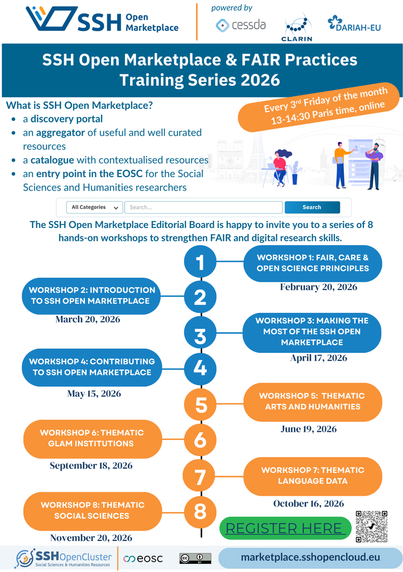
Ever wanted to get started with the SSHOC Open Marketplace but didn't know where to begin?

Join us for the second webinar in this 2026 training series: "Introduction to the SSHOC Open Marketplace" 🤗

📅 20th March
➡️ Register: https://docs.google.com/forms/d/e/1FAIpQLSdLzBGqd4G_XUWVYTEsFOfRnsdg4PSZTFxb7cTaeB_JBnjdSA/viewform
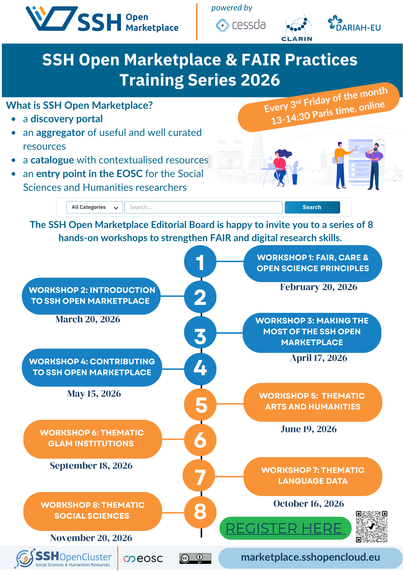
Ever wanted to get started with the SSHOC Open Marketplace but didn't know where to begin?

Join us for the second webinar in this 2026 training series: "Introduction to the SSHOC Open Marketplace" 🤗

📅 20th March
➡️ Register: https://docs.google.com/forms/d/e/1FAIpQLSdLzBGqd4G_XUWVYTEsFOfRnsdg4PSZTFxb7cTaeB_JBnjdSA/viewform
@Mareike2405

Geht in diese Richtung:

"Distinguishing between plainly unavailable URLs, server errors, and links to the Internet Archive, loss rates could be determined to be around 5% per year, leading up to 25% to 50% of pre-2000 DSEs [Digital Scholarly Editions] being unavailable."

Kurzmeier, M., O'Sullivan, J., Pidd, M., Murphy, O. & Wessels, B., (2024) “Visualising the Catalogues of Digital Editions”, The Journal of Electronic Publishing 26(1). doi: https://doi.org/10.3998/jep.3569

Visualising the Catalogues of Digital Editions

This article provides a data-driven overview of the developments in the field of digital scholarly editing. It surveys and evaluates the available data source on digital scholarly editions and provides longitudinal analysis of changes in number of projects, geographic distribution, licensing, interfaces and preservation. Digital scholarly editions (DSE) are essential to arts and humanities research, but also, society and culture at large. They are the primary instrument through which textual and cultural heritage, expert knowledge, and public understanding are negotiated. Their comparatively long history makes them especially suited for a diachronic approach, describing their change over time. While digital editions can vary greatly in scope and lifespan, a quantitative analysis of two of the most comprehensive data sources on digital editions can produce data-based insight into the developments within the field over time.  Exploring this history and at the same time assessing the available metadata on DSEs is the aim of this article. It presents the state of the two most comprehensive available sources on digital editions and details the methodology and visualisation process undertaken. In its analysis, it is at the same time a quantitative approach to DSEs as well as a critique of the available data sources on editions.

The Journal of Electronic Publishing

An exciting #JobOpportunity in #DigitalHumanities is currently open at the Austrian Centre for Digital Humanities, located in Vienna🇦🇹

ACDH is seeking to fill the position of a Digital Humanities Consultant with focus on Machine Learning

➡️ Full job posting: https://www.oeaw.ac.at/jobs?jh=ip687ncuaoilhtu2rmjwlvpubwjffo4

What can hacked websites tell us about the history of political activism of the web? My latest article explores the political, cultural, and archival value of over 10,000 web defacements from attrition.org—now made available for research.

🔗 https://journalofdigitalhistory.org/en/article/hXsgcT9BZ5jP

#DigitalHistory #webarchiving #defacement

Journal of Digital History

The Journal of Digital History (JDH) is an international, academic, peer-reviewed and open-access journal. JDH will set new standards in history publishing based on the principle of multi-layered articles.

Journal of Digital History
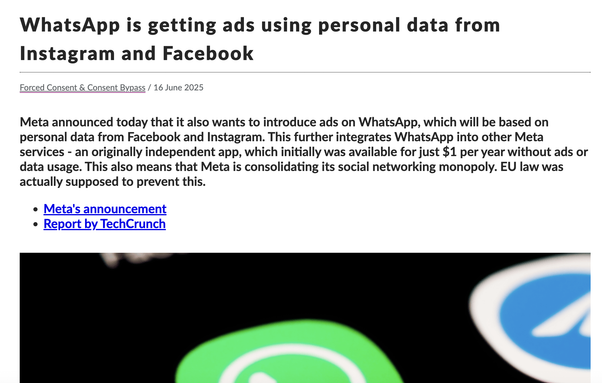
Use Signal. We promise, no AI clutter, and no surveillance ads, whatever the rest of the industry does. <3

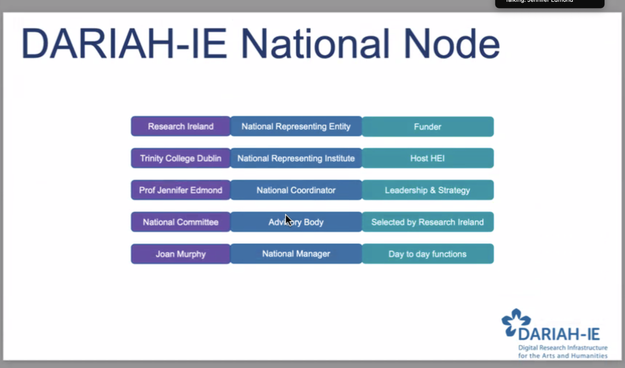
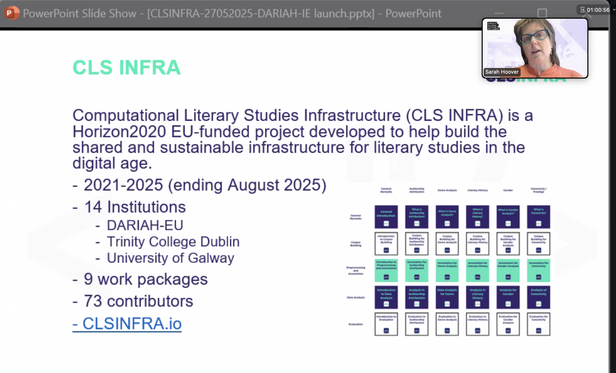
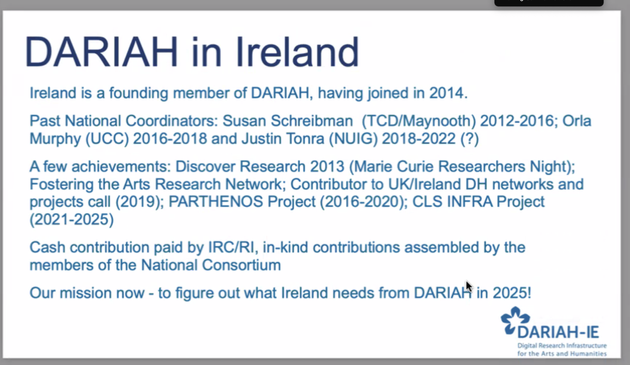
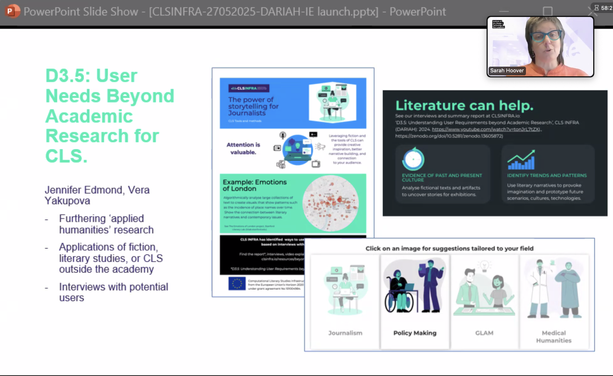
It was fantastic to hear from a host of familiar faces at the (re)launch of DARIAH-IE, spearheaded by National Coordinator for Ireland (and former DARIAH Director) Jennifer Edmond, who introduced the node 🇮🇪

We also heard presentations from a number of representatives from CLS Infra, Huma-Num, and other DARIAH nodes throughout the seminar.

➡️ Read more about DARIAH-IE updates here: https://dariah.ie/wordpress/

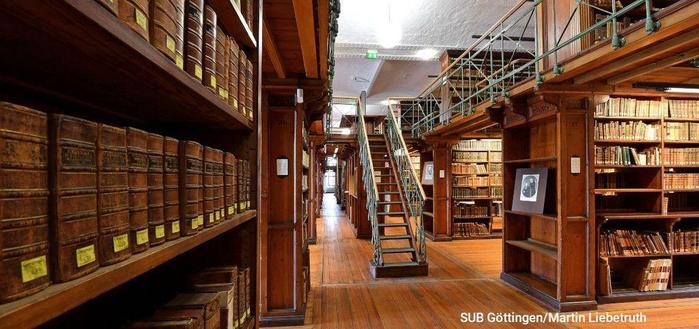
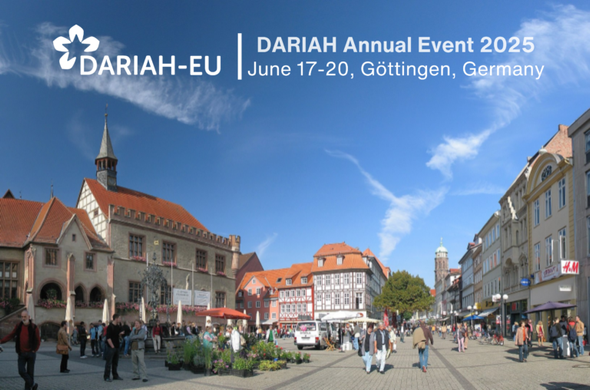
Join us in Göttingen for #DARIAH2025!

Are you a student or doctoral candidate who wants to attend our DARIAH Annual Event this June? Thanks to the support of the German Federal Ministry of Education and Research (BMBF), there are now ten travel grants of €500 available 👀

🔜 Apply before 23rd May!

➡️ More info: https://www.dariah.eu/2025/05/08/call-for-applications-dariah-de-travel-grants-for-the-dariah-annual-event-2025-in-gottingen/

Call for Applications: DARIAH-DE Travel Grants for the DARIAH Annual Event 2025 in Göttingen | DARIAH

📢 (Re)Introducing DARIAH-IE! 🇮🇪

On Tuesday May 27th DARIAH-IE will be hosting an online event for members of the Irish Digital Arts and Humanities communities and beyond.

The seminar will give an overview of DARIAH-IE and its hopes and aspirations for the next few years, and will offer attendees the opportunity to contribute to the development of the newly invigorated Ireland node.

➡️ https://www.dariah.eu/2025/05/07/reintroducing-dariah-ie-event/

(Re)introducing DARIAH-IE event | DARIAH

📣 DEADLINE EXTENDED📣

The Call for Papers for the #DARIAH2025 Annual Event 2025 is now open til March 14th!

🏛️ Theme: "The Past"
📍Göttingen
📆 17-20 June

🔹 Call for Papers: https://buff.ly/3WnoqX8
🔹 Venue: https://buff.ly/41s4jtM
🔹 ConfTool: https://buff.ly/3E7IIh0

Call for Papers – Annual Event