Kp_rider
- 0 Followers
- 4 Following
- 10 Posts
Hi its me! KP!
No the basic models are dumb and only work with remote. They give you choices with higher models with IOT. It's not forced on you.
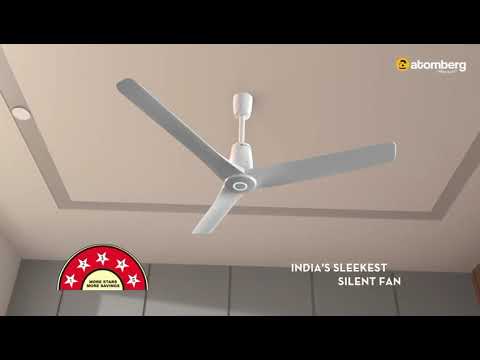
Atomberg Aris Contour Ceiling Fan | Smart Fan
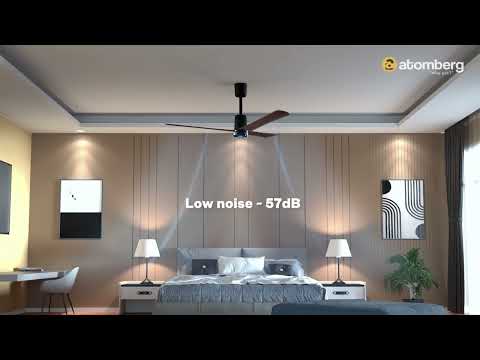
Atomberg Renesa Elite | Ceiling Fan | BLDC fan
It is a fascinating case study in how different regions engineer appliances based on their unique climates and architectural needs.
In the United States, classic brands like Hunter perfected heavy, beautifully crafted fans with thick blades designed to run at a lower, gentler RPM. Because American homes often rely on centralized HVAC systems, these fans are primarily meant to quietly circulate conditioned air and add to the room's aesthetic, meaning their 75-watt power draw isn't a primary concern.
By contrast, in tropical climates like India, fans are the primary cooling source and run continuously. Because many homes rely on backup battery inverters during power outages, efficiency is everything. Companies like Atomberg engineered these ultra-lightweight BLDC fans to maximize every single watt, delivering high-velocity airflow at 350 RPM while cutting energy footprints by over 50%. It is a perfect example of two completely different, brilliant approaches to solving the exact same comfort problem based on local context.
You can look at that in 3D In this website
Take a look at this Renesa with 3 Year Warranty BLDC Motor with Remote 1200 mm Ceiling Fan on Flipkart
https://dl.flipkart.com/dl/atomberg-renesa-3-year-warranty-bldc-motor-remote-1200-mm-ceiling-fan/p/itmea71f80992825?_refId=&_appId=CL
@TechConnectify
The Atomberg Renesa ceiling fan delivers an airflow ranging from 7,769 CFM to 8,828 CFM (Cubic Feet per Minute) depending on the blade sweep size you choose
The Atomberg Renesa ceiling fan delivers an airflow ranging from 7,769 CFM to 8,828 CFM (Cubic Feet per Minute) depending on the blade sweep size you choose
Kp_rider (@[email protected])
@[email protected] Hi Alec, I noticed you just released a fantastic video on how usa keep messing up ceiling fans! Given your love for residential energy efficiency and motor design, I think you should do a deep-dive episode on the electronic wizardry inside "BLDC Ceiling Fans." They are incredibly popular in India right now (pioneered by a company called Atomberg), and they represent a massive leap over the traditional single-phase AC induction fans usa use in the West. Here is why they are a perfect fit for a Technology Connections episode: 1. The Efficiency Leap: A standard AC induction fan draws about 75 Watts at peak speed. A BLDC fan delivers the exact same airflow (around 220–235 CMM / 8,000 CFM) while drawing only 28 to 35 Watts. At low speeds, they run on an unbelievable 2 to 3 Watts. 2. Hidden Inverters: Inside the fan canopy is a sophisticated circuit board. It takes incoming AC wall power, rectifies it to DC via an internal SMPS, and then a microcontroller uses Pulse Width Modulation (PWM) to step it back into a simulated 3-phase AC wave to spin a permanent magnet rotor. It ties perfectly into your older video on how induction motors and 3-phase power work! 3. Absolute Silence: Because they don't use old capacitor-drop or resistive wall regulators to chop the AC voltage waveform, they never experience that annoying low-speed electrical motor hum. They run completely silent. 4. The Engineering Trade-offs: Traditional fans are "dumb" copper and iron machines that can survive a lightning strike and last 40 years. BLDC fans put an entire computer motherboard into a hot, humid ceiling environment. If a power surge fries the PCB, the fan is bricked. Furthermore, they are native to 220V grids—running one on a standard 110V North American outlet requires a step-up transformer, or the internal chip throws an under-voltage error. They cost around $37 to $59 USD in India (though shipping them over to the US pushes it past $220 due to freight). Seeing you tear down the internal circuitry, explain the electronic commutation, and benchmark the power draw using your power meters would make an incredible video. It represents the exact kind of "invisible engineering" that makes household appliances so fascinating. Thanks for the great content!
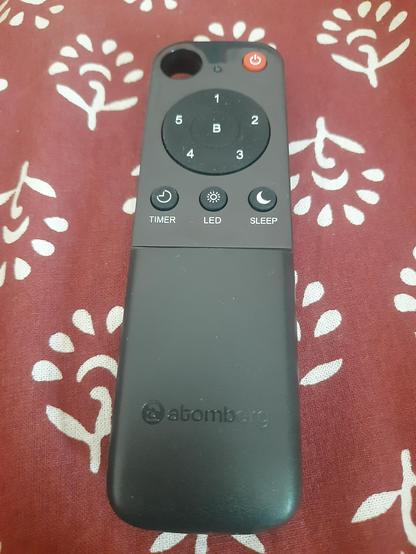
@TechConnectify The Standard Atomberg Remote Control & Functions:
Unlike traditional fans that rely on a wall regulator to physically alter voltage, an Atomberg fan runs its speed control entirely through software. The standard model uses a dedicated wireless remote control that communicates directly with the microprocessor on the fan's internal PCB.
Because the fan's motherboard handles the heavy lifting, the remote introduces several clever functions that are mechanically impossible on a standard induction fan:
1. ON/OFF Button: Completely toggles power to the internal motor control circuit, allowing you to leave your physical wall switch flipped "on" permanently.
2. Speed Control (Keys 1 to 5): Directly alters the Pulse Width Modulation (PWM) duty cycle sent to the stator coils. Speed 1 spins the fan at a dead-silent crawl using only 2 to 3 Watts of power, while Speed 5 ramps it up to its full 28-35 Watt peak capacity.
3. Boost Mode: Acts as an "overclock" button. It bypasses standard speed curves to immediately push the motor to its absolute maximum rated RPM and airflow delivery (up to 360 RPM depending on the model size).
4. Sleep Mode: A highly efficient comfort feature. When activated, the microprocessor automatically reduces the fan speed by one level every two hours. This prevents you from freezing in the middle of the night as ambient temperatures drop, while steadily scaling down the fan's power consumption.
5. Timer Mode: Offers dedicated buttons for 1, 2, 3, or 6 hours. The onboard chip counts down the duration and cuts power to the motor automatically when the time elapses—ideal for falling asleep or regulating room air without running the fan all day.
6. LED Toggle (On Select Models): If the fan includes an integrated LED under-light or speed indicator, the remote allows you to dim, brighten, or turn off the indicator lights so they don't disturb you in a dark room.
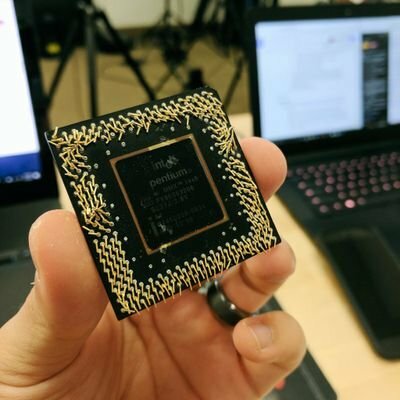
Because these fans are controlled by a built-in computer board rather than simple electrical coils, the higher-end models include fully integrated Wi-Fi and Bluetooth chips directly on the main motor PCB.
This means you can connect the fan straight to a home network to control it via a smartphone app, Google Assistant, or Alexa, entirely bypassing traditional wall switches. It allows you to set up automated routines—like programming the fan speed to change automatically based on the temperature readings from a smart thermostat.
Adding these IoT smart chips shifts the price up slightly, bringing the local cost in India to around $45 to $75 USD depending on the model.
Hi Alec,
I noticed you just released a fantastic video on how usa keep messing up ceiling fans! Given your love for residential energy efficiency and motor design, I think you should do a deep-dive episode on the electronic wizardry inside "BLDC Ceiling Fans."
They are incredibly popular in India right now (pioneered by a company called Atomberg), and they represent a massive leap over the traditional single-phase AC induction fans usa use in the West.
Here is why they are a perfect fit for a Technology Connections episode:
1. The Efficiency Leap: A standard AC induction fan draws about 75 Watts at peak speed. A BLDC fan delivers the exact same airflow (around 220–235 CMM / 8,000 CFM) while drawing only 28 to 35 Watts. At low speeds, they run on an unbelievable 2 to 3 Watts.
2. Hidden Inverters: Inside the fan canopy is a sophisticated circuit board. It takes incoming AC wall power, rectifies it to DC via an internal SMPS, and then a microcontroller uses Pulse Width Modulation (PWM) to step it back into a simulated 3-phase AC wave to spin a permanent magnet rotor. It ties perfectly into your older video on how induction motors and 3-phase power work!
3. Absolute Silence: Because they don't use old capacitor-drop or resistive wall regulators to chop the AC voltage waveform, they never experience that annoying low-speed electrical motor hum. They run completely silent.
4. The Engineering Trade-offs: Traditional fans are "dumb" copper and iron machines that can survive a lightning strike and last 40 years. BLDC fans put an entire computer motherboard into a hot, humid ceiling environment. If a power surge fries the PCB, the fan is bricked. Furthermore, they are native to 220V grids—running one on a standard 110V North American outlet requires a step-up transformer, or the internal chip throws an under-voltage error.
They cost around $37 to $59 USD in India (though shipping them over to the US pushes it past $220 due to freight).
Seeing you tear down the internal circuitry, explain the electronic commutation, and benchmark the power draw using your power meters would make an incredible video. It represents the exact kind of "invisible engineering" that makes household appliances so fascinating.
Thanks for the great content!