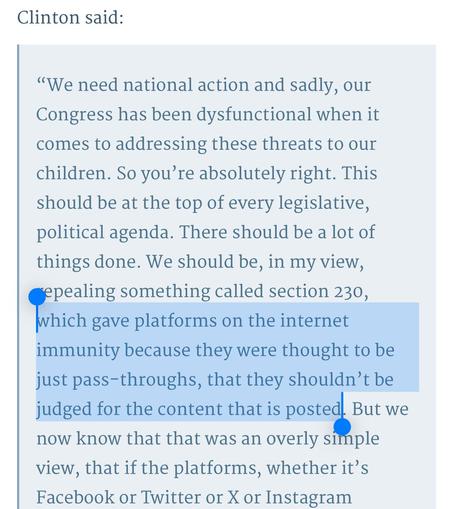
If she read about Section 230’s history for even a few minutes, she would know this is not true.
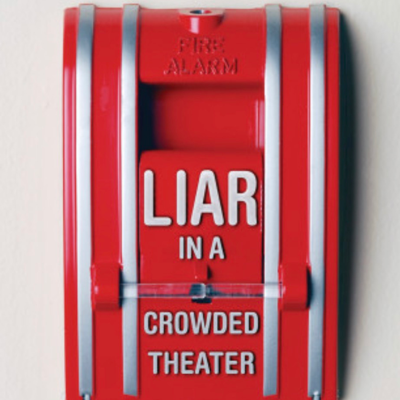
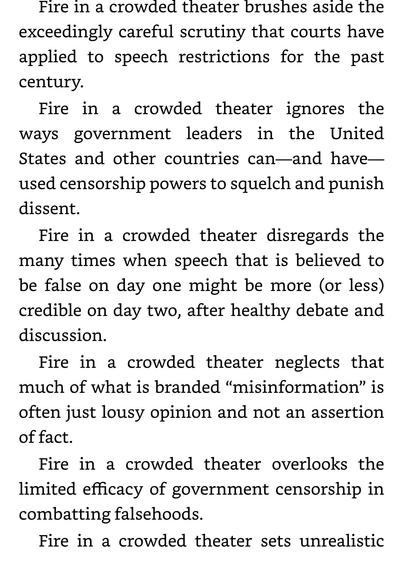
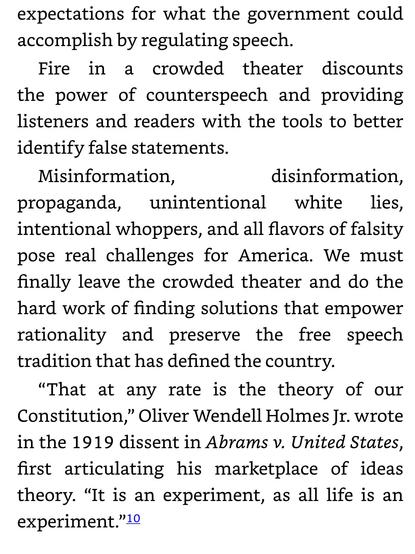
The conclusion to Liar in a Crowded Theater.
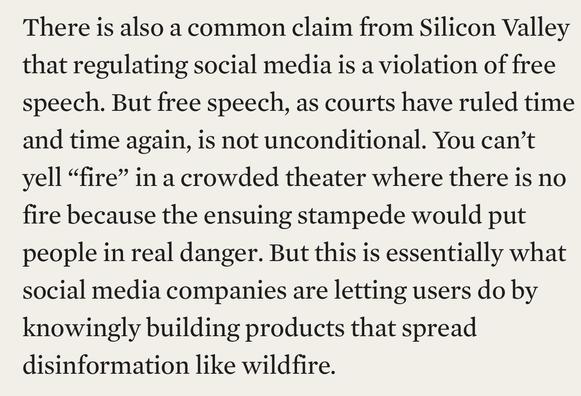
The danger of “fire in a crowded theater” is that it is used as a wildcard to justify any government regulation of speech and get around the strong 1A protections that advocates have earned over the past century.
Yes, there are hypothetical cases in which falsely yelling fire in a crowded theater and causing harm could lead to liability, like a disorderly conduct charge. There also are hypothetical cases where there is no liabilitu.
No, “fire in a crowded theater” is not a First Amendment test. It was a bad metaphor in a 1919 Supreme Court opinion upholding the imprisonment of a draft critic. That opinion was overruled in 1969.
Went to sleep early. Did I miss anything?
And zero surprise that this ends up in the crowded theater.
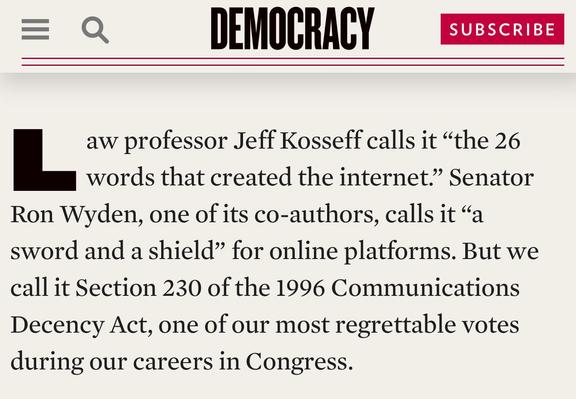
Dick Gephardt mentioned my book in the first paragraph of his new article! Oh…wait
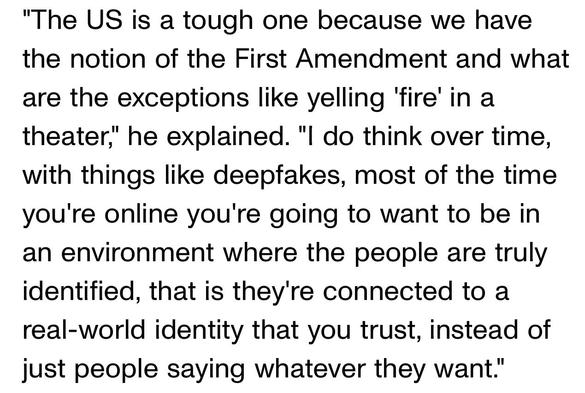
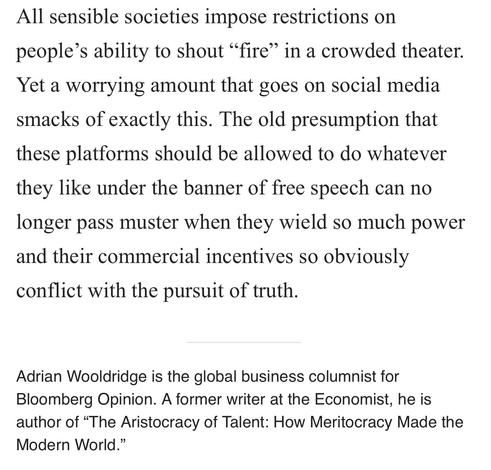
No, Bill Gates, we should not destroy online anonymity. Nor should we rely on the “fire in a crowded theater” trope.