@gilest thanks! It’s one of my favourites
I checked this out weeks ago for a bit of light reading.
Screaming, Crying, Throwing Up: 3 years, one pandemic, OpenSAFELY, Goldacre Review, 900+ references, and 92,000 words later and the thesis is *submitted* 💀
Now you see, if ChatGPT could figure out how to automate moving house, I might be more of an all-around fan.
Alright thesis, ready to reach your conclusion? Let’s do this.
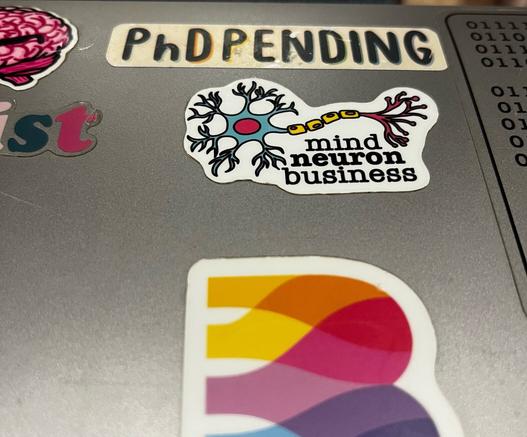
My PhD Pending sticker is getting rather tired. Hopefully it won’t have to last much longer.
I'll never take for granted the ability to go for a walk, nor underestimate its power. Got stuck structuring an argument, became convinced everything in this chapter is terrible & all was lost. Went for a walk. Rewrote the entire problematic argument in half an hour. *Magic*.
Our (mine, drsJoe Zhang and Nick DeVito) editorial on the use of Generative AI
https://www.bmj.com/content/382/bmj.p1551.full?ijkey=hb6GJswGAMWkL4V&keytype=ref8/ is in physical print in the latest edition of the @bmj_latest. IDK why this still feels infinitely more satisfying than it simply existing online - it just does! If you want to hear me wax lyrical about some of these topics in more detail, then check the latest episode of the computational medicine podcast
https://thecomputationalmedicinepodcast.buzzsprout.com/1431472/13331815


Generative AI for medical research
Protecting against misuse without forfeiting the potential benefits is key
The global market for artificial intelligence (AI) for healthcare is booming. Currently valued at $15bn (£12bn; €14bn), it is expected to near $200bn by 2030.12 Public sector spending on AI for healthcare is also on the rise. The UK government, for example, has already invested more than £123m in AI for healthcare technologies.3 Of course, previous AI “summers” were followed swiftly by AI “winters,” when the gap between expectations and the reality of AI grew too wide. This summer’s heat and longevity can largely be attributed to the advent of generative AI.
Generative AI is a type of machine learning capable of generating data in a range of formats (including text, image, audio, video, or code) and adapting to new tasks in real time, following simple text based prompts. These capabilities make generative AI flexible, as one “model” (for example, ChatGPT or DALL-E) can be used for a variety of tasks—including medical research tasks—without having to be retrained. This flexibility makes generative AI appealing …
Me trying desperately to keep up with all the very many well-meaning, but REALLY duplicative, responsible health AI initiatives that keep popping up 😵💫. Might make an email reply bot: "Focus on data curation. Involve clinicians. Design, Validate, Evaluate, Monitor. REGULATE."