 Dr. Casey Fiesler
 Guggenheim Museum

jenniferiwj
- 20 Followers
- 80 Following
- 24 Posts
Anyway, I'm not worried about generative AI taking over Netflix (though do make sure to watch the first episode of the new season that just dropped yesterday, "Joan is Awful"), and also horrified by proposals that AI will be able to tell us how it should be regulated. Not because AI is a sentient, malicious thing that will try to trick us, but because it's a jumble of tropes when what we actually need is human creativity and critical thinking.
 Research Whisperer
'What do grad students in maths do all day? Do they just sit at their desk and think?'
Absolutely in love with this answer by Yasha Berchenko-Kogan.
https://www.quora.com/What-do-grad-students-in-math-do-all-day-Do-they-just-sit-at-their-desk-and-think/answer/Yasha-Berchenko-Kogan
Absolutely in love with this answer by Yasha Berchenko-Kogan.
https://www.quora.com/What-do-grad-students-in-math-do-all-day-Do-they-just-sit-at-their-desk-and-think/answer/Yasha-Berchenko-Kogan

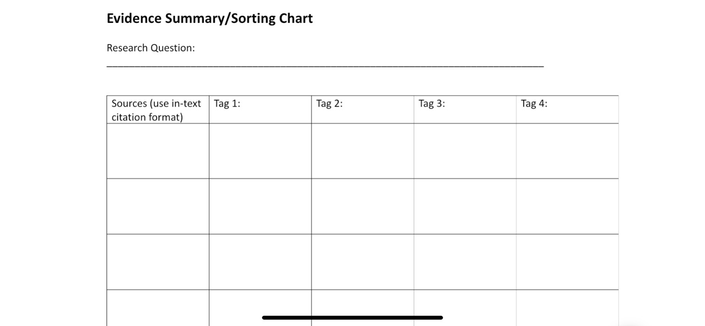
@cgoodhistorian sure! I designed a very simple one, but they can be more complex. The left-hand column lists all the sources, alphabetized appropriately and cited appropriately (ideally). The top row lists keyterms or subclaims the writer will explore. Then they put notes for each source (including page citations) each time a given sources speaks to that question/term.
In the end, they have sorted out various interactions between sources (synthesis training wheels). They have also created their bibliography and can spot gaps in their research. Some boxes will be empty because not every source speaks to every claim/question.
If they were to write a lit review after this work, they could draft it by reading down each column and synthesizing the specific parts of the sources that deal with the claim/term at the top of that column. It’s not pretty, but it can help them get the first draft and maintain better control over the ideas.
Honestly, I use these for my own writing even.
 Cat
Cat10 Image #CaptionTips from a transcriptionist:
1. Any words are better than nothing.
2. You don't need to say it's "a picture of…" screen readers will already say it's an image.
3. Start with the framing or format (i.e. close up, landscape, meme, text).
4. Think about the reason you're posting the pic and describe that first, add background details if you have time.
5. Pretend you're talking to someone on the phone and want to tell them about this cool thing you're looking at.
6. Transcribe any and all text in the image, even if it's the only thing you do.
7. If you've described the image in your post, you don't need to copy and paste it again in the caption. But again, don't leave it blank, just put something like "as described."
8. You can add small subjective notes, but don't give too much interpretation of the image in your own opinion.
9. Caption jokes are fun, as long as they still describe the image objectively.
10. Use punctuation, and capitalize words properly. A lot of us have interacted with this tech when calling customer service or talking to Siri, so keep in mind that you're writing for a computer to read, and it needs all the help it can get.
Assigning essays is not the only way to teach students writing. This isn’t to devalue essays, which are a solid genre by which students can approximate advanced academic writing and work through complex ideas. But if you’re looking at your assessment and the idea of using essays as the core artifact is creating an unreasonable faculty burden then rethink why you’re privileging essays.
Research grids, recorded presentations, user guides/examples of integrated learning, glossaries, disciplinary style guides — all of these are legitimate, conventional genres that can enable and provide evidence of student learning.
Bonuses:
AI will have a harder time with these assignments.
Such assignments also help students learn to deconstruct writing into manageable parts rather than a seemingly unified and therefore daunting task.
Somehow I’m the go-to on ChatGPT at my campus now? Ironically, so much for getting any of my own writing done this semester.
I am becoming the bots I’m studying.
Questions for today’s research:
How many assignments are typical in a WAC FYC course?
—— Such that revision, focus, organization and generic conventions are also prioritized
—— And such that content knowledge can also be adequately and consistently assessed?
—— With the goal of improving accessibility and supporting instructor work/life balance?
I know answers for this but need to revisit and update in order to present a compelling case to my faculty.
I’ve budgeted … three hours for this research. *sigh*
Lemon Branch by Ellsworth Kelly, 1964 #ellsworthkelly #guggenheim https://www.guggenheim.org/artwork/2069
