Recording of new book (Machine Visions: New Books by Parikka, Dobson & Rettberg) talk on computer/machine vision featuring Jill Walker Rettberg, Jussi Parikka, and James E. Dobson.
https://www.youtube.com/watch?v=26qY66PlX0g
Machine Visions: New Books by Parikka, Dobson & Rettberg
If you are interested in the history of computer and machine vision and machine learning, please join this Zoom-based panel with Jill Walker Rettberg, Jussi Parikka, and me! Tuesday, January 23rd at 12:00pm Eastern/9:00am Pacific. Zoom registration here:
https://uib.zoom.us/meeting/register/u5ckcuirpj0iHNeBMlFIG7CIwk44xjvvtsjQ#/registration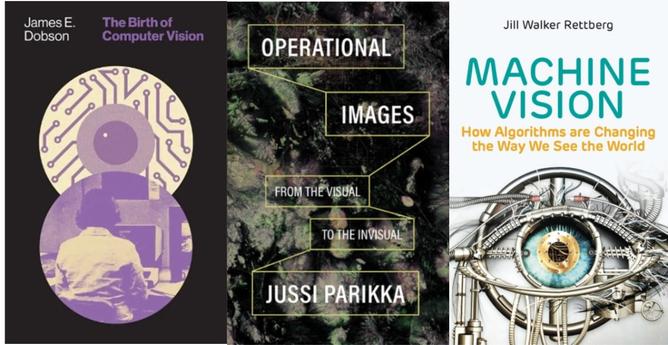

Welcome! You are invited to join a meeting: Machine Visions: New Books by Parikka, Dobson & Rettberg. After registering, you will receive a confirmation email about joining the meeting.
Join the authors of three new books about automated vision in this 60 minute online event.
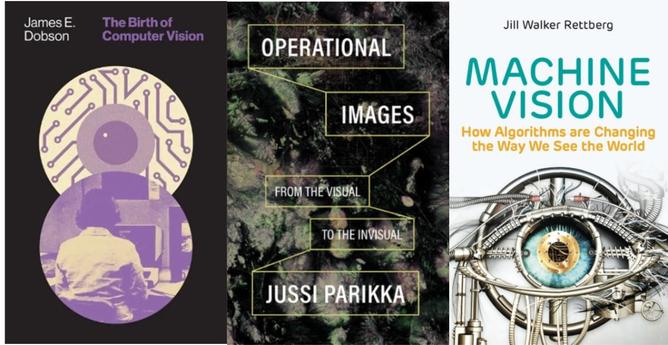
James E. Dobson: The Birth of Computer Vision (https://shorturl.at/IQU35)
Jussi Parikka: Operational Images: From the Visual to the Invisual (https://shorturl.at/jxZ38)
Jill Walker Rettberg: Machine Vision: How Algorithms are Changing the Way We See the World (https://shorturl.at/gklQ1)
This panel discussion offers an exploration of their recently published works, emphasizing the historical, theoretical, and cultural dimensions of algorithmic visual technologies.
Frank Ferdinand’s work touched many thousands of lives and he was widely mourned. Some of his records are held by the YIVO Institute for Jewish Research and the JDC Archives.
Back in NY, while continuing work for the JDC, Frank Ferdinand started a publishing company. Frank-Maurice (named after himself and his first-born son) took over a failed press and began publishing in 1925. They published beautiful books on topics including Jewish tales and legends as well as literary work and translations.
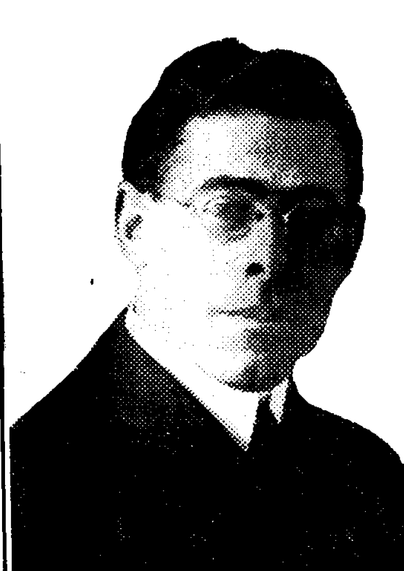
Following his degree, he went to work for two major Jewish organizations: Joint Distribution Committee (JDC) and the Bureau of Jewish Social Research. This work brought him back to Russia and to Lithuania and Czechoslovakia. He raised funds from American Jews to help aid the estimated 1.5m Ukrainian Jewish victims of the pogrom.
Let’s talk about Frank Rosenblatt’s father today. Frank Ferdinand Rosenblatt is the other Dr. Frank Rosenblatt (Frank, the younger, did not have a middle name). He was born as Ephraim in Luboml in Volhynia, Ukraine and likely on May 11, 1884 (records differ on the year).
"Computational Formalism" workshop later this week at Dartmouth with Ryan Heuser, Suzanne Mpouli, Jill Walker Rettberg, Dennis Tenen, Kenton Rambsy, Kate Elkins, Lauren Tilton, Maria Antoniak, Tim Tangherlini, and more.
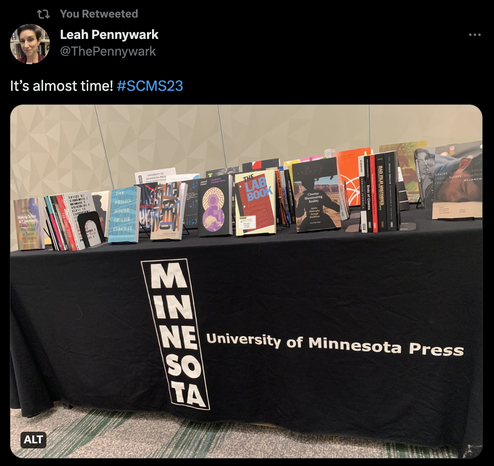
#cls #dh #mlThe Birth of Computer Vision spotted at
#SCMS23A final image: A strange proposal in the history of computer vision was a patent and proposal to recognize individuals by their hair patterns. I briefly mention this wacky proposal (US 7,792,33 B2) from 2010 in the book but didn’t include an image. Here’s one.
Rosenblatt’s colleagues at Cornell Aeronautical Laboratory were explicitly motivated to use the first mechanical Perceptron for military tasks. They wanted it to be an automatic photo-classification machine. Albert Murray used it to identify ships.