I have mixed feelings about leaving the amazing team I've been working with at the NSW STI Programs Unit for the last five years - they're honestly one of the best teams I've ever worked with and I've had the opportunity to lead some real career-highlight programs
BUT I am really excited about this new opportunity and I'm thrilled to have been appointed to the Scientia program. I'm keen to explore potential collaborations in this new role, so reach out if you have an idea to workshop or want to connect once I'm settled in
I have some news. Next week will be my last week at NSW Health, as I'm leaving to take up an academic appointment at the Kirby Institute, UNSW
https://www.inside.unsw.edu.au/academic-excellence/unsw-appoints-outstanding-indigenous-academics-prestigious-scientia-program

UNSW appoints outstanding Indigenous academics to prestigious Scientia Program | Inside UNSW
The three researchers bring expertise in healthy ageing, history and sexual health.

20 people, 2.4 quintillion possibilities: the baffling statistics of Secret Santa
The annual ritual of buying a gift for a random recipient opens a window onto some fascinating mathematics.
And that’s
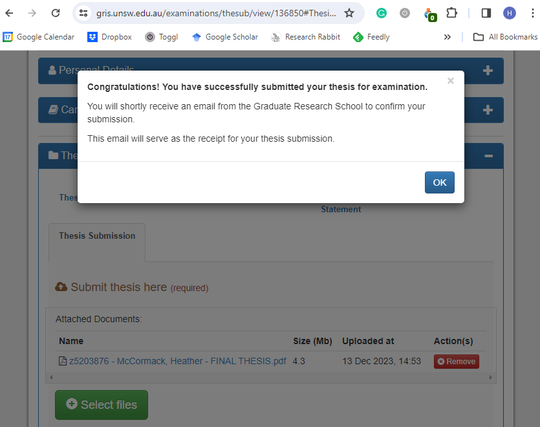
#PhDDone. I’m still pretty fragile after having surgery last week, but I’ve received very clear instructions to make a big deal out of this milestone so… give me a high five for submitting my thesis!
In a lovely piece of serendipity, this paper was published two days after I finished writing my thesis, so I’m feeling very chuffed going into the weekend 🥳
We’ve demonstrated for the first time that eMR modifications can increase STI testing in the health assessment and in the ACCHS setting. This adds to the evidence base on the success of these tools in other contexts and settings
The qualitative data suggests the eMR modifications were normalised into routine practice far more effectively than the credentialing or pre-signed forms, which proved unexpectedly prickly and difficult to normalise
We found a significant and sustained increase in STI testing within the health assessment following the introduction of the systems change, and an increase in inclusion of syphilis tests when STI tests were requested. These were the things targeted by the eMR modifications
The co-created systems change included four components: eMR modifications including prompts and shortcuts, credentialing nurses and Aboriginal health practitioners to do tests independently, pathology forms pre-signed by GPs, and enhanced data reporting. Details in the paper!